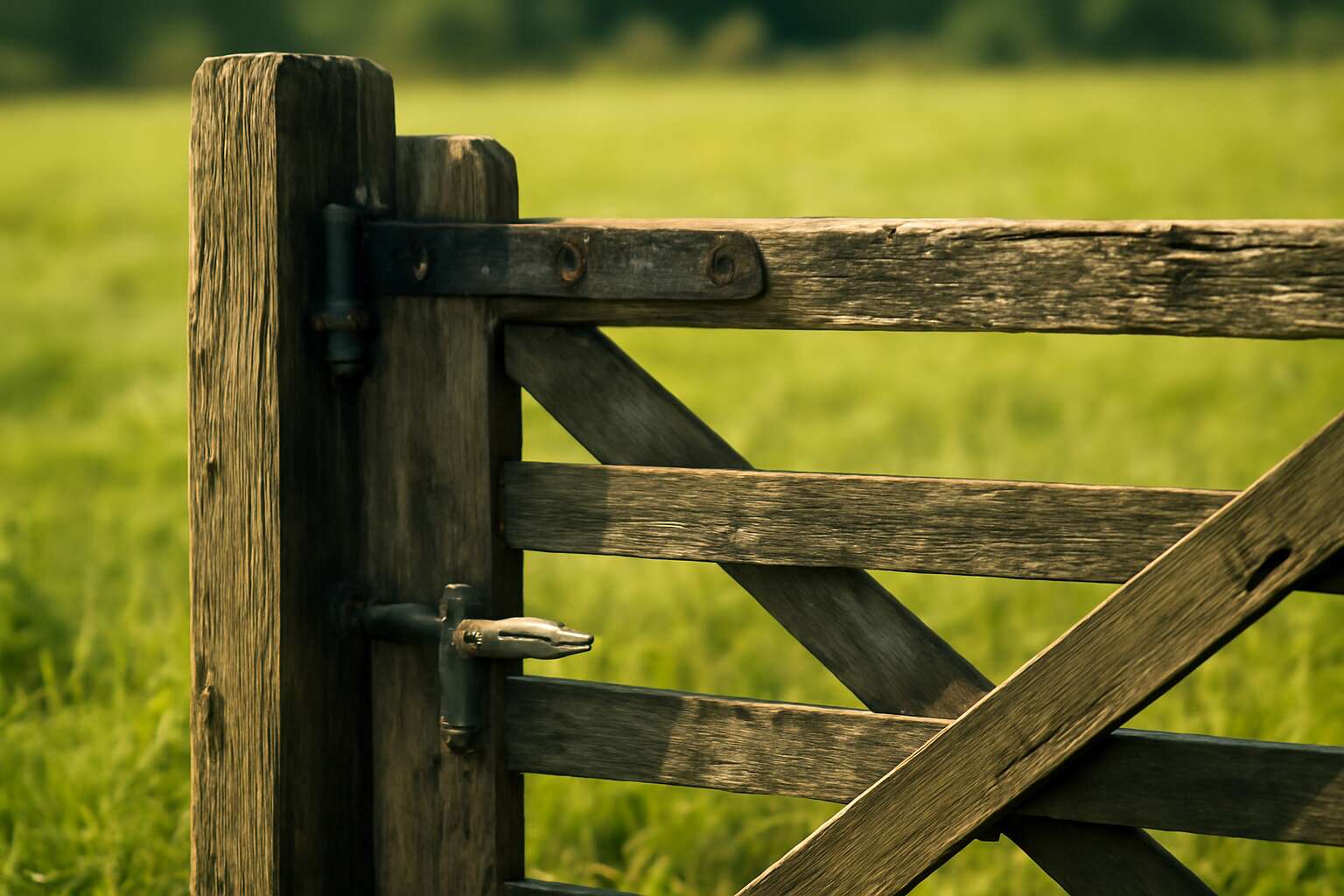
Materials commonly used for farm gates
Wood options for farm gates
Across the South African veld, a gate is more than a boundary—it is a threshold where memory meets resilience. For readers asking what are farm gates made of, wood, metal, and composites each carry a distinct cadence, shaping weather, security, and welcome. Gates endure rain and sun, standing as quiet witnesses to the land’s seasonal heartbeat.
Wood options for farm gates offer warmth and texture, from dense hardwoods to practical softwoods. The most common choices include:
- Iroko (high durability, natural rot resistance)
- Kwila (Merbau) — rich color, dense grain
- Treated pine — cost-effective, accepts finishes
Beyond wood, metal gates—galvanised steel, aluminium, and wrought iron—offer longevity with lower maintenance in harsh sun and rain. Composites and PVC infill provide moisture resistance and cleaner lines for modern farms. Each material maps to climate, budget, and farming rhythm, turning a functional barrier into a landscape’s punctuation.
Metal gate materials overview
Across the SA veld, gates face sun, rain and the occasional dust storm—yet they stand, quietly resolute. In my experience, what are farm gates made of? Materials beyond wood—metal options and composites balance durability with cost.
Metal gate materials deliver longevity with lower maintenance under harsh sun and rain. I’ve seen galvanised steel resist rust and remain affordable; aluminium stays light and never rusts; wrought iron carries a timeless weight, though it asks for protective finishing.
- Galvanised steel
- Aluminium
- Wrought iron
In modern farms, composites and PVC infill add moisture resistance and clean lines, while remaining adaptable to rural aesthetics and budgets. The choice maps to climate, asset longevity, and farming rhythm, turning a barrier into a landscape’s punctuation.
Composite and alternative materials
On South African farms, gates bear sun, rain and dust, yet some materials endure where others crumble! what are farm gates made of in today’s market? Composite and PVC infill options deliver moisture resistance, clean lines, and cost efficiency, while still echoing a rural aesthetic. They can imitate timber or metal without the upkeep, letting you tailor the gate to harsh veld conditions.
Consider these practical directions:
- Fiberglass-reinforced polymer (FRP) composites with moisture resistance and strength
- HDPE or PVC infill panels that resist warping and weathering
- PVC-coated steel or aluminum for a hybrid of durability and lightness
These alternatives cut maintenance, resist the Cape sun, and fit varied budgets, letting the gate become a durable feature rather than a faded afterthought.
Durability and maintenance considerations
South African farms endure an unrelenting blend of sun, dust, and rain. The question of durability often comes down to one line: what are farm gates made of? The right choice respects hard-won veld conditions while keeping maintenance sensible, so gates stand as sturdy gateways rather than faded markers of age. I’ve watched gates endure the Cape sun and dust, and I know the difference!
Beyond legacy frame-and-metal setups, modern farm gates turn to composites and tailored metals that resist the Cape climate. Consider these practical options:
- Fiberglass-reinforced polymer (FRP) composites for moisture resistance and strength
- HDPE or PVC infill panels that resist warping and weathering
- PVC-coated steel or aluminum for a durable, lighter hybrid
These materials reduce upkeep, shrug off UV assault, and suit varied budgets. They blend rugged practicality with a rural aesthetic, ensuring the gate remains a functional feature rather than a worry.
Cost and availability by material
Farm gates endure 365 days of sun, dust, and rain; the question—what are farm gates made of?—shapes every choice, and I’ve watched gates weather the veld, learning their language. The answer flows from timber to steel, aluminum to composite, each material singing with its own climate-minded rhythm.
- Wood (timber): affordable upfront, widely available in SA, but high maintenance against sun and pests.
- Galvanized steel: sturdy and common, good availability; coastal areas may need coatings to prevent corrosion.
- Aluminum: light, corrosion resistant, mid-to-high upfront cost, readily stocked by SA suppliers.
- FRP/composites: premium option with low maintenance; available through specialist SA suppliers.
- PVC-coated steel or aluminium: durable hybrid, mid-range price, generally easy to source.
Cost and availability vary with scale, region, and supplier reach, yet each choice carries a distinct silhouette—practical, persistent, and very much South African in character.
Wood based farm gates
Popular timber choices
Under SA skies, a wooden gate whispers a simple query: what are farm gates made of. Wood answers with grain, warmth, and a quiet dignity metal cannot imitate.
Treated timber, natural oils, and clever joinery let wooden farm gates withstand sun, rain, and wind across the veld. They fold softly, age gracefully, and invite the landscape inside with a storyteller’s patience!
Consider timber families that commonly shelve this craft:
- Pine and cypress—softwoods treated for resilience
- Hardwoods such as meranti or oak
- Indigenous options like yellowwood for longevity
- Engineered wood for stability under SA climate
Whichever you choose, wood-based farm gates bring warmth and character to South African estates.
Hardwood vs softwood
Across SA estates, wooden gates are the quiet handshake between house and horizon. What are farm gates made of? Wood answers with grain, warmth, and a weathered dignity that metal can’t imitate under a blistering Karoo sun.
Hardwood vs softwood isn’t mere jargon; it’s about density, finish, and how timber copes with sun, rain, and African wind. To spell it out, consider the practical contrasts:
- Hardwoods: denser, longer lifespan, and better paint retention
- Softwoods: lighter, easier to cut, easier on the wallet
- Treatments and finishes: oils, sealants, and preservative coats extend life
When chosen for SA climates, timber gates bring character and resilience in equal measure—“nature beats polymer any day.”
Treatment and finishing for outdoor use
What are farm gates made of? Wood answers with grain, warmth, and a weathered dignity that the South African horizon respects. In SA climates the timber gate must weather sun, rain, and wind while keeping its character intact. The right treatment turns this rustic ally into a long-haul workhorse, not a seasonal prop.
Treatment and finishes for outdoor use are your timber’s best line of defence. Oils, sealants, and preservative coats extend life and preserve colour.
- Oils such as tung or linseed to nourish the grain
- UV-blocking sealants to resist fading
- Fungicidal preservatives to fend off rot and mould
These options respect what are farm gates made of, letting the wood breathe while moisture is kept at bay.
In the harsh SA sun, the right finish is a quiet social grace, a handshake that endures.
Weather resistance and maintenance
South Africa’s mornings blaze and evenings soften into gold; a timber farm gate endures, speaking in grain and memory. For what are farm gates made of, wood answers with warmth and weathered dignity that the horizon itself respects.
Weather resilience in wood hinges on its quiet ability to breathe while standing sentinel against sun, rain, and wind. The right balance preserves colour, grain, and character, letting this rustic ally age gracefully as a steadfast companion, not a seasonal prop.
- Grain structure and density influence how moisture moves through the timber
- Joinery quality and timber selection affect long-term stability
- Breathable protective finishes help maintain form and colour through seasons
In the SA landscape, a wooden gate remains more than a barrier—it is a patient witness to the land, a whisper of shade and shelter when the afternoon heat climbs.
Environmental and cost considerations
Wood carries more than a barrier; it carries wind-whispered stories of fence-line patience. In South Africa, the right timber gate is a quiet fixture against heat and rain. When asked what are farm gates made of, wood answers with warmth and dignified resilience.
Environmental and cost considerations shape wood selection.
- Certified timber reduces environmental impact
- Nearby suppliers cut transport emissions
- Longer life lowers total cost of ownership
Wood gates age with grace when they breathe—combining joinery savvy with breathable finishes. They remain a living part of the landscape, never merely a barrier.
Metal gate options for farms
Galvanized steel and powder coating
Metal gate options for farms glitter with practicality and poetry. When you wonder what are farm gates made of, galvanized steel stands as a steadfast backbone, its zinc armor fending off rain and grit while the gate carries the field’s weather with quiet dignity!
- Galvanized steel offers durability and low maintenance, resisting corrosion with a protective zinc layer.
- Powder coating adds color and UV resilience, turning plain gates into lasting statements against South Africa’s sun.
A powder-coated finish seals the deal, turning functional portals into weatherproof statements in the South African veld. I love how color options tempt the eye, and maintenance becomes a gentle ritual rather than a burden.
Aluminium gates advantages
Aluminium gates are light enough to swing with a whisper and tough enough to stand up to the South African wind on a farm. If you ask what are farm gates made of, aluminium is a standout answer. They weigh up to 70% less than steel, which means easier installation, safer handling, and less strain on posts during storm season.
Natural oxide gives aluminium enduring corrosion resistance, so gates stay pristine through SA sun and rain with minimal upkeep. It holds its shape under heat and pairs with clean, modern profiles that fit both traditional kraal entrances and contemporary farmyards.
- Lightweight yet strong for easy handling and long hinge life
- Excellent corrosion resistance in varied SA climates
- Design versatility from slim to bold profiles
- Low maintenance with durable finishes
- Fully recyclable at end of life
Iron and steel gate styling
Iron and steel have long stood guard at the gates of South Africa’s farms, shaping the horizon with quiet authority. What a sight they are! When asked what are farm gates made of, the answer often points to iron and steel forged for enduring strength against wind, sun, and time.
- Wrought iron for timeless, decorative lines
- Tubular steel for lean, modern silhouettes
- Rolled or cast iron accents to anchor traditional kraal entrances
- Galvanized or powder-coated finishes for SA weather resistance
These metals offer design versatility, from slender railings to bold archways, and they pair with post choices that respect both traditional kraal entrances and modern farmyards. In SA’s climate, finishes guard the metal’s beauty, and both iron and steel are readily recyclable at end of life.
Corrosion protection and rust prevention
Across the South African plains, metal gates brave sun, wind, and dust, standing as silent sentinels at the farm’s edge. So, what are farm gates made of, you ask? In this climate, the answer favors stout metals forged for enduring strength against weather and time. Wrought iron offers timeless vertical flair, tubular steel delivers lean, modern silhouettes, and robust finishes guard against rust.
Corrosion protection and rust prevention options include:
- Hot-dip galvanized steel
- Powder-coated finishes in SA-friendly hues
- Stainless steel components and fasteners
- Weathering steel (Corten) with protective patina
These choices, paired with solid post anchors and thoughtful drainage, keep farm gates looking bold through seasons of sun and rain.
Security features and hardware
Across South Africa’s plains, a sturdy metal gate is more than a boundary—it’s a working tool and a statement of resilience. what are farm gates made of? In our climate, the answer favours heavy steel frames and welded joints that shrug off sun, wind, and dust. Tubular steel and forged sections deliver strength with lean silhouettes, while durable finishes guard against weathering without masking character.
Security features and hardware matter as much as the metal itself. Look for components built to last in tough farm conditions:
- Heavy-duty hinges with anti-lift pivots to resist forced removal
- Anti-pry latches and reinforced locking points
- Weather-ready locks and tamper-resistant housings
- Option for motorized operators with battery backup and remote access
Pair these elements with solid posts and proper drainage, and your gate becomes the frontline of farm security—functional, dependable, and quietly confident.
Composite and alternative materials
PVC and vinyl gates
What are farm gates made of? In South Africa’s varied farming landscape, PVC and vinyl gates stand out as resilient, low-maintenance composites. They resist fading under fierce sun, shrug off rain, and won’t warp like timber. Lightweight yet solid, they glide on dependable hardware and preserve clean lines against livestock and wind. The result is a boundary that reads as much architecture as barrier, blending practicality with a quiet, modern elegance that lasts through seasons of heat and dust!
- UV-stable colors that resist chalking and fading
- Low maintenance—no regular painting or sealing
- Corrosion-free and suitable for coastal or dusty inland SA conditions
In environments where aesthetics meet endurance, ‘what are farm gates made of’ often points to PVC and vinyl gates that deliver restrained sophistication, complementing existing fencing and entrances without demanding constant attention or replacement.
Fiber cement and composite blends
When you consider what are farm gates made of, composites and alternatives are changing the game in South Africa. Fiber cement and composite blends mimic timber warmth while shrugging off sun and rain, offering a modern, low-maintenance option.
- fiber cement and fiber-reinforced panels
- polymer-wood composites
- recycled plastic blends
These materials balance durability, weight, and aesthetic restraint, letting farms preserve open vistas without constant upkeep. On South Africa farms, they shrug off heat and dust and work well with coastal or dusty inland conditions.
Recycled materials and sustainability
Across South Africa, a surprising 62% of new farm gates are now built with recycled or composite materials, proving durability can stride hand in hand with sustainability. So, what are farm gates made of in this green shift? The answer spans more than timber: it merges recycled plastics, cementitious blends, and wood-fiber composites to create gates that age gracefully under sun and dust.
Recycled materials and sustainability rise to the top with options that balance weight, strength, and curb appeal. Consider the following iterative choices that are gaining traction among SA farms:
- recycled plastic blends designed for outdoor wear
- wood-plastic composites that echo timber warmth without the upkeep
- fiber cement and cement-bonded composites for long life
- rice husk or bamboo fibre composites that shrug off heat and dust
These materials are not just fashionable; they reduce transport footprints and fuel a circular economy on rural properties. In coastal or inland conditions, their colourfast finishes and weather resistance help maintain open vistas without frequent maintenance, aligning gate design with sustainable farming values in South Africa.
Comparing weight, strength and cost
Across South Africa’s rural valleys, farm gates weather seasons like quiet legends, and the question what are farm gates made of becomes a doorway to possibility. Composite and alternative materials rewrite the rules, offering lighter handling without sacrificing strength and a cost profile that can delight farmers across SA. The shift blends recycled plastics, wood-plastic composites, and cementitious blends into gates that age gracefully under sun and dust.
When you compare weight, strength, and cost, the picture clarifies. Wood-plastic composites can be lighter than solid timber yet resist warping; fiber cement offers sturdy rigidity with different maintenance needs; recycled plastic blends keep upkeep minimal and colourfast in harsh sun. A practical trio of metrics guides selection.
- Weight-to-strength balance
- Initial vs ongoing costs
- Maintenance and durability over time
Installation and durability tips
On South African farms, your gate is the first line of weather and budget. If you’re weighing choices, the question what are farm gates made of? Composite and alternative materials—wood-plastic composites, cementitious blends, and recycled plastics—offer lighter handling and strong performance under SA sun and dust!
These materials install with different framing needs and hinge systems, but the payoff is a gate that ages gracefully. Expect expansion, UV exposure, and soil contact to shape fittings; choose corrosion-resistant hardware; and maintain with light cleaning and periodic checks of joints and seals. The right choice balances weight, strength, and cost while reducing ongoing maintenance.
Key considerations in installation and durability include:
- Weight-to-strength balance tailored to your site
- Color stability and weathering under harsh sun
- End-of-life options such as recyclability and responsible disposal
Choosing the right material for climate and use case
Climate impact on material choice
South Africa’s climate is a sculptor, shaping what are farm gates made of. In the sun-baked Karoo or along the salt-tinged coast, material choice must wrestle with heat, UV, moisture, and wind. The question is not merely aesthetic; it’s about durability and the gate’s ability to stand sentinel through seasons. Climate acts as a quiet co-designer with function, guiding form toward resilience.
- UV stability and fading resistance
- Moisture, rot and pest risk
- Salt spray and corrosion exposure
That climate context nudges us toward materials that balance availability, maintenance and aesthetics. Treated timber offers warmth; galvanized steel or aluminum delivers longevity; composites blend resilience with lighter weight. The right material for farm gates reflects inland, coastal, and farm-life realities rather than a single trend.
Foot traffic vs livestock separation
On South African farms, a gate is more than a barrier—it’s a weathered steward of the land. UV, heat, wind, and moisture test every latch and joint. This raises the question: what are farm gates made of?
Climate nudges the choice toward resilience and purpose. For foot traffic, aesthetics and smooth, slip-resistant surfaces win the day; for livestock separation, strength, secure hinges, and robust latches take priority.
- Foot traffic considerations: slip resistance, comfort of operate, and visual appeal
- Livestock separation: reinforced posts, heavy-duty hinges, and secure latches
- Climate durability: UV stability, corrosion resistance, and low maintenance
Ultimately, inland, coastal, and farm-life realities dictate the balance among availability, maintenance, and appearance—ensuring the gate remains a sentinel rather than a showpiece.
Fence line integration and aesthetics
Thresholds greet the day with weathered wisdom. what are farm gates made of? This question threads climate, craft, and country lanes into one answer—materials chosen to weather sun, wind, and rain on South African farms.
Choosing for climate and use case is a simple spell: for foot traffic, slip resistance; for stock, strength and security. Options include:
- Timber with outdoor treatment
- Galvanized steel or powder-coated metal
- Composite blends
Let the fence line and aesthetics decide the finish—for inland quiet or coastal spray. UV stability, rust resistance, and low maintenance keep the gate a companion to the land, not a distraction.
Maintenance schedule and long-term costs
On South African farms, gates endure sun, wind, and rain year after year. For readers asking what are farm gates made of, the answer is a climate-aware choice that balances durability with daily use, ensuring the gate stays a steadfast boundary rather than a maintenance headache.
Choosing for climate and use case is simply a matter of weighing foot traffic, stock, and exposure. Timber with outdoor treatment, galvanized steel or powder-coated metal, and composite blends each offer different blends of aesthetics, rust resistance, and longevity—guiding you toward the finish that suits inland calm or coastal spray.
Maintenance schedule and long-term costs sit at the heart of the decision. UV stability, corrosion resistance, and low upkeep translate into fewer replacements and more time on the land. While initial price tags differ, the long-term value shows up as reliability and lasting appeal for a South African farm landscape.
Legal and safety considerations
On a South African farm, the gate is both portal and sentinel, weathering sun, wind, and rain as the seasons turn. So, what are farm gates made of, and how does that choice shape daily life on the veld?
Choosing for climate and use case means selecting materials that endure: treated timber for warmth and character, metals with powder coatings to resist salt spray and UV, and modern composites that blend aesthetics with longevity.
- Comply with South African fencing by-laws and local regulations.
- Ensure safe operation with appropriate hinges, latches, and a height that prevents stock escape.
- Use locking systems and clear access signage to protect people and property.
Let the boundary be a statement of resilience—a gate that answers the day’s demands with quiet dignity.


0 Comments