Understanding Local Zoning and Property Line Regulations
Researching Municipal Codes
The municipal code is a silent sentinel, guarding what we cannot see. Before any wall rises from the earth, the zoning bylaws of your South African municipality must be consulted. A privacy fence near me may seem a simple matter of timber and nails, yet the law draws boundaries far more absolute than any property line. In many areas, height restrictions remain fixed at 1.8 metres for boundary walls, and corner lots carry their own spectral rules regarding sightlines. This regulatory terrain often hides surprises:
- Approval for any fence exceeding 1.2 metres may require a formal building plan application
- Heritage districts or coastal conservation zones impose stricter material and design conditions
- Neighbour consent becomes mandatory when a structure sits directly upon a shared boundary
Researching municipal codes before construction saves costly reversals. The council’s online portal or physical office holds the answers, though you must know which documents to request. Ignorance of these regulations does not soften their enforcement. When searching for privacy fences near me, the true starting point is never a contractor’s quote, but a patient reading of the local ordinances governing your soil.
Property Surveys and Boundary Markers
Property lines have a habit of getting fuzzy in people’s minds. A survey pegs the true boundary before you sign anything. The old fence might sit a foot onto the neighbour’s side. That matters when you search for privacy fences near me later. A misplaced post becomes a legal headache.
Boundary markers, those unassuming iron pegs, settle the argument early. The surveyor’s diagram, stored with the Deeds Office, holds the answer. A professional survey costs money. It beats paying a lawyer after your new wall starts a feud. Trust me, I have seen fences cause stranger grudges than property disputes.
Consider the following when planning a fence:
1. The pegs on site may have shifted or vanished.
2. The registered diagram might not match the current fence.
3. A new survey might reveal a surprise.
The neighbour’s rose bush may or may not be on your land. The surveyor knows.
Homeowners Association Guidelines
Local zoning schemes speak louder than any sales pitch. They control height, setback and material. In South Africa, a titled deed often carries conditions that govern how close a wall may sit to the street. The relevant municipal department will guide you, but the approved building plans must match the final structure.
Homeowners associations add another layer. Their architectural guidelines might demand a specific colour or forbid precast walls altogether. Bulk services like stormwater lines sometimes cross private property too, and a fence built over an easement can be pulled down at your cost.
Consider these typical restrictions:
- Maximum boundary wall height in residential areas.
- Setback distances from the road or water drainage channels.
When searching for privacy fences near me, remember that approval letters are as important as the fence itself. A written consent protects you later.
Easements and Utility Access
Easements are legal pathways through your property. A utility company may hold the right to access a strip of your land for cables or water pipes. Building a fence over that passage can lead to an expensive demolition order. Your title deed often reveals these servitudes, but municipal records show the exact routes of electrical mains and sewer lines.
Before you search for privacy fences near me, confirm where underground services run. A concrete wall cannot block a municipality’s right to demand access for repairs. Zoning regulations also govern how close a fence sits to the road or drainage channels. Interfering with a stormwater system means removal at your own cost.
Consider these utility access realities:
- Pipes and cables often run near street boundaries.
- Meters and junction boxes require unobstructed entry.
- Stormwater channels need regular maintenance.
Written approval from the relevant authority protects your investment. Without it, any search for privacy fences near me ends with a structure that can be dismantled without compensation.
Choosing the Right Fence Material for Your Climate
Wood: Classic and Cost-Effective
When I evaluate property for privacy fences near me, the local climate decides which material will last. Wood remains classic and cost-effective, but its performance depends on your region’s humidity and temperature swings. In Cape Town’s wet winters, untreated pine can warp within two seasons. In Gauteng’s dry heat, it may crack instead.
Selecting the right timber involves more than aesthetics. Consider these factors:
- Mosquito and termite pressure in coastal KwaZulu-Natal
- UV intensity in the Karoo or Highveld
- Rainfall volume in the Western Cape
Hardwoods like mahogany resist decay, yet cost more upfront. For many homeowners, balau offers a reliable alternative. I have seen cedar shrink dramatically in Johannesburg’s low humidity, which highlights the need for a climate focused approach. When discussing privacy fences near me, wood requires this climate specific assessment before any installation.
Vinyl: Low Maintenance and Durable
Salt wind eats wood fences in Milnerton within five years. I have seen vinyl stand in the same conditions for a decade with nothing but a faded sheen! The material resists rot, insects, and sun bleaching, which matters in the Karoo.
Homeowners searching for privacy fences near me assume vinyl looks artificial. The newest profiles change that impression. Textured grain and matte finishes mimic timber without the upkeep.
A few things stand out with vinyl:
- Colour goes through the entire board, so scratches cannot show
- Panels tolerate salt spray without corroding
- Cleaning requires only a hose and a cloth
The trade-off is rigidity. Vinyl does not flex in high wind, and poorly anchored panels can crack. The installation quality defines the fence’s lifespan.
Aluminum and Metal Options
Coastal gales treat aluminum with indifference, and that is precisely the point! Unlike wood, which rots within five years in Milnerton, or vinyl, which can crack, metal bends and recovers. The salt-laden air around the Cape Peninsula will pit cheaper metals, but powder-coated aluminum forms a protective layer against oxidation.
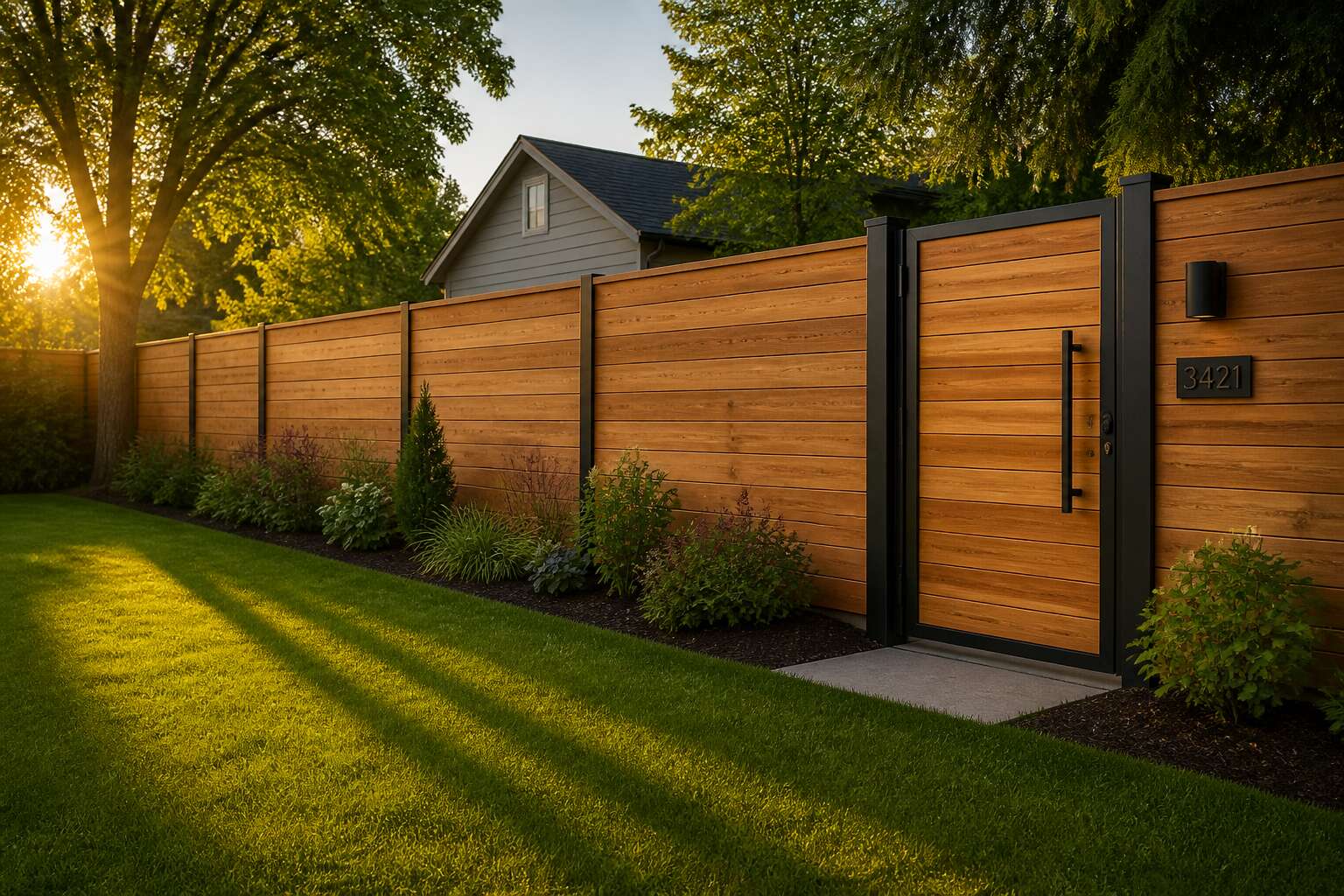
When you search for privacy fences near me, many contractors push wrought iron. It looks grand, but it rusts where the coating chips. Aluminum offers a lighter alternative. I have seen horizontal slat panels block sightlines while letting wind pass through, reducing the sail effect that tears down a fence during one August storm.
- Aluminum weighs less than steel, making installation faster
- Powder coating resists the Karoo sun without fading
- Anti-corrosion fasteners prevent rust stains
This material suits properties where the ground shifts, because it flexes without snapping. For anyone comparing privacy fences near me, metal deserves a serious look.
Composite Materials
Composite materials combine wood flour with recycled plastic polymers, or co-extrude a plastic shell over a structural core. The result looks like timber but behaves like vinyl. For homeowners searching privacy fences near me, composite panels offer a compromise that requires less deliberation than either pure option.
The Cape’s weather affects fences unevenly. Inland, the UV index bleaches colour out of anything organic. At the coast, humidity finds every seam. Composite boards resist both, though they gain heat in direct sun. Stand next to a dark composite panel in a Beaufort West afternoon and you will feel the difference. The boards expand and contract with temperature shifts, so installers must leave gaps at the ends. Most forget this. I have seen a tidy composite fence warp within one summer because the rails ran tight to the posts.
- Composite boards never splinter, which matters if children play near the boundary
- They cut with standard woodworking tools, unlike steel
- Termites ignore them completely
- Repair sections match the original, since the colour runs through the material
Weight works against composites. A single 2.4 metre board weighs roughly double its wooden equivalent, so transport costs climb. On a sloped Constantia property, hauling those boards up the terraces will test your contractor. The hardware matters too. Composites move more than wood, so screws need larger heads and pre-drilled holes. A contractor who quotes you like a timber fence is quoting you wrong. Searching privacy fences near me and finding a crew that specialises in composite installation is worth the extra effort.
When comparing privacy fences near me, composite sits between vinyl and wood on lifespan projections. It lasts longer than pine, shorter than aluminium. The environmental argument cuts both ways: recycled plastic diverts waste, but the binding resins complicate recycling at end of life. If you want the look of wood with less maintenance, composite delivers.
Bamboo and Eco-Friendly Alternatives
Climate decides more than colour. In the Cape, coastal salt and inland UV punish materials differently. Bamboo handles humidity well, but the Highveld sun dries it brittle without proper sealing. When you search privacy fences near me, ask how a material performs in your region, not just in the country.
Bamboo grows fast, making it a renewable choice. It resists insects naturally and carries a warm grain. The trade-off is lifespan. Treated bamboo lasts a decade or two, whereas steel or vinyl outlast it. For eco-conscious homeowners, the shorter life may still win.
- Recycled plastic lumber, which never rots
- Living hedges, such as white stinkwood or wild olive
- Salvaged timber from old buildings
Each option suits a different climate. Recycled plastic tolerates coastal air. A hedge needs water but shades the boundary. Salvaged timber, once treated, handles inland dryness well.
Evaluating Local Fence Contractors
Qualifications and Licensing Requirements
Almost a third of fence projects end in disputes between homeowners and contractors. The cause is rarely poor materials. It is usually a failure to verify who you hired before a single post sits in the ground. The search for privacy fences near me often leads to the cheapest quote. That is a mistake. Your fence is a boundary marker, a security feature, and a long term investment.
My advice is to dig into the paperwork before you dig any holes. A qualified contractor should supply a valid registration number from the NHBRC for new home builds. For general fencing work, ask for their CIDB grading. This proves they handle projects of a certain size. Trade test certificates hold weight too. They show a worker has passed a practical exam. Don’t accept a photocopy. Call the issuing body to confirm it is genuine.
Then comes the licensing. Many homeowners assume a business license covers everything. It does not. You need to confirm the contractor holds public liability insurance. This protects you if a worker damages a neighbour’s property. It also covers you if someone gets injured on your land. Ask to see their certificate and call the insurer if needed. This takes ten minutes and could save you a fortune.
– Check for a valid tax clearance certificate.
– Verify their physical address, not just a cellphone number.
– Request references from jobs completed in the last six months.
– Confirm they have the necessary municipal permits for your area.
The best contractors won’t hesitate to share these documents. In fact, they will volunteer them. If you get pushback or vague answers, walk away. There will be another option among the listings for privacy fences near me. A fence is only as strong as the hands that build it. Making sure those hands belong to a licensed professional is the entire game. Take your time. The right credentials will give you a fence that lasts decades, not a headache that lasts forever.
Reading Reviews and Requesting References
The best reviews for privacy fences near me rarely live on a contractor’s own website. They live in local community forums and neighbourhood WhatsApp groups. When you search for privacy fences near me, read the comments with a critical eye. A single complaint matters less than a pattern. Look for repeated mentions of workmanship, materials and site cleanliness.
Ask for references from the last six months. Then call them. Better yet, go and look at the fence in person. A reference who hesitates or makes excuses tells you everything you need to know.
- Were the crew punctual and tidy?
- Did the project finish on budget?
- Would you hire them again?
Cross-check online ratings against those conversations. If feedback is consistent, you have found a contractor worth your time.
Comparing Quotes: What to Look For
Comparing quotes for privacy fences near me is where the real entertainment begins. The cheapest option usually means the contractor plans to use leftover materials and wishful thinking. A proper quote itemises materials, labour, and disposal costs. It specifies post hole depth, concrete mix, and timber treatment. A quote that says “standard privacy fence” without detail is a red flag.
Watch for vague line items like “miscellaneous” or “contingency.” These are how cost overruns creep in. Ask each contractor to walk you through their numbers. The one who can explain every line item without hesitation knows their business. The others are hoping you will not ask.
Warranty and Post-Installation Service
A warranty is where good contractors separate themselves from the opportunists. Ask what happens after the last gate swings shut! Will they return for a loose latch or a warped rail six months later?
Some offer a one year workmanship warranty. Others give five. The difference tells you how much they trust their own crews. When searching for privacy fences near me, I always request the warranty document in writing, not a verbal promise.
- Does the warranty cover materials or labour only?
- Who pays for the callout fee?
- Is there a response time guarantee?
The best local fence contractors schedule a post installation inspection. They fix minor movement after the ground settles. That service is worth more than a discount.
Timeline and Project Management
Three weeks. That is the difference between a crew that pours concrete on Monday and one that waits for a rainy forecast to clear. When I search for privacy fences near me, I now ask for a written schedule before signing anything.
A reliable contractor maps every phase, from digging post holes to hanging gates. They account for soil conditions in Gauteng or coastal moisture in KwaZulu-Natal. Ask for their project plan:
- When does excavation start and finish?
- Who manages material delivery and storage?
- How is weather handled without stalling the job?
Progress updates matter more than promises. The best teams send photos or brief call notes every few days. That transparency turns a simple fence build into a predictable process, which beats a cheap quote any day.
Cost Factors and Budgeting for Your Privacy Fence
Material Cost Breakdown
Two quotes for the same boundary can differ by half, and the reason rarely involves the material. Homeowners searching for privacy fences near me discover the true cost drivers: ground conditions, access, and old fence removal. A level stand with open gates costs far less than a sloped property surrounded by garden beds.
This is why itemised quotes matter. Look for line items such as:
– Concrete footings and post holes
– Disposal of existing fencing
– Machinery hire for awkward terrain
– Additional height for boundary walls over 1.8 metres
These variables move the price per linear metre by up to 30 percent. The cheapest quote often excludes site preparation, so ask directly what the estimate does not cover before signing. Soil type also plays a role; sandy ground demands deeper post holes, which raises the final bill.
Labor and Installation Fees
The true weight of any quote for privacy fences near me falls on labour and installation fees. A contractor might charge a fixed rate per metre, yet that number can hide essential steps like digging post holes by hand or hauling materials across a sloped yard. I have watched two neighbours pay almost the same for timber, then receive final bills that differed by thirty percent. The labour line item tells the real story. Here is what to inspect closely:
- Time based charges when the ground footage proves deceptive.
- Fees for setting posts in concrete, which are always separate.
- Surcharges for working near existing structures or garden beds.
Budget for these before you approve anything. A cheap hourly rate means little if the crew moves slowly, and installation fees often exclude cleanup. Ask for the number of person hours expected and how overtime is handled. That single conversation can save you from a costly surprise.
Permit and Inspection Costs
Few homeowners budget for the permit, yet the inspection can stall a project for weeks. In South Africa, municipal fees for privacy fences near me range from R150 to R800, depending on the suburb. The inspection itself usually costs extra if the first visit fails. A fence that sits a few centimetres over the line gets flagged, then you pay for a second appointment.
Check what the municipality covers. Some require separate fees for the application and the final sign-off. Others bundle them. Ask for a breakdown in writing.
- Post hole depth and concrete mix
- Height from natural ground level
- Distance from the boundary line
- Gate clearance and swing direction
Those four points decide pass or fail. Paying for a re-inspection eats your budget, so prepare before calling.
Long-Term Maintenance Expenses
Privacy fences near me bring ongoing costs that many homeowners overlook. Wood rots, vinyl weakens, and metal oxidises, each requiring financial attention after the initial build.
Budget for the slow decay. Every two years, seal the timber. Every year, wash the panels and check the posts. A gate that drags on the soil will warp the frame eventually.
- Replacing rusted screws and nails
- Staining or painting affected sections
- Adjusting hinges after the ground shifts
These expenses feel small individually but compound quickly. Neglect leads to structural failure, and a collapsed barrier costs far more than routine care. Allocate a percentage of the build cost annually, because maintenance is not optional. It is the price of keeping your privacy intact.
Financing Options
Searching for privacy fences near me reveals a single figure, yet borrowed money changes everything behind it. Interest accumulates silently on construction loans, and I have watched it turn a modest quote into a crippling debt. Home equity rates appear modest, but they place the family home as collateral for a barrier that will eventually age and weather.
Some contractors offer payment plans, though the fine print carries fees that swell the total.
- Cash settlements sometimes unlock a five percent discount
- Credit cards simplify the purchase while accruing interest above twenty percent
- Personal loans fix monthly sums, with origination costs rising on the front end
The fence stands in the ground while interest continues to grow. The final bill surpasses any quoted figure, and privacy fences near me carry that hidden cost long after the last panel is hung.
Design and Placement Considerations
Optimal Height and Spacing
When a fence fails to provide seclusion, the culprit is usually design, not materials. For privacy fences near me, the height and board spacing matter more than panel colour. A standard 1.8 metre height works for most suburban plots in South Africa, but sloped properties need stepped sections. Spacing is equally crucial. A 40 millimetre gap between boards will expose your private backyard.
Before digging, study the wind. In coastal towns, a solid fence without gaps creates wind load, so leave a small bottom gap for airflow. Consider these details when marking post positions:
- Post spacing of 2.4 metres keeps panels stable.
- Set posts 600 millimetres deep in concrete.
- Align the top rail with the ground slope.
Test the sightlines from your windows and the neighbour’s upstairs rooms. A 1.8 metre height fits most cases, while two metres suits pool areas. The wrong height leaves your privacy fences near me exposed.
Gate Placement and Accessibility
Of all the components involved in privacy fences near me, the gate is the only moving part. It swings, creaks, and jams when you need it most. Place the main gate where the ground stays dry, not in a marshy track that softens the posts. A single 1.2 metre gate covers foot traffic, while a double gate wide enough for a boat trailer adds future flexibility.
Consider what will move through that opening: refuse bins, a wheelbarrow, a fold-out ladder. Each has a narrow profile, but the turn radius matters. Hinges belong on the inside with a thumb latch that opens from both sides, so you never fumble with keys while your arms are full.
A misplaced gate ruins the seclusion provided by privacy fences near me. If you must walk the full fence line to reach the house, the design fails. Measure the widest object you plan to move, add 300 millimetres of clearance, and specify that gate width when ordering materials.
Landscaping and Visual Appeal
A fence that ignores its surrounding terrain looks abrupt. The hard lines of a privacy fence near me need softening through deliberate landscaping.
Plant a mixed hedge along the base to break the vertical plane. Use indigenous grasses to blend the fence into the veld. Visual appeal depends on proportion. A tall fence on a small plot feels oppressive. A low fence with layered planting creates depth. Two factors determine success:
- Plant species chosen for the local rainfall pattern.
- Setback distance that protects the fence posts from root pressure.
Colour and texture change how the fence reads from the street. Dark staining recedes, pale finishes draw the eye. The goal is a seamless transition between built and natural.
Noise Reduction and Windbreaks
Placing a fence for noise reduction demands more than height. Sound bends over solid barriers, so a fence with a slight tilt toward the noise source deflects more decibels. In South African suburbs, morning traffic and neighbour chatter follow predictable patterns. Walk your boundary at different hours to identify the exact origin of the sound before you dig any post holes.
Windbreaks need permeability. A solid privacy fence near me can create harsh eddies on the leeward side, scattering lightweight garden furniture and stressing young trees. A palisade or spaced slat design slows the wind while allowing it through. If you are planting a windbreak, remember that the fence and the trees rely on the same ground. Consider these placement factors:
- Set windbreaks at a distance of twice their height from the fence to avoid root damage and pressure.
- Orient the fence perpendicular to the prevailing wind for maximum shelter.
The result is a quieter, calmer yard with uncompromised airflow.



0 Comments