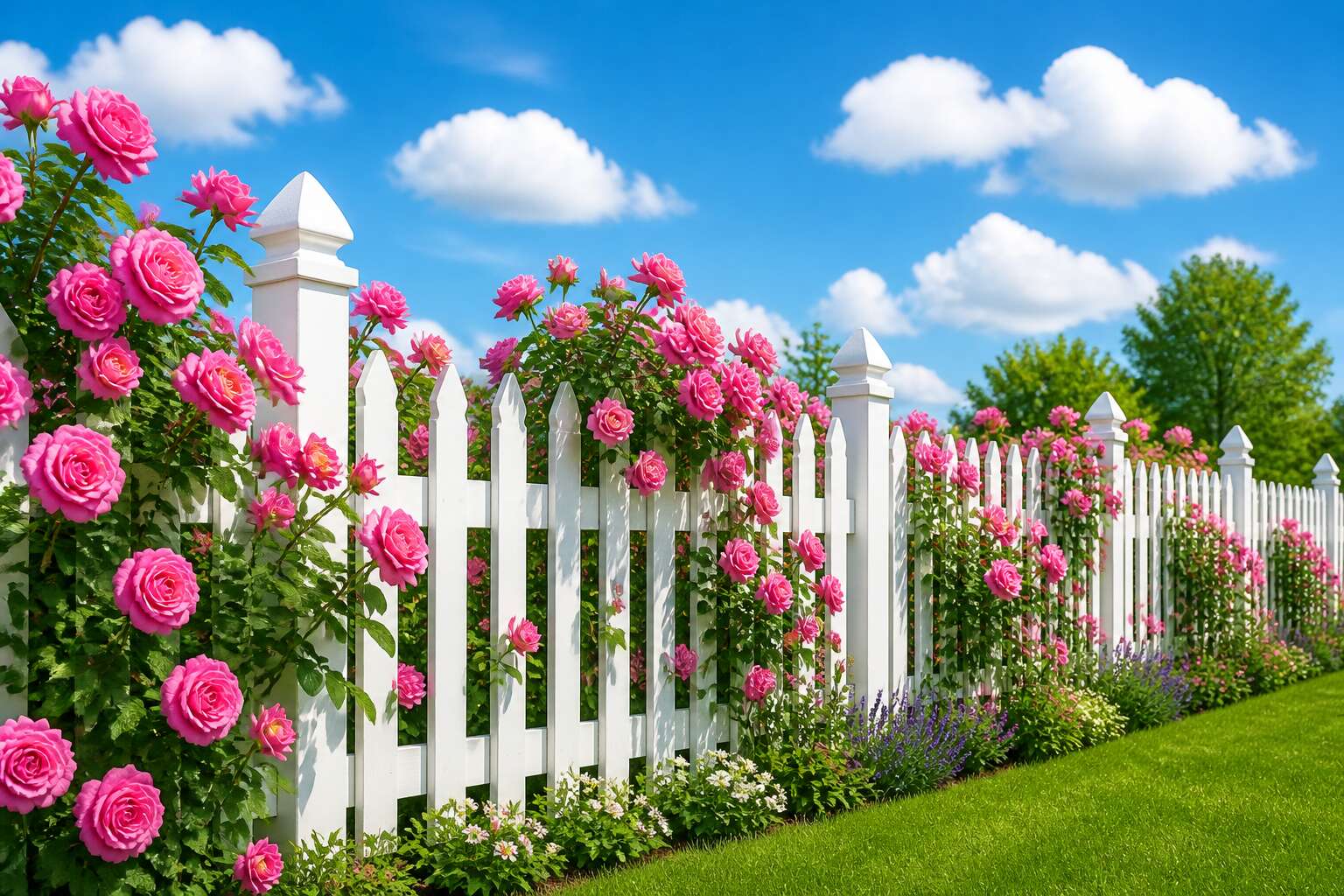
The Timeless Allure of Classic White Fencing
Historical Roots and Cultural Symbolism
There is a distinct clarity to the visual rhythm of a sun-bleached fence line, a cadence that has marked boundaries for centuries. The image of the American suburban dream is often cited, yet the origins of picket fences white are far more practical and ancient. They began in colonial America as a means of defining livestock and garden plots, constructed from split timber that was pointed at the top. The whitewash, often made from lime, served a dual purpose: it preserved the wood and created a luminous, reflective surface that was visible at night. This simple act of protection evolved into a language of its own, a silent communication of order and pride.
As the decades passed, the symbolism deepened beyond mere utility. In the 19th century, the fence became a domestic emblem, a physical representation of a settled life and the virtues of home ownership. This cultural weight was not just an American phenomenon; in the Cape Colony, similar notions of boundary and propriety were taking shape, though with their own local materials and social dynamics. The white fence became a universal marker, but its meaning was always adapted to its environment.
– It signified a claim to land and a commitment to its upkeep.
– It represented a visible line between the public thoroughfare and the private sanctuary.
– It acted as a status symbol, indicating a household had the resources to maintain a clean, precise perimeter.
– It served as a simple, effective tool for containing children and small animals within a safe zone.
The aesthetic appeal lies in this very rigidity, a stark geometry that contrasts beautifully with the softness of a green lawn or a wild garden. When you see a row of picket fences white stretching down a quiet street in a Johannesburg suburb or a seaside town in the Western Cape, you are witnessing a direct line to a bygone era of craftsmanship. Unlike a solid brick wall, which can feel imposing and secretive, the picket fence is a permeable barrier. It offers a sense of enclosure while maintaining a view of the street, a gesture of neighborliness rather than seclusion. This delicate balance of security and openness is perhaps the most enduring aspect of its charm.
How a Bright Fence Elevates Property Value
A bright fence does something to the light. It catches the sun and throws it back at the lawn, at the walls of the house, at the street itself. This reflection changes how a property is perceived before a single word is spoken. The eye reads that luminous perimeter as a sign of order. It is a primal cue, one that suggests the occupant pays attention to detail. Savvy buyers in South Africa, from Pretoria to Paarl, recognise this visual shorthand. They see the crisp geometry of picket fences white and immediately calculate a lower maintenance burden and a higher standard of living.
This psychological effect has a tangible impact on valuation. A property framed by a well-kept fence presents a complete picture. It announces that the structure within is as cared for as the boundary outside. Consider the attributes that contribute to this perception of value:
– A reduced need for immediate capital expenditure.
– An enhanced curb appeal that differentiates the listing.
– A defined sense of place that feels established, not transient.
The brilliance of this addition lies in its restraint. A stark brick wall can feel defensive, almost hostile. The picket fence white stands open to the world, inviting scrutiny. That confidence is an asset. It suggests a home with nothing to hide. In markets where turnover is quick and competition is fierce, this subtle signal can be the factor that tips a decision. The fence does not merely mark a border. It creates a narrative of longevity and pride that speaks directly to a buyer’s desire for permanence. And that story, once told, is hard to ignore.
Psychological Benefits of a Clean, Crisp Aesthetic
There is a quiet permanence to a white picket fence that steel and concrete cannot counterfeit. It signals a deliberate choice, an investment in calm. In a country where security is often visualised as barriers and height, the psychological reprieve offered by an open, clean boundary is profound. This aesthetic does not shout; it soothes. The crisp lines and bright surfaces create a visual rhythm that reduces cognitive noise, making a property feel less like a fortress and more like a sanctuary.
This effect translates into a daily sense of control. A clean aesthetic is a silent promise of order. When you look at a neighbourhood of pristine picket fences white, you see a collective commitment to standards. That uniformity is not dull; it is reassuring. I have seen how this simple geometry can alter a mood, softening the hard edges of a long day before you even reach the front door.
– The brain registers a sharp contrast as safety.
– A clear boundary defines personal space without aggression.
– The colour white itself is a blank slate, allowing the garden and home to take centre stage.
The result is a subtle but constant validation of your environment. You are not just maintaining a fence; you are curating a feeling. That feeling, once established, becomes part of the home’s daily narrative, a quiet backdrop to the lives lived within it.
Complementing Architectural Styles from Colonial to Modern
Few design elements remain suitable across centuries as picket fences white. From Cape Dutch gables to minimalist contemporary facades, these fences adjust their spacing to the proportions of the structure behind them. I have seen a narrow-spaced picket match the formal symmetry of a Victorian stoep, while a wider set posts complements the clean lines of a modern glass box.
The value lies in proportion and restraint. A traditional home gains a familiar grace, a modern one gains a softer boundary. This versatility explains why architects still specify picket fences white for new builds and restorations alike.
- Colonial homes rely on the fence to frame their symmetry.
- Modern homes use the same fence to add visual variety.
The result is a stylistic compatibility between eras, a continuity that keeps the fence relevant across generations.
Selecting the Ideal Material for a Pristine White Finish
Cedar: Natural Beauty and Staining Challenges
Cedar is a beloved choice for many homeowners, but its natural beauty is a double-edged sword. With a lifespan that can stretch to four decades when properly maintained, it offers incredible value. The deep, warm grain is rich and inviting, yet it fights against the notion of a stark white palette. The tannins in cedar can bleed through the paint, leaving ugly brown streaks that mar that pristine image. It is not a surface that forgives shortcuts, and the preparation is more demanding than many anticipate.
To achieve that flawless, bright finish, a meticulous approach is required. The wood must be clean, dry, and free from any previous coatings before you even think about applying color. A high-quality, stain-blocking primer is non-negotiable, acting as a barrier between the wood and the topcoat. The application process is also time-sensitive; painting over damp timber traps moisture and guarantees peeling down the line. Regular maintenance becomes a ritual, a careful watch for any sign of wear along the grain.
– The initial sanding and cleaning process can be labor-intensive.
– You must apply a dedicated primer to seal the porous surface.
– The topcoat will need refreshing every few years to maintain its brilliance.
This inherent upkeep is the primary challenge, turning a simple fence into a living project. The visual payoff of a crisp, white boundary is immense, but it asks for a commitment to those repeated coats of paint. A cedar fence is a relationship that requires constant attention to keep its bright promise, a task many find rewarding despite the demands. Each repainting session breathes new life into the wood, ensuring the picket fences white remain a striking feature for years to come.
Vinyl: Low Maintenance and Fade Resistance
Vinyl presents a compelling argument for those seeking the iconic aesthetic without the constant burden of upkeep. In fact, a recent industry survey indicated that over 60% of homeowners who replace their timber fencing choose vinyl for its longevity and ease of care. This material does not require the annual inspection or the ritual of repainting that wood demands. It is a decision made in the present to be free from the persistent worry about peeling paint or weather damage.
This manufactured product is crafted to mimic the crispness of a fresh coat of paint, yet it holds that color within its composition. The core structure is resistant to moisture and pests, meaning it will not rot, warp, or become a haven for termites. For the homeowner, the true advantage is the reclamation of time and mental energy. The fence becomes a serene backdrop rather than a recurring project, a silent testament to a decision that favored permanence and ease.
The resistance to fading is a primary consideration under the harsh South African sun. The UV inhibitors in high-grade vinyl prevent the bright white from dulling into a chalky grey over the years. The maintenance routine is reduced to an occasional rinse with a garden hose to remove dust and grime. This simplicity ensures that the visual appeal of picket fences white is maintained with a fraction of the effort required by other materials. For the busy professional or the family who would rather spend weekends at leisure, this material offers a path to the perfect aesthetic without the corresponding sacrifices. The promise of the pristine white fence is finally reconciled with the reality of a busy life.
Aluminum: Durability with a Painted Look
Aluminum sidesteps the compromises of wood and vinyl. The painted look comes from a powder coating applied under heat, which bonds to the metal. This creates a surface that resists chipping, peeling, and the corrosive salt air found along the South African coastline.
This material offers a unique combination. It is lighter than steel yet stronger than timber. It will not swell in the morning mist or crack in the Karoo sun. For homeowners chasing the exact aesthetic of picket fences white, aluminum provides a crisp, opaque finish that survives harsh weather without losing its form.
Consider the key advantages:
– No annual repainting
– Resistance to rust and salt spray
– A consistent, factory-applied white finish
This is the pragmatic side of the picket fences white tradition. The fence looks painted because it literally is, just protected in a way that field-applied paint never could be. That is a satisfying thought for a homeowner who values permanence!
Composite Materials: The Eco-Friendly Alternative
Wood plastic composite, or WPC, blends reclaimed timber fibre with recycled plastic. In South Africa, this material answers two questions: what to do with plastic waste, and how to build a lasting white fence. The result is a board that mimics the grain of painted wood without peeling or warping.
I have seen composite fences stand through Western Cape winters while wooden neighbours sagged. The white pigment runs through the entire board, so a scratch does not expose a different colour beneath.
Consider the practical benefits:
- The boards resist termites and fungal decay
- They require only occasional washing with soapy water
- They remain cool to the touch under the Highveld sun
For homeowners who want picket fences white without the yearly upkeep, composite offers a way to keep picket fences white for decades without repainting! The fence ages evenly, and that is a good thing to live with.
Comparing Long-Term Costs Across Materials
Selecting the ideal material for a pristine white finish requires looking beyond the first coat of paint. Some materials demand constant attention to keep their colour true. Others, like prefinished steel or advanced polymers, hold their shade with less fuss. I have learned that the true cost of picket fences white is measured in maintenance hours, not just rand spent upfront.
Comparing long-term costs across materials reveals surprising winners. Cheaper timber may seem economical until you factor in sanding, priming, and repainting every few years. Meanwhile, a higher initial investment in a durable material often pays off within a decade.
- Frequency of repainting or recoating
- Susceptibility to rust, rot, or UV damage
- Cleaning requirements and labour intensity
A fence that looks pristine after ten years without intervention is cheaper in the long run. That is the mathematics that matters for any homeowner chasing picket fences white.
The Ultimate Guide to Painting and Staining Light-Toned Pickets
Essential Surface Preparation Steps for Perfect Adhesion
Most paint failures on timber pickets trace back to lazy preparation. A glossy surface, damp wood, or old chalky paint will reject your fresh coating within months. For picket fences white to look sharp, the substrate must be clean, dry, and slightly rough.
Follow this order for perfect adhesion:
1. Scrape away loose paint and flaking residue.
2. Wash with sugar soap and a stiff brush.
3. Rinse and let the wood dry for 48 hours.
4. Sand with 120-grit paper to open the grain.
5. Dust off and apply primer the same day.
Light-toned pickets reveal every missed spot. Fill nail holes and cracks with exterior putty before priming. Check moisture content with a meter; anything above 15 percent means you wait. When prepped properly, your picket fences white paint or stain bonds firmly and stays that way through Highveld sun or Cape storms.
Choosing Between Oil-Based and Latex Paints
The choice between oil and latex can feel like a coin toss, but it makes a real difference under the South African sun. I have seen oil-based paints hold their colour on timber where latex failed within two seasons, especially on north-facing boundaries.
Oil-based enamel creates a harder shell. It resists the daily knocks from garden tools and the scuffs from dogs pressing against the palings. Latex, or acrylic, offers flexibility. That means it handles the constant swelling and shrinking of Cape pine as humidity swings between morning fog and afternoon heat.
Here is the honest trade-off:
– Oil-based paint: High gloss, tough finish, but needs turpentine for cleanup.
– Latex paint: Low odour, fast drying, and washes off with water.
For picket fences white, both systems work, but the prep and primer dictate the lifespan. If you choose latex, use a 100 percent acrylic primer first. If you choose oil, let each coat cure fully before the next, otherwise the topcoat will wrinkle like old skin. The white pigment in oil can yellow over time, so look for a non-yellowing alkyd formula if that finish matters to you.
I cannot stress enough how the local wind shapes this decision. A dusty Karoo breeze will pit a soft latex finish quickly, while a coastal salt spray attacks the film integrity of oil. The right answer depends on your specific patch of earth, your exposure, and how much you enjoy repainting every few years.
Applying Primer: The Key to Lurid-Free Brightness
The primer is the seal between weather and wood. A raw pine paling absorbs moisture quickly, and tannins surface beneath the paint. For picket fences white, this is the moment of truth.
I have watched homeowners skip this step and wonder why their brightness turned lurid within months. The primer seals the pores, stops the tannin bleed, and gives the topcoat something to grip. Your choice of primer must match the timber’s character.
Here is what I look for in a primer for light pickets:
- A stain-blocking acrylic primer for timber with high tannin content
- A bonding primer for previously painted surfaces that have turned chalky
- A shellac-based sealer for knots that weep resin
The South African sun is unforgiving. A proper primer keeps picket fences white looking crisp through the seasons, while a skipped one leaves a patchy, washed-out result.
Spraying vs. Brushing: Achieving a Flawless, Even Coat
A worn brush or a stiff spray gun. That is the fork in the road for most homeowners. The truth is, the application method dictates the final texture more than the paint itself. For picket fences white, a flawless finish requires a decision based on your wood’s condition and your own patience.
Spraying covers ground fast. It gets into the grain and the joints between palings with ease. The result is a uniform, factory-like coat that is difficult to match by hand. However, a sprayer demands masking. Overspray drifts onto your lawn, your paving, and your neighbour’s car if you are not careful. It also requires thinning the paint, which means you often need two or three coats to build the proper film thickness.
Brushing is slower, but it forces the paint deep into the timber’s pores. This mechanical action is crucial for adhesion on rough-sawn wood. It gives you control over drips, and you can see the coverage as you go. For a newly installed fence, I generally recommend a brush for the first coat to seal the wood, then an optional spray for the topcoat.
Consider the trade-offs:
1. Brush: Superior penetration, no overspray, but time-consuming for large perimeters.
2. Spray: Rapid coverage, smooth finish, but requires skill and meticulous prep.
The best approach often combines both. A brush for the edges and a spray for the flat picket faces. This hybrid method ensures that picket fences white retain a crisp, even appearance without the tell-tale signs of sloppy handwork under the harsh South African sun.
Avoiding Common Pitfalls Like Brush Marks and Yellowing
White paint exposes every flaw. Brush marks that vanish in a deep green reappear in stark relief on a sunlit picket. The culprit is often heavy-handed brushing, a habit that feels productive but leaves ridges that catch the afternoon light.
Yellowing presents a different kind of embarrassment. It creeps in around knots and nail heads, or emerges months later when a cheap gloss turns the colour of weak tea. Timber tannins and certain alkyd resins are the usual offenders, and neither cares about appearances.
Picket fences white demand a thinner application than darker shades. A generous hand with the brush seems efficient, yet it creates texture that no amount of sanding will fully erase. The same principle applies to the timber beneath.
- Brush marks that harden into ridges under the African sun.
- Yellowing from alkyd resins or timber tannins seeping through.
- Uneven sheen where a second coat was applied too late.
I have learned to respect the paint’s natural leveling time and to choose a formulation that stays neutral as it ages. Picket fences white reward that patience.
Design Variations to Personalize Your Sunlit Yard Border
Exploring Silhouettes: Scalloped, Gothic, and Dog-Eared Tops
Consider how the very top of your fence, its silhouette against the Highveld sun, sets the rhythm for your entire property. The scalloped edge softens the boundary with a gentle curve that echoes rolling hills and quiet suburbia. This design offers a friendlier face to passersby. Its undulating line can make a narrow erf feel wider, drawing the eye along the horizontal plane.
For a sharper character, the Gothic point carries a vertical aspiration. This steeper pitch injects a measure of formality while retaining a sense of historical charm. Homeowners often pair this profile with Cape Dutch architecture, where the angularity complements the gables. It creates a firmer, more protective statement.
When you need a middle ground, consider the dog-eared top, a subtle variation that keeps the classic line without the severity of a full point. The corners are clipped, lending a relaxed, almost rustic appeal that suits farm-style homes.
– The scalloped top softens the skyline.
– The Gothic point asserts a vertical line.
– The dog-eared style offers a laid-back trim.
The choice here impacts more than just aesthetics. The silhouette defines how sunlight falls across your lawn, casting intricate shadow plays. A dog-eared fence, for instance, breaks up the glare of a harsh afternoon in Gauteng, providing dappled relief for border plants. This functional aspect of design is often overlooked. Ultimately, the shape you select for your picket fences white should mirror the energy of your home, creating a cohesive, personal story from the street to the stoep.
Height Adjustments for Privacy and Visual Balance
According to recent property surveys, the average South African boundary stands at a modest 1.2 meters, a height that offers neighbourly greetings but little in the way of seclusion. The pursuit of privacy, however, need not sacrifice the charm of your picket fences white. Consider the vertical dimension as a tool for crafting intimacy, not just enclosure.
A standard height allows the garden to breathe and invites conversation. For those seeking a more sheltered haven, extending the pickets to 1.8 meters transforms the yard into a private enclave. This adjustement often suits corner stands or properties on busier streets.
– Assess the sightlines from your windows and your neighbour’s.
– Consider the sun’s path; a taller fence may cast unwanted shade on a vegetable patch.
– Review municipal by-laws in your area for height restrictions.
The key is balance. A fence that towers over the property can feel imposing, while one too low offers no respite. The visual weight of the structure must complement your home’s scale. When you adjust the height of your picket fences white, you are essentially sculpting the air around your dwelling, creating a dynamic that is both protective and welcoming. The rhythm of the pickets, therefore, should be tuned to the specific song of your sunlit yard.
Integrating Arbors and Gates for Curb Appeal
Your picket fences white can frame an entrance while still marking a boundary. In Cape Town’s southern suburbs, I have watched homeowners pair a gabled arbor with climbing roses to create a threshold that draws the eye. The gate holds the visual focus; the pickets continue the line.
Consider these additions:
- A wooden arbor over the gate gives climbers a sturdy structure.
- A curved gate, rather than a straight one, adds a gentle motion.
- Post caps in a contrasting tone, like dark bronze or charcoal, anchor the design.
The hardware matters. Black hinges and latches against picket fences white create a crisp focal point. In Johannesburg, where stands sit behind high walls, a well-proportioned gate with an arbor signals a welcoming shift. The arbor’s scale should match the gate’s width. The result is a border that feels intentional.
Pairing with Landscaping and Flower Beds for Contrast
The clean geometry of a classic border invites a counterpoint. I have found that pairing picket fences white with a lush, layered bed creates a visual dialogue. The fence provides structure, while the planting softens its edges. For this contrast, consider using dark foliage like burgundy heuchera or deep green boxwood spheres. These hues anchor the bright vertical lines. Flowering perennials, such as lavender or white salvia, add movement and attract pollinators. The result is a sunlit boundary that feels curated, not stark.
The relationship between the fence and the garden bed defines the yard’s energy. Give the bed a generous width to allow plants to spill forward. This depth adds dimension and prevents the line from feeling flat. The colors you choose against picket fences white matter. Bold clarets and deep purples are theatrical; soft pastels are quiet.
– Plant tall grasses behind the fence for a hazy backdrop.
– Use low-growing annuals in the front to conceal the concrete edge.
This layered approach creates a gentle transition. Importantly, the fence becomes the frame, not the entire picture. A well-planned border draws the eye along the property line and into the landscape. It transforms the perimeter from a simple marker into a considered element of the garden’s overall design. The white paint acts as a constant, unifying the seasonal changes in the flower beds with a steady, bright rhythm.
Innovative Decorative Post Caps and Finials
The top of a fence rarely gets attention. It should. Decorative post caps and finials transform a plain run of picket fences white into something deliberate. We install standard flat caps by default. But a turned wooden ball cap or a cast aluminum spear point shifts the entire profile. A copper finial will weather to a soft green over the years. That natural change gives the boundary a living quality.
Match the cap to the house. A squared fluted cap suits a Georgian facade. A slim finial works with a modern gate. The size matters too. Oversized caps overpower a narrow picket. Keep proportions modest. Choose from these common styles:
- Ball caps for a classic look.
- Spear tips for a defensive feel.
- Custom shapes for a signature.
Sunlight catches the edges at dusk. The small details hold the eye.
Installation Strategies and Prolonging the Brilliance of Your Enclosure
DIY Installation vs. Professional Expertise: A Detailed Trade-Off
Few sights carry the quiet triumph of a properly aligned white picket fence. For picket fences white to retain that brilliance, installation must be sound. The difference between a fence that gleams for years and one that dulls within a season often comes down to post-setting and rail spacing. A DIY approach saves money but demands precision. Professional expertise brings engineered foundations and leveling that resist frost heave and shifting soils. For South African gardens, where sun and wind test every surface, the choice affects how long that crisp white remains.
Prolonging that brilliance depends on habits born from experience. Sealing gaps and choosing galvanized fasteners spare you from early rust. Routine cleaning removes algae and dust that dull the paint. Touch-up coats on chipped edges keep moisture from creeping under the film. A hose, a soft brush, and an afternoon keep picket fences white glowing for years.
Proper Post Setting Techniques for a Stable Foundation
The romance of the white picket fence is a lie, if the foundation is weak. The earth in South Africa shifts, heaves, and swells with surprising violence. A post set too shallow is a tooth loose in the gum. It will rot, it will tilt, and it will drag the proudest slats down with it into the dust.
Proper post setting techniques for a stable foundation begin below the frost line, a depth of at least 600 millimetres for our climate. Dig a hole three times the width of the post. Pour 150 millimetres of crushed stone for drainage, as trapped moisture is the first enemy. The post must then be braced plumb and true while the concrete cures. This is not a task for a hurried afternoon. The curing process takes days, and patience here determines whether the crisp lines remain.
Before the concrete sets, consider the drainage paths for water runoff around the base. A concrete collar that slopes away from the post prevents the pooling that softens wood. Galvanized stirrups or brackets anchor the post above the ground, breaking the capillary action that draws moisture upward. The angle of the sun across the Highveld is unforgiving, and it will expose any lean or settle.
One must also heed the silent threat of termites which find untreated softwood irresistible. The soil itself is a repository of fungal spores. Sealing the cut end of the post with a wood preservative before burial is non-negotiable.
For those seeking to prolong the brilliance of your enclosure, the battle is fought with small, consistent actions:
Wash the surfaces with a mild detergent and soft brush quarterly to remove the red dust that clings.
Inspect the paint film for microscopic cracks, especially where the rails meet the posts.
Reapply a coat of fresh paint to any exposed wood within the season, not later.
Keep vegetation trimmed away from the fence base to allow airflow.
The white pigment itself acts as a mirror, reflecting the harsh UV rays that would otherwise degrade the timber. But rust on a nail head is a stain that spreads. Use only hot-dipped galvanized or stainless steel fixings when repairing. A fence that is cared for in this manner will stand silent and straight for decades. The brilliance of picket fences white is not a gift, it is a discipline against the elements. It is the daily vigilance against the creeping decay that waits in the shadows of the garden.
Routine Cleaning Methods to Prevent Grime Accumulation
Installation strategies must account for the behaviour of the full panel, not just the individual posts. Once the concrete has cured, the rails are fixed to the posts with galvanized brackets. The slats are then spaced with a jig to ensure uniform gaps. Even a deviation of a few millimetres will become obvious along the length of the line, especially when the morning low sun throws long shadows across the yard. Use a string line to check the top edge of the slats and adjust before final fastening. This method prevents the subtle waves that plague poorly planned fences.
Routine cleaning methods to prevent grime accumulation begin with a simple schedule. The Highveld wind deposits a fine red dust that binds to the paint film. A quarterly wash with a soft brush and a solution of warm water and mild detergent will lift this layer before it embeds. Pay attention to the horizontal surfaces of the rails where moisture and grit settle.
– Spray the fence with water to loosen loose dirt.
– Scrub the slats and rails from top to bottom.
– Rinse thoroughly to prevent soap residue from dulling the white finish.
The result is a surface that keeps its reflective quality against the UV, delaying the film erosion that leads to repainting. The brilliance of picket fences white persists when the routine is consistent.
Quick Repair Solutions for Chips and Scratches
Installation strategies for picket fences white should consider the ease of future repairs. Countersink every fastener and fill the recess with exterior filler before the topcoat. This keeps moisture from the metal and stops rust streaks from staining the white surface. Likewise, leave a small expansion gap at each rail joint so the timber can move without cracking the paint film.
Quick repair solutions for chips and scratches require attention to the exposed edge. Sand the damaged spot with fine grit paper, then wipe with a tack cloth. Spot-prime the bare wood and feather in a matching topcoat.
- A pot of touch-up paint stored in a cool, dark place stays workable for months.
- A fine brush applies thin layers that blend into the surrounding film.
- A quick check after storms catches impact marks before they reach the wood.
A ten-minute repair now will preserve the brilliance of picket fences white through the Highveld autumn.
Seasonal Maintenance Calendars for Year-Round Whiteness
The fierce Highveld sun and sudden summer downpours present a unique challenge for any exterior finish. The true brilliance of a white fence relies not just on the paint, but on the smart systems you build from the first day. Consider water flow before you set a single post. A gravel bed at the base of each post encourages drainage, preventing the soil from holding moisture against the timber, which causes rot and paint failure.
Think about the interplay of surfaces. The gap between the fence and the ground is your first line of defense. It allows air to circulate and keeps splashing rainwater from accumulating. This airflow is as vital as the paint itself. For the fence body, a gentle shadow line from a small bevel on the top rail adds depth and helps shed water. These are the quiet decisions that dictate the lifespan of your colour.
Your maintenance rhythm should follow the seasons, not the calendar alone.
- Spring: Storms have passed. Hose down the fence to lift winter grime and check for damaged paint.
- Summer: Watch for sap bleeding from knots or heat-induced blistering. A touch-up paint job applied in the evening saves you from a full repaint later.
- Autumn: Trim back any encroaching foliage. Leaves held against the wood create damp pockets that dull the whiteness.
- Winter: Use a soft brush to clear clinging frost and dust, but avoid chemical washes that can strip the protective layer.
A pristine picket fences white installation demands that you see the whole picture. The weather in South Africa can be adversarial. A fence that stands proud in Johannesburg requires a different care strategy than one near the Cape coast, where salt air dictates a stricter washing schedule. This attentiveness is the small price you pay for a statement of permanence. The effort you invest in your routine prevents the costly drama of a full restoration, keeping your property’s facade as crisp as the day it was raised.



0 Comments