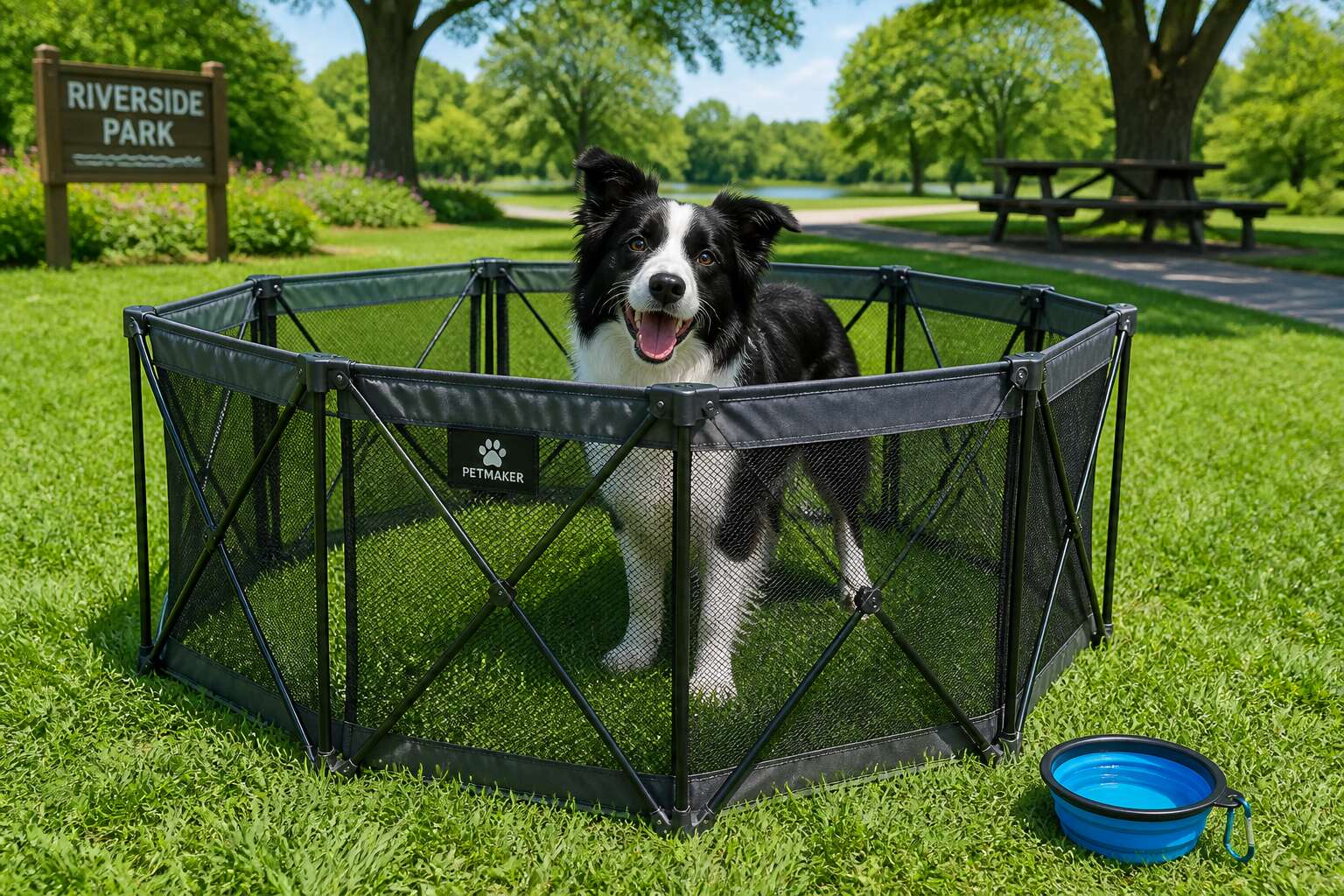
Key Benefits of Temporary Dog Fencing
Flexible Spaces for Active Puppies
Picture this: a boisterous puppy with boundless energy, a garden full of tempting plants, and a delivery person at the gate. Supervision is constant, yet chaos finds a way. The solution isn’t a permanent structure that alters your landscaping; it is a system that bends to your daily rhythm. A portable fence provides a secure parameter that moves with you, from the patio to the campsite, ensuring your young dog explores safely without constant correction.
This adaptability proves invaluable when your space is multifunctional. Perhaps you need to section off a drying area after a muddy walk or create a quiet zone during a braai with friends. The true strength lies in the instantaneous setup. You can reconfigure the layout in minutes, responding to the shifting needs of your household. This prevents the frustration of a static yard that fails to serve your puppy’s growing independence.
Consider the operational advantages beyond simple containment:
– Adjustable configurations for narrow passageways or wide open lawns
– Lightweight panels that are simple to transport for weekend getaways
– Ground stakes that secure the structure without permanent damage
– Visual barriers that reduce barking at passersby
For the active owner, this gear translates to more freedom. Instead of skipping a hike because the puppy isn’t fully trained, you pack the enclosure and establish a safe base camp. It manages the environment rather than fighting the dog’s natural curiosity. That means less stress on you and more positive reinforcement for them. Ultimately, this flexibility encourages more time outdoors, creating a well-adjusted canine companion while preserving the aesthetic of your home. You simply set the boundaries where they are needed most, and then fold them away when the sun sets.
Stress-Free Travel with Your Pet
Travel with a dog introduces a layer of unpredictability that can fray the calmest nerves. New environments trigger vigilance, and a lack of familiar boundaries often leads to restless pacing or escape attempts. A hotel balcony, a relative’s sprawling garden, or a coastal rental all present unknown risks. The solution resides in the luggage, not in the architecture. A portable fence for dogs transforms an alien space into a defined territory, providing the animal with a psychological anchor that reduces anxiety.
Routine is the bedrock of canine confidence. The sudden absence of physical parameters can feel like a loss of control for the animal. When you erect a temporary enclosure, you restore order. It signals that even though the surroundings are foreign, the rules remain the same. This allows the pet to relax its guard, and it allows you to actually enjoy the holiday instead of playing warden.
The practical benefits of this approach are substantial:
1. Eliminates the stress of finding pet-friendly accommodation with secure gardens.
2. Prevents the dog from investigating dangerous wildlife or toxic flora in unfamiliar regions.
3. Provides a hygienic barrier between your pet and high-traffic public grounds.
4. Facilitates a reliable sleeping arrangement that feels consistent for the animal.
For the South African traveller, the logistics of a road trip often involve stops at reserves or family farms where boundaries are unclear. Setting up a temporary perimeter within minutes means the dog is secured before it has a chance to chase a scent or wander toward a busy roadway. The owner’s peace of mind is not a luxury; it is a necessity. When the dog perceives safety, the human perceives freedom. This gear ultimately bridges the gap between the desire for adventure and the duty of guardianship, ensuring that every journey strengthens the bond rather than testing its limits.
Quick Setup for Backyard Playtime
A backyard should be a sanctuary, not a source of worry. A temporary fence turns a few square metres of lawn into a controlled arena where a dog can sprint, dig, and roll without flirting with disaster. Permanent structures demand planning and permits, but portable fences for dogs unfold in minutes and pack away when visitors arrive or the grass needs cutting.
The value of this speed becomes obvious during a typical afternoon:
- The sun moves, so you shift the fence to stay in the shade.
- A parcel delivery arrives, and the dog stays contained while you answer the door.
- Play gets rowdy, and the boundary keeps the chase inside the yard.
This is the quiet work of good fencing. Portable fences for dogs give the animal a clear line it does not cross, freeing you from the role of referee. When the session winds down, the whole setup collapses into a bag smaller than a camping chair.
Cost-Effective Alternatives to Permanent Fences
In South Africa, a permanent boundary wall can cost between R800 and R1,500 per linear metre, plus labour, building plans, and council approval. Portable fences for dogs cover the same ground for a fraction of that price, and they arrive flat packed, no builder required. The saving is real and immediate, especially for households managing multiple pets or large properties.
Renting brings another kind of cost. You cannot install permanent posts in a leased property, and you should not lose a pet deposit because of drilled holes or stained timber. Freestanding panels solve this without a single screw entering the ground.
- No installation fees.
- No property damage.
- No permit paperwork.
- No resale worries.
The money you keep can go towards better quality kibble, a stronger lead, or a proper outdoor bed. A portable fence for dogs follows you between homes, provinces, and seasons without depreciating the way a built structure does. Permanent walls are a fixed asset; a portable enclosure remains a flexible expense.
Exploring Different Types of Mobile Dog Enclosures
Foldable Metal Pens
In a country where the sun can transform your lawn into a crucible by 10 AM, watching your Jack Russell attempt to dig to China is hardly the entertainment you need. Foldable metal pens are the architectural answer to a problem you didn’t realise you had until your petunias vanished. Unlike the flimsy plastic options that buckle under a determined paw, these pens are constructed from welded wire and steel frames, offering substantial rigidity.
Consider the specific mechanics of the panels. The hinges are usually the point of failure, so look for reinforced pins rather than simple press studs. A pen with a 48-inch height is not just for large breeds; it also prevents the more acrobatic smaller dogs from performing an unintended jailbreak. The folding mechanism is a simple concertina action, allowing the entire structure to collapse into a flat disc about the size of a car tyre.
– Check the mesh gauge; a tighter grid prevents little teeth from gripping.
– Look for a ground anchor kit if your terrain is sandy or loose.
– Ensure the door latch operates from the outside as well as the inside.
The real advantage here is the psychological barrier. Dogs often respect a visible boundary, even if they could jump it, simply because it feels like a solid structure. While setting up a permanent kennel involves a sledgehammer and a broken back, this pen sets up in seconds. You might even use it to contain a toddler at your next braai, though the metal bars might make you look a bit suspicious to your neighbours. For anyone searching for reliable portable fences for dogs, the metal pen provides a fortress that travels as well as it protects.
Pop-Up Mesh Tents
As dusk settles over the Highveld, the mesh tent appears as a spectre of convenience, a gauze sanctuary that springs from its bag with a twist and a snap. These enclosures are the chameleons of containment, collapsing into a circular pouch you can sling over one shoulder. No tools, no pins, just a deft wrist action and the structure breathes into life. They suit the beach or the veld, where hard ground rejects stakes with stubborn finality.
The breathable fabric walls offer shade and airflow, a welcome reprieve from the midday glare that turns metal pens into ovens. However, this transparency is also their weakness. Determined chewers may find the mesh a tempting texture. It serves best as a temporary holding space, a watchful pause during a long trip, rather than a long term fortress.
– The zipper is the primary escape point; look for double zips that lock.
– Guy ropes and pegs are essential, even if you rarely use them.
– The material weight dictates how far you will carry it.
For pet owners weighing portable fences for dogs against the permanence of brick or timber, this option offers a peculiar freedom. You accept its flimsiness in exchange for its ephemeral nature, a trade that suits the nomadic weekend. The dog adapts, sensing the temporary quality, settling into a familiar rest while the world moves on around them.
Wire Fence Panels with Stakes
Wire fence panels with stakes arrive with a ceremony mesh tents never offer. You unpack the steel sections and read the ground. Hard earth demands a heavier peg. Soft loam accepts a screw-in anchor. The fence earns its keep in that friction between metal and soil.
Portable fences for dogs in this format trade ease for permanence. The panels stand rigid. A seventy kilogram Boerboel leans into the wire and feels only the earth’s resistance. Most dogs respect a boundary they can see through but not push over.
- Panel height that matches your dog’s jump ability
- Stake diameter suited to your soil type
- Connector strength between sections, where escapes actually happen
The weight deters casual buyers. But the owner who returns to the same Karoo site every month finds a ritual. These portable fences for dogs become a home built on portable foundations.
Heavy-Duty Exercise Pens for Large Breeds
Gauging the real strength of a Boerboel is a sobering exercise. When that force is channeled against a flimsy enclosure, the result is not just an escape, but a potential injury. Heavy-duty exercise pens for large breeds are the bulwark against that outcome. The construction must be rigid. Look for substantial galvanized wire that resists the pressure of a determined shoulder. The practical difference emerges in the framing. A robust frame prevents the initial stress from turning into a full-blown escape attempt. Many high-quality units employ a double-locking mechanism that leverages the dog’s weight against itself, a clever piece of engineering that turns resistance into security.
This security must travel. A flimsy carrying case offers no peace of mind on a trip to the Cradle of Humankind or a weekend in the Drakensberg. The weight of the fence and its portability often stand in direct opposition. You must find a balance that works for your particular travel routine.
– The broad track system is brilliant for stability on soft ground
– But the folding design of the frame is what truly compromises the stability
– I find that the stress points of the pack are always hidden in the joints, not the mesh
The psychology of the dog matters at this point. A traumatized escape artist is a dangerous problem, but a calm dog will still test boundaries. A truly portable fence for a large dog is not a permanent structure. It is an agreement. The true test of portability is not just the fold, but the unfolding. Setting up a pen that has been jammed into a boot for six months is a frustrating puzzle. The best designs pivot open on sturdy hinges that click into place on their own, without the need for finicky pins or complex locks. The click of a solid latch is a sound of security, a promise that the loose ends are tied up. For the owner who values their journey, this portability is a ritual.
Portable Electric Fencing Systems
The farm sighs at dusk, and the boerboel’s low rumble carries across the veld. A physical fence is a statement; a mobile electric system is a whisper. It creates a boundary that exists not in steel, but in memory, a phantom corridor the dog refuses to cross. For those needing portability for dogs, these systems offer a different kind of freedom, yet they demand a nuanced understanding of power and trust.
The types vary, and each serves a distinct purpose. A wire-based perimeter requires a physical loop, a tangible line that teaches a visible lesson. A wireless containment broadcasts a signal from a central hub, drawing a circle of authority in the empty air. Some prefer a solar-powered perimeter, which frees the owner from the tyranny of the wall socket and allows for placement in the most remote corners of a plot.
– A buried boundary wire is permanent in intent but technically portable; it is labour to install and labour to uproot.
– A wireless radio fence is the simplest to establish, though the shape is inflexible, always a perfect sphere.
– A semi-portable electric netting is the pragmatic choice for rotation, often used to protect a garden or a specific patch of lawn from grazing.
The electric pulse is a conversation, not a punishment. It is a sharp word that the dog respects. In South Africa, where the load-shedding schedule can disrupt the most patient plans, a portable electric system with a reliable battery backup becomes an essential partner. The true test arrives during a thunderstorm, when the air itself is charged, and the canine instinct clashes with the artificial warning. A well-trained animal will pause, even when the physical line is coiled and packed into the boot of a bakkie, because the memory of the correction lingers longer than the fence itself. The most effective barrier, in the end, is the one that exists entirely within the dog’s mind, a permanent fixture in a temporary setup.
Factors to Consider When Buying a Temporary Dog Fence
Size and Height Requirements by Dog Breed
Choosing the right dimensions for a temporary dog fence starts with measuring your dog at the shoulder. A Jack Russell terrier needs roughly 60 cm of height, while a Great Dane demands at least 120 cm. Ignoring these numbers leads to escapes or discomfort.
Consider the breed’s jumping ability and digging tendencies. Hounds and herding dogs often test boundaries. For those breeds, a taller fence with a lower anchoring line works best. A common mistake is buying a fence that suits the dog’s current size but not their adult frame.
- Small breeds under 30 cm: 60 cm fence
- Medium breeds up to 60 cm: 90 cm fence
- Large breeds above 60 cm: 120 cm or more
Manufacturer specifications vary, and panels often measure differently than expected. A dog’s standing height plus 15 cm serves as a general benchmark, but breed traits like jumping ability change the calculation. Portable fences for dogs offer flexibility when sized correctly.
Material Durability and Weather Resistance
Ease of Folding and Carrying
Imagine a Tuesday afternoon. The braai is sizzling, the garden is looking immaculate, and your Jack Russell has just discovered a molehill. In the split second you turn to flip the boerie, he is gone, excavating your petunias with the enthusiasm of a diamond miner. This is the chaos that portable fences for dogs solve before it even begins.
These aren’t permanent fixtures; they are freedom. They give your pup the run of the lawn without giving the neighbourhood the run of your pup. But choosing the right one requires a bit of thought. Here is what matters when you are staring down the aisle of mesh and metal.
The Weight and the Fold
The entire point of a temporary enclosure is that it doesn’t feel like a construction project. You want something that collapses into a bag smaller than your camping chair. A heavy steel frame might withstand a rhino, but if it takes you twenty minutes to wrestle it into the car, it will live in the garage forever. Look for a balance between rigidity and portability. The best options feel sturdy when erect but fold flat in seconds. If you plan to move it around the lawn to follow the sun, or take it to the beach, the weight is the single most critical factor.
The Anchor System
Here is a secret that no product photo tells you: a fence is only as good as its pegs. Many lightweight pens look great until a strong Highveld wind turns them into tumbleweeds. Check the base. Does it come with heavy-duty stakes that actually penetrate hard ground? Or does it rely on flimsy pins that bend on impact? If you have a digger, you also need to check the bottom edge. Some designs have a skirt that lies flat on the grass, preventing Houdini-style escapes, while others require you to peg the mesh directly down. Don’t underestimate this; it is the difference between a secure dog and a bored escape artist.
The Terrain and Storage
Consider your surface. A pop-up mesh tent works brilliantly on a manicured lawn but struggles on rocky terrain where stakes refuse to bite. If you are camping, you need a self-supporting structure that doesn’t rely solely on ground pegs. Also, think about the storage space in your flat or home. A bulky pen can be a nuisance when not in use. The most clever designs fold into a circular disc that slips behind a door or into the boot of your car. Prioritise the features that match your lifestyle, not just the size of your dog.
Anchoring Options for Stability
Portable fences for dogs often betray their promise in the Cape Doctor’s first gust. The mesh stands proud, the pegs wait, and then the whole apparatus lifts like a gull taking flight. Stability rests entirely on what anchors the structure to the earth. A fence without a serious stake system is merely a suggestion.
Before you buy, inspect the peg. Many pens arrive with pins that bend on the first strike against hard clay. You want steel stakes, angled with a sharp bevelled tip, capable of biting into the unforgiving Karoo ground. Consider the number of anchor points too. A hexagonal pen with six corners each receiving a stake will hold firm. A square with only four invites trouble. If you plan to erect on sand or loose soil, look for wider pegs or a skirt that lies beneath the edge, distributing the load rather than piercing it. The wind cares little for your schedule. Choose anchoring that outlasts your patience.
Overall Footprint for Outdoor Spaces
Every dog owner knows the feeling: you purchase a shiny new enclosure, set it up with optimism, and within minutes, your furry Houdini has either escaped or knocked the whole thing over. The solution often lies in the details. When evaluating portable fences for dogs, the overall footprint of the unit is a critical, yet frequently ignored, specification.
A larger footprint generally offers more room for your pet to move, but it also changes how the structure interacts with the ground. A long, narrow rectangle might fit along a side yard, but it creates a wind tunnel effect. A square or circular layout provides better structural integrity against lateral forces. Consider the gate location as well; a gate placed at the end of a long run means more distance for you to travel to retrieve your dog. The shape dictates how the enclosure sits in your specific outdoor space, and a poor fit is a daily frustration.
The physical space also influences your dog’s behavior. A cramped pen, regardless of how well it is built, can lead to pacing and anxiety. Portable fences for dogs that offer a wide, open area encourage natural movement and reduce stress. Conversely, an overly large pen on an unstable surface becomes a liability. You must balance the need for space with the limitations of your yard. The weight of the footprint, when packed, also matters. A substantial pen that covers a large area will be heavier and more cumbersome to transport, which is a tradeoff you must accept for stability. Before purchasing, measure the area where you plan to set it up, and always visualize the enclosure’s border in relation to your existing flower beds and pathways. A little planning here prevents a lot of irritation later.
The geometry of the pen also dictates how the forces of a running dog are distributed. A long, straight side is a weakness. A series of interconnected panels that form a hexagon or an octagon dissipates energy much better. When you look at the layout, ensure that the corners are not too sharp, as dogs often cut corners and can strain the joints. The anchoring points are only as good as the overall shape they are supporting. In this sense, the footprint is not just about square footage; it is about the structural geometry that keeps the whole system rigid. Think of the layout as the skeleton of the operation, and the stakes as the muscles. You need a good skeleton first. Ultimately, the right layout makes the difference between a convenient tool and a piece of yard art that your dog will eventually destroy.
Warranty and Customer Feedback
A warranty is insurance for your peace of mind. It reveals the manufacturer’s confidence in their product. For portable fences for dogs, a solid warranty covers frame joints, zippers, and mesh anchoring. It rarely covers normal wear from chewing or weather exposure. Read the fine print before buying.
- Frame welding quality
- Material grade for UV resistance
- Hinge and connector durability
Customer feedback exposes what the warranty omits. Owners report how panels hold up after month of constant use. Look for patterns in reviews. If several buyers mention rust at the base, expect it. Feedback also highlights ease of replacement parts. One broken panel should not ruin the whole system. Some brands sell individual sections; others do not. That difference saves money later. Check the warranty duration. Two years is common, longer is better. Confirm the claim process. Is it a phone call or a complicated form? Simple processing matters. Reviews from South African owners add value. They test unit against harsh sun, wind,and uneven ground. Their experience informs your choice. A fence with a great warranty and positive feedback becomes a tool, not a gamble.
Step-by-Step Guide to Setting Up a Portable Dog Pen
Choosing the Right Location
Nearly every guardian of a spirited canine has faced the same moment of hesitation. You glance at the open sky and the inviting lawn, yet you know that without a secure boundary, your furry companion will soon be chasing a scent or a shadow. Setting up a portable enclosure need not be a puzzle. The process, when broken down into methodical steps, takes only minutes and saves you from hours of worry.
Begin by unpacking your chosen enclosure and laying it flat on the ground. Locate the designated corner hubs or the continuous wire frame. For foldable metal pens, the panels often collapse into a flat accordion shape. Gently pull the ends apart, expanding the structure fully until you hear the distinct click of the locking mechanisms. For pop-up tents, simply release the securing straps and allow the spring steel to snap into shape. Always position the gate opening facing your home or your usual seating area, ensuring easy access without moving the entire unit. After the frame is erect, a visual inspection of all joints and latches ensures that no section is loose.
Once the main structure is standing, the focus shifts to stability. Most modern pens include ground stakes or screw-in anchors at each corner. Insert these through the provided loops and press them firmly into the soil. If you are setting up on a paved patio or a balcony, utilise weighted sandbags or heavy water containers attached to the base to prevent any lateral movement. Finally, before letting your dog inside, walk the perimeter of the fence line. Check for any gaps at the base where a determined puppy might squeeze through, and verify that the gate latch is functioning correctly.
Choosing the optimal location for the pen is just as critical as the assembly itself. A flat, level surface prevents the frame from twisting and keeps the dog comfortable. Avoid low-lying areas that collect water after rain, as a muddy enclosure is unpleasant for everyone. Consider the sun’s trajectory across your yard. While you want the pen to have shade during the hottest part of the afternoon, you also want it to remain within your line of sight. If you are spending time indoors, place the pen where you can easily observe your pet.
The ground texture also dictates how you secure the enclosure. For grassy areas, you have the luxury of staking directly into the earth. For harder surfaces, you must rely on the weight of the pen itself or additional counterweights. When placing the pen, consider the proximity to distractions. A spot near a busy street or a neighbour’s barking dog can cause stress. Instead, choose a quieter corner that allows your pet to relax. Here are the key factors to assess before you commit to a spot:
– The amount of direct sunlight during peak hours.
– The presence of natural hazards like thorny bushes or toxic plants.
The distance from water sprinklers or hoses.
The drainage of the area after a heavy downpour.
Look for uneven ground that could compromise the structural integrity of the pen. By taking these extra moments to assess the terrain, you ensure that the portable fences for dogs remain a source of freedom rather than a source of frustration. A stable, well-placed enclosure transforms your backyard into a safe haven, allowing your dog to enjoy the outdoors while you maintain peace of mind. The simple act of thoughtful placement prevents many common behavioural issues, such as whining or attempts to escape, keeping the experience positive for both of you.
Unfolding and Securing the Panels
Assembling the enclosure is a tactile exercise, yet the procedure differs slightly depending on the model you own. For collapsible metal pens, locate the central hinges and pull the accordion folds outward with steady, even pressure. You will feel the joints settle into place as they lock. For pop-up variants, undo the elastic straps and let the frame expand on its own. You want to ensure the base is flush against the ground, as an uneven footing will compromise the entire structure.
Securing the panels is the next step, and it requires a degree of foresight. If the ground is soft, drive the stakes through the anchor loops at a slight angle, which increases their grip. For concrete or paving, you need to think in terms of ballast. Here is what works best:
– Heavy-duty sandbags that drape over the bottom rail.
– Sealed plastic containers filled with water.
– Bungee cords to attach the pen to a fixed object like a railing.
The gate latch should be tested several times from both sides. A determined dog will investigate every connection point, so run your hand along the seams and apply pressure to test their strength. Once the structure is stable, the enclosure is ready. A correctly assembled pen is a quiet fixture in the yard, and the distinction between a hastily constructed pen and a properly anchored one is instantly noticeable to a dog. Portable fences for dogs offer this flexibility, but only when the panels are treated with respect. The final check involves walking the perimeter one last time to confirm the stability of the setup.
Anchoring Against Wind and Movement
A sudden gust across an open South African field can test any enclosure. Wind force increases with the square of its velocity, so a breeze of 40 km/h pushes against a panel with four times the pressure of a 20 km/h wind. This is not a trivial concern when your dog weighs less than the fence itself.
The vulnerability is not the panel strength but the ground connection. A tall pen with a small footprint acts like a sail. The stabilising strategy depends on the terrain:
– Elbow stakes driven at opposing angles create a tripod effect that resists pull-out forces.
– Dense sandbags placed at every corner and the gate frame add mass where the structure flexes most.
– Anchor straps attached to the handle of a filled 25 litre water container offer immediate weight and a low centre of gravity.
Check the weave of the mesh where it meets the bottom rail. That connection point carries the load when the wind presses against the entire surface. Portable fences for dogs rely on these stress points to remain intact, and a worn seam can fail during an afternoon thunderstorm. The motion of the panels matters as much as their mass, so a properly weighted setup becomes a silent, fixed object rather than a flapping distraction. A dog reads that stillness as security.
Adding Shade and Comfort for Your Pet
In South Africa, shade can be as scarce as a quiet braai during rugby finals. The sun transforms a simple enclosure into a convection oven capable of testing any dog’s patience. Setting up your pen correctly accounts for this.
Position the portable fences for dogs where the late afternoon sun lands, not where the morning light feels pleasant. That mistake is a classic rookie error. After securing the panels, address the ceiling. A fitted shade cloth over one third of the enclosure works well. Or clip a reflective tarp onto the top rail with carabiners.
The ground also radiates heat. Your dog will dig a cool pit if you ignore that factainer. Consider the interior environment:
– Place a raised cot bed to allow air circulation underneath.
– Position the water bowl in the shaded section.
– Add a damp towel draped over a low rail for instant cooling.
– Keep the gate side clear for unobstructed entry.
The best portable fences for dogs become useless if the interior feels like an oven. The shade does not just protect your pet; it protects the integrity of the entire afternoon setup.
Important Safety Tips for Using Temporary Dog Enclosures
Supervising Your Dog During Playtime
Almost 70% of dog owners use some form of containment, but many overlook the daily risks that come with temporary setups. A portable fence for dogs gives you freedom, yet it demands a shift in thinking from permanent boundaries to active supervision.
You cannot simply set the panels and walk away. The primary rule is that a portable enclosure is a tool for managed freedom, not a babysitter. When you step inside the pen with your pup, you become the primary safety feature. This is especially true in South Africa, where heat and wildlife add extra layers of risk.
Supervision is Non-Negotiable
Leaving your dog unattended in a portable pen is the leading cause of accidents. Unlike a permanent fence, which is buried and secured to the ground, a portable structure relies on gravity and stakes. A determined digger or a sudden thunderstorm can compromise the setup in seconds. If you are gardening or reading inside the house, the fence is not working for you.
Check the Environment, Not Just the Fence
Before securing your dog inside, do a quick sweep of the area. The flexibility of a portable pen means you can place it anywhere, but that also means you might place it over a hidden wasp nest or near toxic plants. Look up for low-hanging branches that could become a launchpad for an escape, and look down for sharp debris that could cut your dog’s paws.
When you set up your portable fences for dogs, consider the surface temperature. In the South African sun, grass can become scorching within an hour. If the ground is too hot for your bare hand, it is too hot for your dog’s pads.
Supervision Strategies for Different Personalities
Your supervision style should match your dog’s drive. A relaxed adult might be fine while you sit nearby, but a high-energy puppy needs your eyes on them at all times. Watch for these risk signals during playtime:
- Scratching at the base of the panels, which indicates an immediate escape attempt.
- Excessive drooling or panting, which signals heat stress that requires instant removal.
- Mouthing or chewing the fabric or mesh, which can lead to ingestion of dangerous fibres.
- Sudden barking at passers-by, which can escalate into frustration-based digging.
If you observe these behaviours, you have two choices: redirect the play or end the session. You are the director of this environment, so trust your judgement.
The Buddy System for Play
If you have multiple dogs, supervision becomes more complex. A portable pen is a neutral zone, but it can also create a territorial reaction if resources like water bowls are involved. Never leave two dogs in a new pen unsupervised for the first few minutes. You need to observe their body language to ensure that the “play” is not turning into a dominance struggle. Watching them interact gives you crucial data about whether this setup works for your pack.
Routine and Cues
Your dog learns safety through your presence. When you step inside the enclosure, use a specific command like “settle” to signal that playtime is starting. When you leave, make sure it is a positive experience with a treat, so they do not develop separation anxiety linked to the pen. This consistent routine helps your dog understand that the fence is a basecamp, not a cage.
Ultimately, the best safety feature on any portable fence is your own focus. Put the phone down, watch the wind direction, and listen to your dog’s breathing. That attention is the only thing standing between a great outdoor session and a trip to the vet.
Avoiding Heat Exposure and Overheating
Under the harsh South African sun, a portable fence for dogs offers freedom, but heat poses a serious risk. An enclosure without shade can quickly become an oven, turning a play session into a health emergency. You must always provide a dedicated cool zone, as a dog’s ability to regulate temperature is limited.
When you set up your portable fence for dogs, place it in a location that gets morning sun and afternoon shade. A sun shelter is essential for blocking UV rays. Consider a cooling pad or a small paddling pool for your dog to lie in. Always monitor the ambient temperature and limit outdoor time during peak heat hours. Check the ground temperature with your hand; if it is too hot for you, it is too hot for their paws.
– Provide fresh, cool water every 15 minutes.
– Watch for heavy panting or disorientation as immediate warning signs.
Never leave your dog inside a portable fence for dogs without direct supervision in warm weather. Your attention is the only reliable defence against heatstroke.
Checking for Escape Hazards and Gaps
Escape hazards are easy to miss. A gap of a few centimetres between the ground and the bottom edge of a panel becomes an exit for a determined dog. South African gardens often have uneven terrain, so the enclosure never sits perfectly flush. Before every use, walk the perimeter of your portable fences for dogs and look for low spots.
Check each corner where panels join. Latches can look secure but fail under pressure. Run your hand along the seams and inspect the ground for dips or holes a dog could exploit. Pay attention to the gate area, as repeated opening weakens the closure. Your portable fences for dogs need a regular once over.
- Inspect the base of every panel for bent wire or torn mesh.
- Test each latch by pulling firmly from both sides.
- Look for gaps between the fence and trees, walls, or garden beds.
A quick inspection takes two minutes. Skipping it turns a simple enclosure into a liability.
Preventing Damage to the Fence
Portable fences for dogs look sturdy until you drag them across a paved patio. The welds break quietly, the mesh stretches, and suddenly your enclosure has a new gap for a determined hound. I have seen more panel damage from careless humans than from all the enthusiastic chewers combined.
Dragging is the main offender. So is folding against the crease lines, which leaves a permanent kink. Grass stains are harmless. Metal fatigue is not.
- Rust forming where the coating scratched off.
- Bent bottom edges from slamming panels onto uneven ground.
- Brittle, cracked plastic feet after harsh sun exposure.
South African weather punishes anything left outside. Rain seeps into scratched coating. UV rays harden the plastic connectors. Checking for these issues keeps your portable fences for dogs ready for the next season.
Rainy Day Precautions
Rain transforms a secure backyard into a testing ground for portable fences for dogs. Wet ground softens stakes, and slippery surfaces reduce traction for any dog mid-sprint. That combination invites both escape attempts and injuries.
For rainy day precautions, check that panels interlock tightly after each downpour. A warped post or loosened hinge becomes a liability when the soil shifts. Water also finds scratches in the coating, accelerating rust on metal frames.
- Lift panels without dragging them across wet concrete.
- Position enclosures away from drainage paths.
- Dry all connectors before folding for storage.
These small actions preserve the integrity of portable fences for dogs throughout South Africa’s wet months.


0 Comments