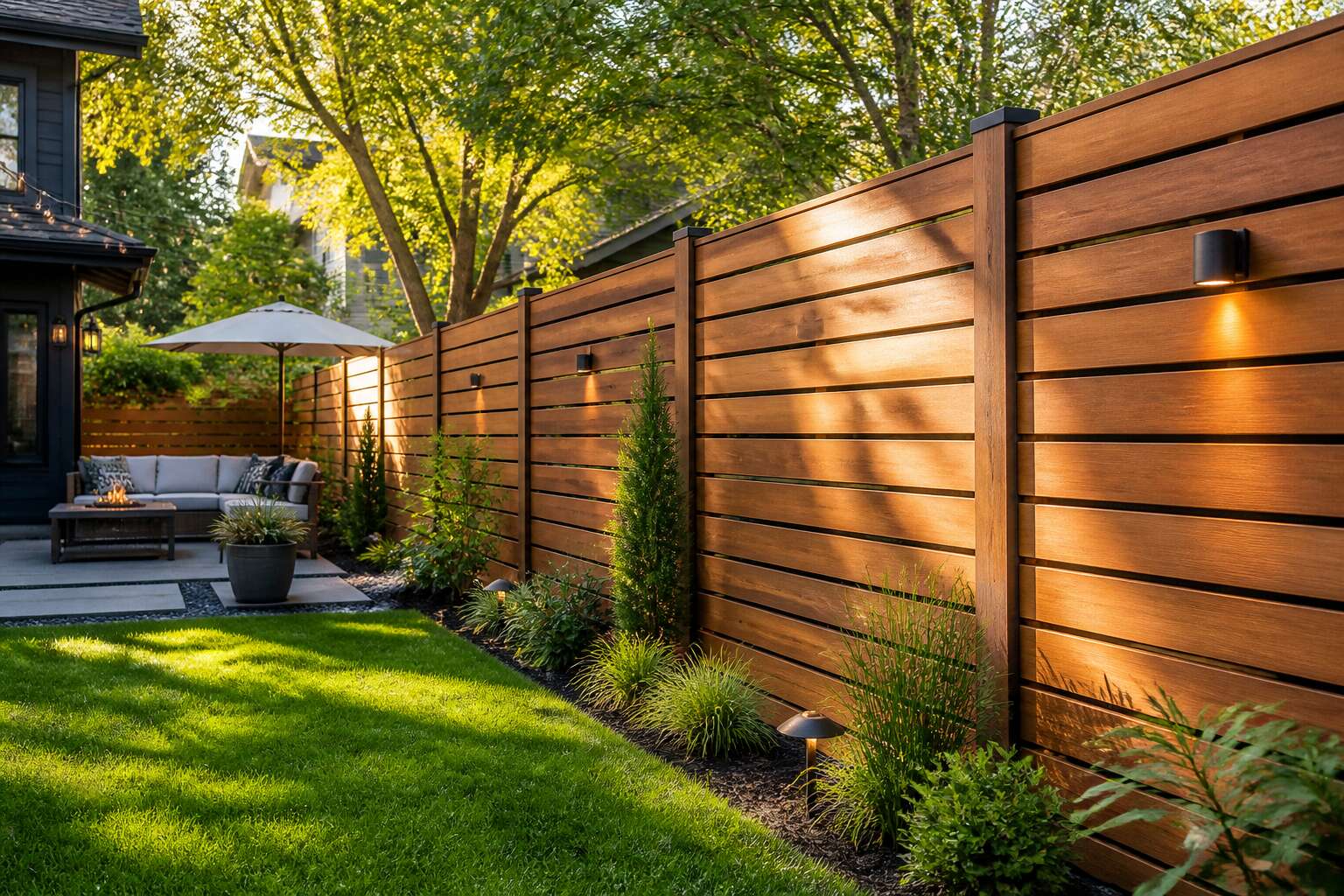
Evaluating Big-Box Home Centers for Material Sourcing
Comparing Product Selection and Availability Across Major Retailers
There is a peculiar charm to the vast aisles of a big-box home center. Scale suggests ample choice for any fencing project. Yet material sourcing is nuanced. One store boasts a display of pre-fabricated panels, while another keeps only chain-link and corrugated iron in stock.
I check the timber yard before committing to any design. Availability of treated pine versus meranti varies wildly between branches. For fences where to buy, a quick phone call saves the disappointment of a wasted trip.
Consider these variables when comparing retailers:
- Stock rotation speed, which affects the freshness of timber
- The range of gate hardware and hinges on display
- Whether the store cuts posts to length at the counter
For fences where to buy, the clever shopper knows the branch manager’s mood can matter more than the national catalogue. The store with cluttered aisles and dusty pallets hides the best bargain in concrete mix.
Analyzing Pricing Structures and Volume Discount Opportunities
In the fencing trade, the difference between the sticker price and the final bill is a matter of negotiation stamina. Big-box home centers price timber per metre, but bulk purchases invite a quiet conversation with the branch manager. A pallet of palisade fencing rarely leaves the yard at the advertised rate. For fences where to buy, the shrewd buyer asks about volume pricing before mentioning project size. Pricing structures differ between cash and account customers, and the gap can be substantial.
Consider these variables when evaluating a quote:
- Whether delivery fees are waived above a certain spend
- The discount tier for pre-assembled panels versus loose materials
- The credit terms for trade account holders
Some stores apply a markup on cut-to-size posts, while others absorb the labour. For fences where to buy, the final invoice reveals the true cost, and the patient shopper who compares three quotes always pays less.
Exploring Retailer-Specific Installation Services and Their Hidden Costs
Big-box home centers in South Africa project convenience, yet the material sourcing experience rarely matches the promise. For fences where to buy, discernment begins in the yard, not the showroom. Check palleted timber for moisture damage and inspect rolled mesh for defects. The special order desk holds more authority than the checkout lane!
Retailer installation services demand separate scrutiny. The quoted price excludes site preparation, and subcontracted fitters often charge separately for rubble removal. A rainfall delay clause increased my final bill by eleven percent. Hidden costs include:
- Travel fees to outlying suburbs
- Concrete disposal charges
- Post-footing inspections by third parties
Ask whether installers are salaried or commissioned, for their incentive structure shapes the finish. A fence marks the edge of one’s claim to the land, and for fences where to buy, patient evaluation keeps that dream firm.
Navigating Return Policies and Warranty Coverage for Defective Materials
Big-box return counters promise frictionless exchanges. The fine print tells another story. In South Africa, fencing materials often fall under special order rules. The seven day return window rarely applies once the pallet leaves the yard. I learned this with a batch of twisted droppers.
Warranty coverage favours the retailer. Galvanised mesh fails from the inside out, and most stores classify rust perforation as environmental wear, not a defect. You need the original packaging, the receipt, and photographic evidence. Contest a claim without those and you lose.
Before purchasing, check the restocking fee clause. Some outlets charge fifteen percent on bulk returns.
For fences where to buy, the yard supervisor holds the authority to authorise replacements. The checkout staff cannot help you.
Uncovering Local Fence Contractors and Specialty Dealers
Bridging the Gap Between Material Procurement and Skilled Labor
Between the big-box aisles and the quiet workshops of Johannesburg, a different transaction happens. Local fence contractors hold relationships with specialty dealers that never appear on a national price list. I watched a welder in Durban source galvanised mesh within an hour because he knew the right supplier.
For anyone wondering about fences where to buy, the answer sometimes lives behind a plain steel door. These dealers carry remnant stock, unusual profiles, and the exact bolts that major retailers do not stock. They understand installation, from concrete footings to tension wire.
A few markers identify a reliable specialty dealer:
- Clear origin certificates for imported timber or steel
- Willingness to sell partial rolls or offcuts
- Direct phone numbers, not call centres
That human link, from the salesperson to the installer, often matters more than any brochure promise. When fences where to buy feel like a solitary search, this connection settles the question.
Accessing Premium-Grade Materials and Customization Options Not Found at Chains
In Cape Town, I asked a veteran installer why his fences where to buy always start at a scrapyard gate. He laughed and said, “Because the best steel hides where the chains stop.” Specialty dealers supply marine-grade alloys and kiln-dried hardwoods that never reach the big-box shelf.
These suppliers also cut to order. Want a 2.4-meter panel with a capping rail? They produce it in-house, not from a catalogue. Some offer bespoke welding, custom hinge placements, and security spikes that match the original architectural lines of a property. That level of control changes the entire build.
Uncovering these contractors shortens the search. They know which dealerships carry certified meranti or SABS-approved mesh, and they understand tolerances that matter. For anyone weighing fences where to buy, this quiet network delivers materials that chains simply cannot source.
Leveraging Local Expertise for Climate-Specific and Terrain-Sensitive Solutions
In Durban, salt-laden air corrodes standard galvanised wire within three years. Local contractors in KwaZulu-Natal specify marine-grade alloys before a single post is sunk. That expertise redirects your fences where to buy decision toward suppliers who understand coastal decay.
A Cape Flats property with ferricrete soil demands different anchoring than a moist Garden Route slope. The right dealer stocks brackets, concrete mixes, and treated timber that match these conditions. For fences where to buy, the ground itself is part of the specification.
- Ask about wind load ratings for exposed sites.
- Request soil assessment for erosion-prone slopes.
- Confirm fastener metals compatible with local rainfall acidity.
Specialty dealers maintain relationships with geotechnical engineers and fencing contractors. They offer solutions for rock outcrops or seasonal waterlogging. Their advice prevents panel warping and post heave before installation begins.
Negotiating Package Deals That Bundle Supplies with Professional Installation
Fence contractors do not share their supplier lists easily. The installer who has worked the same region for a decade will not send you to a national chain for a roll of diamond mesh. They have a dealer who calls when the galvanising batch changes.
Package deals that bundle supplies with installation require negotiation, but the structure is simple. One invoice, one responsible party, one set of delivery dates. When a specialist dealer sends their own crew, the warranty gains meaning.
Buying materials separately and hiring labour at random produces a different result. The post holes get dug too shallow, the tensioning wire arrives in the wrong gauge, and the warranty does not cover workmanship. A bundled quote from a specialty dealer eliminates that gap.
The revealing question is not about price per metre. It is about which dealer the contractor trusts with their own name on the job. That reputation is your fences where to buy guide.
Verifying Credentials, Licensing, and Portfolio Reviews Before Committing
A fence contractor’s portfolio tells you more than their handshake ever will. In South Africa, registration with the Master Builders Association acts as a solid first checkpoint. Licensing matters because an unregistered cowboy with a bakkie and a roll of mesh can disappear without a trace.
When you inspect a portfolio, look for specific details:
– Gate alignment and hinge wear
– Post depth indicators from terrain settling
– Consistent weld quality across multiple projects
– Proper tensioning on long runs
Before you decide on fences where to buy, verify the dealer’s credentials. Specialty dealers often hold manufacturer certifications. Call the manufacturer to confirm. A warranty is only as strong as the company standing behind it.
Exploring Online Marketplaces and Direct-Ship Suppliers
Comparing Prices Across Multiple E-Commerce Platforms for Identical Products
Prices for fencing materials vary sharply across online platforms. Direct ship suppliers frequently beat retail stores, yet their logistics fees alter the true cost. Search for the same palisade or mesh product on Takealot, Makro, and niche importers. Record the listed price, then add shipping to your province. One platform may show a bargain, only to double the total at checkout.
To compare accurately:
– Verify the exact material grade and thickness.
– Note whether VAT is included or added later.
– Check the supplier’s delivery radius for your area.
Searching fences where to buy requires this cross-platform diligence. Identical items from different sources can differ by 40 percent. The cheapest offer often hides extra charges. Only by comparing multiple e commerce sites can you secure a fair deal.
Decoding Verified Customer Reviews to Assess Long-Term Product Performance
A fence is a decade long commitment, yet most buyers spend more time choosing a phone case. Online marketplaces and direct ship suppliers list hundreds of options, but the real evidence sits in verified customer reviews. Those reviews reveal how palisade panels hold up after three Highveld summers, or whether mesh begins to sag under coastal salt. When browsing fences where to buy, ignore generic praise and focus on dated, detailed feedback. Consider:
– Photos from buyers showing installation after rain
– Comments about rust, weld integrity, and gate alignment
– Repeat purchases from the same household
A supplier with a 4.8 star score may still ship undersized posts. Reviews, read critically, expose those gaps better than any product description. Search for patterns across multiple platforms, not single opinions.
Calculating Shipping Costs, Freight Fees, and Estimated Lead Times
Shipping a fence sometimes costs as much as the fence itself. Online marketplaces quote attractive prices, then freight fees appear at checkout with no warning. For fences where to buy, the base product cost is only the opening act. Palisade panels are heavy, and weight dictates freight. A 6-metre bundle of corrugated sheeting needs a flatbed, not a bakkie. Lead times stretch when suppliers route through central warehouses instead of direct dispatch. The final invoice often includes:
- Per-kilometre rates from major logistics providers
- Offloading fees if the driver does not carry a tailgate lifter
- Lead times for rural areas versus major metros
Direct-ship suppliers often beat marketplace prices, but only when the full landed cost is tallied.
Managing Replacement Protocols for Damaged or Defective Deliveries in Transit
Marketplace algorithms reward visibility, not accountability. When browsing fences where to buy online, a seller with thousands of listings can aggregate feedback until complaints lose visibility. Direct-ship suppliers operate with fewer intermediaries, meaning the person answering your query often controls the warehouse floor. That distinction matters when a pallet arrives with bent sections.
Replacement protocols for damaged deliveries vary sharply. Some suppliers require photographic evidence within 48 hours. Others send a claims inspector. When comparing fences where to buy, understanding these protocols before payment saves weeks of delay. A few suppliers request the batch number and dispatch a new order.
- Signed delivery notes contradicting your report weaken a claim
- Photographs taken while the driver waits outweigh those captured later
- Original packaging is the first thing a claims inspector asks for
These steps determine whether a replacement arrives in days or, as I have witnessed, stretches into weeks.
Investigating Direct-to-Consumer Manufacturers Who Bypass Traditional Distributors
Online marketplaces aggregate thousands of sellers, which makes fences where to buy seem abundant. But the listing page hides the supply chain. A marketplace vendor may drop-ship from a wholesaler who imports from another province. Direct-ship suppliers and direct-to-consumer manufacturers control their own stock, so the product you see is the product in their yard.
When investigating direct-to-consumer manufacturers, request the factory address. A genuine producer will invite a site visit. A broker will deflect. Also examine their delivery fleet:
- Do they own the trucks or hire couriers?
- Who handles offloading at your gate?
- Which party insures the load in transit?
These signals reveal whether your fence order moves through one accountable hand or five indifferent ones. In South Africa, local steel mills and wire suppliers often sell directly, cutting out distributor markups entirely.
Adopting a Hybrid Approach: Ordering Online While Hiring Local Installation Pros
Online marketplaces feel limitless, but the real test begins when the pallet lands at your gate. In South Africa, a hybrid approach works well: source from direct-ship suppliers with transparent stock, then hand the physical work to a local installer who knows your soil and municipal rules. This split is not a compromise. It is a division of labour.
When browsing fences where to buy, separate the product from the placement. The seller gets paid for the steel. The installer earns trust with every post hole. Together, they fix the two common failures: wrong material and poor alignment.
- Confirm the installer works within your suburb before ordering
- Ask the supplier for a pallet manifest so the installer can verify counts
- Agree on a delivery date only after the installer has inspected the site
Use the online order to secure the price, then use local labour to secure longevity. That sequence gives you control from cart to corner post!
Sourcing Materials by Fence Type and Durability Needs
Locating Pressure-Treated Lumber and Cedar from Salvage Yards and Timber Mills
Nobody strolls into a salvage yard expecting perfection. That is precisely why pressure-treated lumber found there often outperforms pristine stock. The wood has already weathered, so you can see how it will behave. Cedar from timber mills, meanwhile, requires a sharper eye for grain density. Both sources demand patience. And both will inform your decision on fences where to buy with far more honesty than any showroom.
- Inspect pressure-treated ends for cracking
- Request cedar planks with vertical grain
Durability needs vary. A coastal garden demands rot-resistant cedar. A suburban boundary may favour the sheer strength of treated pine. Salvage yards and mills reward those who ask questions. The answers you get will shape your entire project.
Selecting Vinyl and Composite Panels from Specialty Distributors Offering Extended Warranties
Choosing vinyl or composite panels in South Africa demands a different lens than wood. The market splits between coastal corrosion and highveld UV exposure. A specialty distributor with extended warranties becomes your reference point. I found that requesting accelerated weathering test results separates serious suppliers from resellers. Panels that survive Durban’s salt air have proven themselves. That distinction matters!
Scrutinize the warranty language carefully. Some distributors offer 25 year prorated coverage, others provide fully transferable terms. For fences where to buy, this category rewards buyers who verify the manufacturer’s local distribution rights.
- Request samples exposed to Johannesburg sunlight for six months.
- Confirm the warranty covers colour fading, not just structural failure.
Composite boards with capped polymer shells handle Cape Town’s winter rainfall zone with ease. Vinyl remains stable across dramatic temperature swings. Match the product to your microclimate, not the showroom brochure.
Ordering Custom Wrought Iron and Aluminum Components from Fabrication Houses
Sourcing materials by fence type starts with hard questions about your property’s specific demands. When I order custom wrought iron and aluminum components, I go directly to fabrication houses rather than middlemen. These workshops control the entire process, from cutting to finishing, which means the quality rests in their hands alone.
Aluminum suits coastal estates where salt spray corrodes steel within years. Wrought iron carries a classic presence but demands hot-dip galvanizing to survive the Highveld’s violent thunderstorms. The fabrication house must know which base metal suits your suburb.
– Ask for mill certificates verifying the aluminum grade
– Request weld samples from your actual production batch
– Confirm the powder coating laboratory test results
For fences where to buy, fabrication houses remain the overlooked source for bespoke work. They build to your exact dimensions, eliminating the gap between design intentions and installed reality. Fences where to buy often come down to who will stand behind their own welding, not a distributor quoting someone else’s work.
Comparing Wholesale Supply Houses Versus Pro-Grade Retailers
Understanding the Pricing Gap Between Wholesale Clubs and Contractor-Only Suppliers
A 2024 trade survey found that account holders at contractor-only suppliers pay roughly a quarter less for identical fencing stock than walk-in retail customers. That gap is structural, built on loyalty, volume, and credit terms private buyers rarely see.
For anyone comparing fences where to buy, the difference matters when the project grows. A single gate panel shows barely a dent. Fifty metres of palisade shifts the numbers.
The comparison comes down to three things:
- Membership criteria. Wholesale clubs are open to the public, but trade counters sit behind proof of business.
- Credit terms. Contractor suppliers offer 30 day invoices, altering the true cost.
- Mixed sourcing. A wholesale club may discount chain link yet inflate the price of posts.
Contractor-only suppliers lose the convenience game. They close early, carry few display models, and rarely deliver small orders. The pricing gap exists because these suppliers strip away everything a retail store offers. When you choose fences where to buy, you are choosing which omissions you can tolerate.
Assessing Fees for Local Pickup, Pallet Delivery, and Long-Distance Freight
Local pickup sounds like the cheapest option, but it hides a cost. Your vehicle, your fuel, your time! Pro-grade retailers often let you collect from a nearby branch, yet their stock may be scattered across the yard. Wholesale supply houses, meanwhile, charge a small handling fee if you don’t lift the pallet yourself. That fee keeps their staff on the forklift, not on your order.
Pallet delivery is where the numbers diverge. A retail chain might quote a flat R500 for curb-side drop-off. A wholesale supplier will ask for your coordinates and then calculate per kilometer. Long-distance freight, for a rural site, can easily double the material cost.
Consider these common fee traps:
- Pallet deposit, refundable only if you return the timber strapping.
- Offload charges when the driver must use a tailgate crane.
- Access fees for sites with tight turning circles.
When I compare fences where to buy, I add these friction costs to the base price. The advertised discount disappears quickly.
Evaluating the Value of Professional-Grade Fasteners, Posts, and Accessory Kits
Wholesale supply houses sell to contractors first. Pro-grade retailers sell to anyone with a bakkie and a budget. The difference shows up in the hardware. A cheap galvanised staple will fail in two Highveld summers. A proper screw, ring shank or coated, holds through the wind.
Professional-grade fasteners cost more per unit. They save you from replacing entire sections later. Posts matter too. A dropper made from offcut rebar bends under tension. A cold-rolled steel post keeps the line straight for decades.
Consider what the accessory kit includes:
- Brackets rated for your specific rail profile
- Tensioners that adjust without kinking the wire
- Washers and caps that prevent rust ingress
Retailers that supply fences where to buy often bundle these kits at a markup. Wholesale houses leave the assembly to you.
Calculating the Total Cost of Ownership When Professional Installation Is Included vs. Self-Install
Wholesale supply houses quote a price that makes your eyes water in a good way. Then you realise the installation crew charges double because they have to re-engineer half the hardware you bought. Pro-grade retailers sell the same fences where to buy with brackets that actually match the posts.
Crunch the numbers on total cost of ownership. A do-it-yourself fence saves on labour but consumes weekends, borrowed tools, and your marriage. Professional installation adds 30 percent upfront and removes the risk of a gate sagging by September.
- Labour rates vary by province
- Wholesale prices exclude delivery
- Pro-grade kits include fasteners
Add the cost of one failed section, and the cheaper quote disappears.




0 Comments