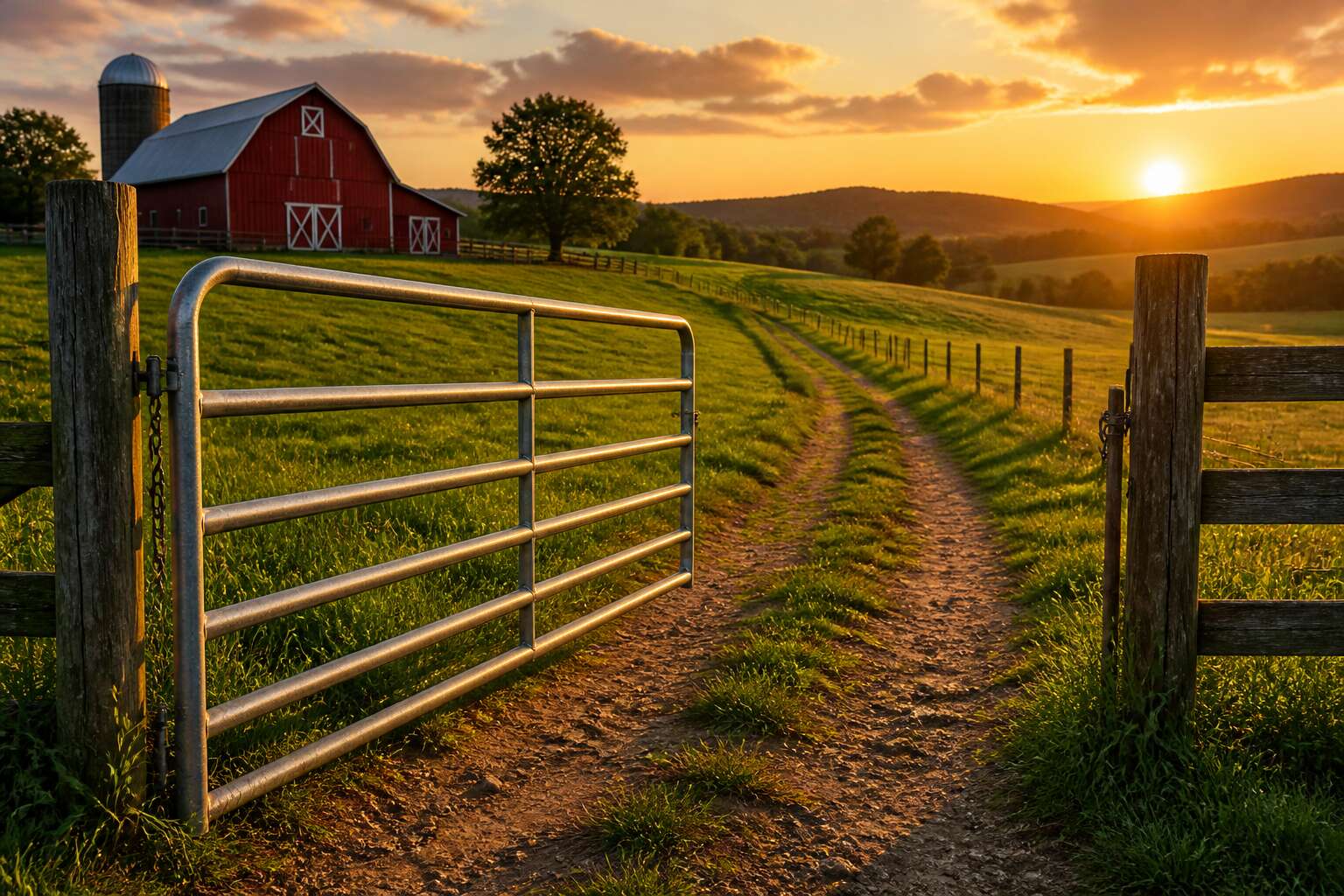
Understanding 9ft Farm Gates
What Are 9ft Farm Gates?
When we talk about 9ft farm gates, we mean a specific piece of hardware. South African farmers use this width constantly, and for good reason. It accommodates bakkies, tractors, and livestock trailers with room to spare.
What sets these particular 9ft farm gates apart is the construction. Galvanised steel or tubular frames, often braced diagonally to handle the weight of pushing livestock. The typical height sits at 1.2 metres, which discourages most animals from hopping over.
The common setups you will encounter:
– Hinged gates that swing open or shut
– Sliding gates for tight corners
– Removable lift-off hinges for seasonal use
Yet the standard hinged model remains the staple. It is easy to install, easy to maintain, and forgiving if your reversing skills are as questionable as mine!
Common Agricultural Uses for 9ft Gates
The true value of 9ft farm gates only becomes clear during the rhythm of a working season. Rotational grazing depends on gates that swing cleanly between camps. A gate that sticks or sags costs minutes when cattle are on the move. Those minutes add up quickly when a storm is rolling in and the herd needs to shift.
Daily duties these gates manage:
– Moving cattle between grazing camps
– Letting feed trucks into paddocks
– Blocking access to kraals during calving season
– Securing water points from stray animals
Those 9ft farm gates on a mixed livestock and crop operation see more cycles in one month than a suburban driveway gate sees in years. Dust, wind and repeated stress separate durable hardware from short-term fixes. Farmers who invest in proper 9ft farm gates avoid the constant cycle of repair and replacement.
How 9ft Gates Compare to Other Sizes
Width decides more than clearance. It decides how many trips a worker makes, how long a tractor idles at a camp entrance, and how a herd moves at dusk. An 8ft gate clears a bakkie but forces a tractor driver to fold mirrors. A 12ft gate handles wide implements, yet it demands reinforced posts and heavier hinges. The 9ft farm gates balance these concerns well.
Consider what passes through daily:
- A 7ft livestock trailer with an implement hitch
- A 60hp tractor with a mounted sprayer
- A feed wagon moving between paddocks at dusk
Each of these fits through 9ft farm gates with room to spare. We find an 8ft gate saves steel but costs driver patience. The 10ft option adds clearance but requires a longer throw on the latch. That few feet of difference carries weight when the ground is wet and the herd is impatient.
Key Benefits of Installing 9ft Farm Gates
Enhanced Accessibility for Large Equipment
The true cost of a narrow entrance is never apparent at the moment of installation. It reveals itself later, when a tractor with a mounted sprayer blocks an entire laneway because the opening simply cannot accommodate its width. I have watched drivers face this exact predicament, and it is never a quick fix.
This is where 9ft farm gates change the reality of operations. They provide clearance that turns a stressful manoeuvre into a smooth pass. For anyone who has reversed a heavy implement through a too-small gap, the relief is immediate!
Consider the practical effects:
- Reduced turnaround time when shifting machinery between paddocks
- Lower risk of damage to equipment and gate posts
- Ability to move larger implements without preliminary dismantling
The scale of your operation should not be limited by the width of a single opening. 9ft farm gates remove that limitation.
Improved Livestock Containment
I have spent more evenings than I care to count chasing a rogue Bonsmara across three paddocks. Livestock containment is not about the fence alone. The gateway is where discipline breaks down. A narrow opening invites hesitation, and hesitation reads as an invitation to test the boundary. 9ft farm gates give cattle and sheep no such opportunity. The wider span creates a calmer flow, meaning fewer stressed animals and fewer reunions with your neighbour’s prize lucerne.
Consider the practical side of herd movement:
- Reduced bunching and pushing at the entrance, which lowers injury risk
- Better visibility for the handler, so no animal is lost behind the swing
- Cleaner separation when drafting or loading
When the gate swings wide, the herd moves through without the stop-start chaos that causes bruising and weight loss. These 9ft farm gates simplify daily handling routines, especially during calving season.
Long-Term Durability and Cost Efficiency
The true cost of a gate is measured over a decade, not a season. A quality 9ft farm gate, built from hot-dipped galvanised steel, resists the corrosion that coastal salt and Highveld thunderstorms throw at it. Hinges and latches endure daily swinging without developing the sag that plagues lighter frames.
I have watched operators replace budget gates every few seasons. That expense accumulates quietly. One robust 9ft farm gate outlasts two or three cheaper alternatives, so replacement spend drops and labour stays on productive work instead of hinge repairs.
The savings stack up in measurable ways:
– Longer service life reduces capital outlay across a ten year cycle
– Heavier gauge material and proper bracing prevent warping under wind load
– Galvanised coating cuts rust treatment and repainting costs
Spend once on the right gate. The payback arrives in every year you do not have to think about it.
Materials, Styles, and Customization Options
Steel vs. Aluminum vs. Wood
In the Highveld’s harsh sunlight, a gate’s true character emerges within three years. The material you choose for your 9ft farm gates dictates more than appearance; it determines survival. Steel offers raw strength but demands vigilance against corrosion. Aluminum resists rust yet bends under pressure. Wood carries a pastoral silence but requires relentless upkeep.
Customization options include:
- Hot-dip galvanised steel for coastal regions
- Powder-coated aluminium in charcoal or sage
- Saligna or meranti timber with fire-treated posts
- Double-brace framing for high-wind zones
Each material alters weight, swing speed, and maintenance cycles. I have seen steel gates outlast two wooden replacements, while aluminium suits automated systems better. The 9ft farm gates used on Free State farms often combine galvanised frames with timber infills, a hybrid that balances brute durability with visual warmth. Choose deliberately, because a gate is a promise you make to your land every morning.
Tubular vs. H-Brace Construction
The 9ft farm gates on a working property carry more than livestock and machinery. They carry your patience as well. A gate that sags on its hinges becomes a daily argument you cannot win. Construction style determines that outcome.
Tubular construction uses a continuous frame of round or square steel. It presents a clean face, weighs less, and pairs well with automated openers. H-brace construction adds a vertical post with diagonal bracing across the frame. It resists racking under cattle pressure and Highveld wind, holding its shape through the seasons. In my experience, the distinction only becomes visible after a few hard winters.
The right choice depends on how you work the land. Consider these differences:
- Tubular frames suit gates that open several times a day
- H-brace construction suits boundary gates that must never drop
- Some farmers order tubular 9ft farm gates with hidden H-braces for rigidity without the traditional silhouette
Finishing Options: Galvanized, Powder-Coated, Painted
A single rust spot on a 9ft farm gate can spread beneath the paint and weaken the hinge section within two rainy seasons. In South Africa, sun and salt air decide how long a finish survives. Hot-dip galvanized steel offers sacrificial zinc that heals small scratches. Powder-coated 9ft farm gates add an electrostatic layer that resists chipping. Painted gates need yearly attention, but match existing buildings exactly.
Materials and styles are tied. A mild steel gate with a spear top suits a livestock paddock. A chamfered square tube gate with mesh infill suits a homestead entrance. Custom widths past 9ft farm gates require deeper hinge posts and heavier bracing. Common adjustments include:
- Latch positions for left or right handed opening
- Drop rod assemblies for uneven ground
- Hinge extensions for masonry or wooden posts
Finishing options affect maintenance schedules more than any other variable.
Choosing the Right Latch and Hinge System
Selecting the latch and hinge system for 9ft farm gates requires attention to leverage. A nine foot span multiplies force at the hinge post, so I specify three hinges with equal spacing. The bottom hinge sits above knee height to prevent livestock pressure from distorting the frame. On the latch side, a self-locking catch handles gusty Highveld winds better than a simple hook.
Customization options affect installation. Hinge extensions adapt gates to masonry or wooden posts. Drop rod assemblies manage uneven ground, but the receiver must stay clear of debris. Latch positions flip for left or right handed opening, which matters when your vehicle approach has a tight turning radius.
- Measure hinge pin diameter against gate frame thickness
- Confirm latch reach exceeds post width by 20 mm
- Test drop rod travel on the actual slope
These details decide how smoothly 9ft farm gates perform through changing seasons.
Factors to Consider Before Purchasing a Farm Gate
Measuring Your Opening Correctly
Before you commit to a set of 9ft farm gates, the first ritual is measurement. The opening width must be verified at three points: top, middle, and bottom. Fences sag. Posts lean. The earth itself shifts with the seasons.
Consider the swing radius. A 9ft gate requires clearance on the hinge side. A locked wheel or a stone wall can turn installation into a costly affair. Verify the hinge post is sound. A rotten timber core means the entire structure fails.
Also assess the ground slope. For uneven terrain, an anti-sag wheel or a diagonal brace becomes necessary.
- Check for overhead obstacles like branches or cables.
- Confirm the latch side has a solid strike post.
- Determine if you need a walk-through panel.
Neglecting these details invites rusted hinges and stubborn latches. Measure twice, and the 9ft farm gates will serve for decades. Measure poorly, and you’ll be back at the hardware store before winter ends.
Weight Capacity and Gate Swing Requirements
Before buying 9ft farm gates, think about what they will actually carry. A gate that only controls cattle might need to support its own weight, plus a persistent cow leaning against it. But if you plan to use it for feeding lanes or machinery access, the frame must bear far more. Weight capacity is not a suggestion. It determines whether the hinges survive their second season.
Gate swing requirements are equally specific. A 9ft gate needs a full arc of space, often more than people expect. The hinge side must absorb the momentum of every opening and closing. Consider wind in open Karoo fields. A heavy gate catches gusts like a sail.
Here is a practical checklist for your own assessment:
– Calculate the total load, including the gate’s weight and any impact from livestock or vehicles.
– Measure the swing clearance on the hinge side, not just the latch side.
Your post must be solid enough for that weight. Otherwise, the 9ft farm gates become a leaning problem, not a solution.
Terrain and Mounting Surface Conditions
South Africa’s soil varies from clay to decomposed granite to loose sand. 9ft farm gates behave differently on each surface. The soil type determines post depth and concrete requirements. A gate on shifting ground never stays aligned.
Mounting surface conditions extend beyond dirt. Post material, brace orientation, and drainage all influence daily operation. If water pools at the hinge post, wood rots or steel corrodes. On a slope, the gate’s resting position exerts uneven pressure on the latch.
- Test soil compaction at the hinge post location
- Identify water runoff during heavy rain
- Confirm the swing arc clears rocks or ruts
Ignoring these details turns 9ft farm gates into recurring repairs. The terrain directly affects the gate’s alignment.
Local Regulations and Permits
Municipal approval can outlast the gate itself. In South Africa, planning departments administer zoning schemes that determine how close a 9ft farm gate may sit to a street boundary. Many landowners assume a farm gate is a simple agricultural fitting, then discover the municipality treats it as a structure. A formal building plan might be required when the gate connects to a permanent post foundation.
Key regulatory checks before installation:
- Confirm the zoning scheme for gate height restrictions
- Apply for an encroachment permit if the swing arc crosses a public walkway
- Submit a building plan when the gate is attached to a fixed concrete foundation
Near national roads, the South African National Roads Agency (SANRAL) demands separate consent. Coastal municipalities apply stricter rules for structural materials, though that is a material decision, not a legal one. The permit process is not theoretical. A neighbour complaint or a routine inspection can force the removal of an unapproved 9ft farm gate.
Budget and Long-Term Maintenance
I have watched farmers spend heavily on the cheapest 9ft farm gates, then replace them within five years. The purchase price is only the first payment. The real expense lives in hinges, latches, and the hours spent fixing sagging frames.
Budget for the complete installation, including the posts and concrete foundation. A modest gate bolted to an undersized post will fail at the base. South African sun and dust load every component with stress, so a cheaper coating leads to rust treatment and repainting within a few seasons.
The realistic budget for 9ft farm gates covers more than the gate itself:
- Concrete and rebar for the post foundations
- Galvanized hinges and a latch rated for daily use
- Transport and installation labour
Those items determine the real long-term cost of the purchase.
Installation, Maintenance, and Safety Best Practices
Step-by-Step Installation Overview
Most gate failures trace back to installation shortcuts, not metal fatigue. Setting your 9ft farm gates on undersized posts is a recipe for a drooping top edge. Begin by burying hinge posts at least 600mm deep in concrete, then allow the mix to cure fully before attaching hardware. Level the frame with a spirit level and check the swing arc. Here is a logical sequence:
- Set the hinge post and back brace.
- Mount hinges and test the gate’s clearance.
- Install the latch and adjust the drop rod.
Maintenance is equally about routine and observation. Lubricate all pivot points semiannually and retighten bolts after seasonal temperature shifts. Safety best practices involve inspecting hinges for wear and ensuring the gate’s swing path remains unobstructed. These small habits extend the life of 9ft farm gates considerably, sparing you from a mid-harvest repair session.
Routine Inspection and Hinge Care
Somewhere on a Karoo farm, a gate is groaning. The noise signals neglected hinges, not metal fatigue. For 9ft farm gates, the hinge takes the real punishment: weight, wind, and the occasional impatient tractor nudge. Routine inspection means looking for rust streaks, loose bolts, and any sagging at the latch side. Hinge care is straightforward. A simple schedule keeps things honest:
- Monthly: wipe hinge pins and apply grease.
- Seasonally: retighten bolts and check latch alignment.
- After storms: inspect brackets for bent metal.
Safety means a gate that stays where you left it. A swinging 9ft farm gate becomes a hazard in gusty conditions, so keep the swing path clear and secure the gate properly. Small habits beat a mid-harvest repair bill any day.
Preventing Sag and Structural Damage
A 9ft farm gate sags when its connections give way, not when the steel fatigues. In most cases, the culprit is a loosened hinge plate or a post that shifted during a wet season. The diagonal brace must run from the hinge corner down to the latch corner, pushing the latch side up against gravity. Re-torque the brace bolts after the first heavy downpour.
Foundation movement shows up as a gap under the latch side. You can correct minor sag by shimming the bottom hinge, but if the post has moved deeper than 20 millimetres, the concrete base is compromised.
- Check brace tension every season
- Inspect welds for hairline cracks after harvest
- Measure the gap under the latch side each month
Safety is simple. A distorted swing radius can clip a passerby or drop a gate onto a vehicle. For 9ft farm gates, keep the path clear and tension the hardware before the wind does it for you.
Safety Tips for Gates with Automatic Openers
Installing automatic openers on 9ft farm gates requires torque that exceeds the gate’s weight by a third. The motor will complain otherwise, and no amount of polite conversation fixes a burnt clutch. Mount the drive unit on a reinforced post, never directly on the gate frame.
Maintenance follows a seasonal rhythm. Clean the photo eyes and limit switches, then lubricate the screw drive with lithium grease. If the gate reverses mid-swing, it is not being dramatic; it is signalling a misaligned sensor.
Safety for automatic openers means assuming every passerby is distracted. For a socially responsible installation:
- Keep the swing radius free of bikes and wheelbarrows.
- Set the closing speed to a gentle crawl.
- Test the manual release lever monthly.
The correct safety edge prevents crushed hands, a common injury with automated 9ft farm gates, and preserves good neighbourly relations.


0 Comments