Understanding Automated Agricultural Access
Core Mechanics of Self-Operating Field Entrances
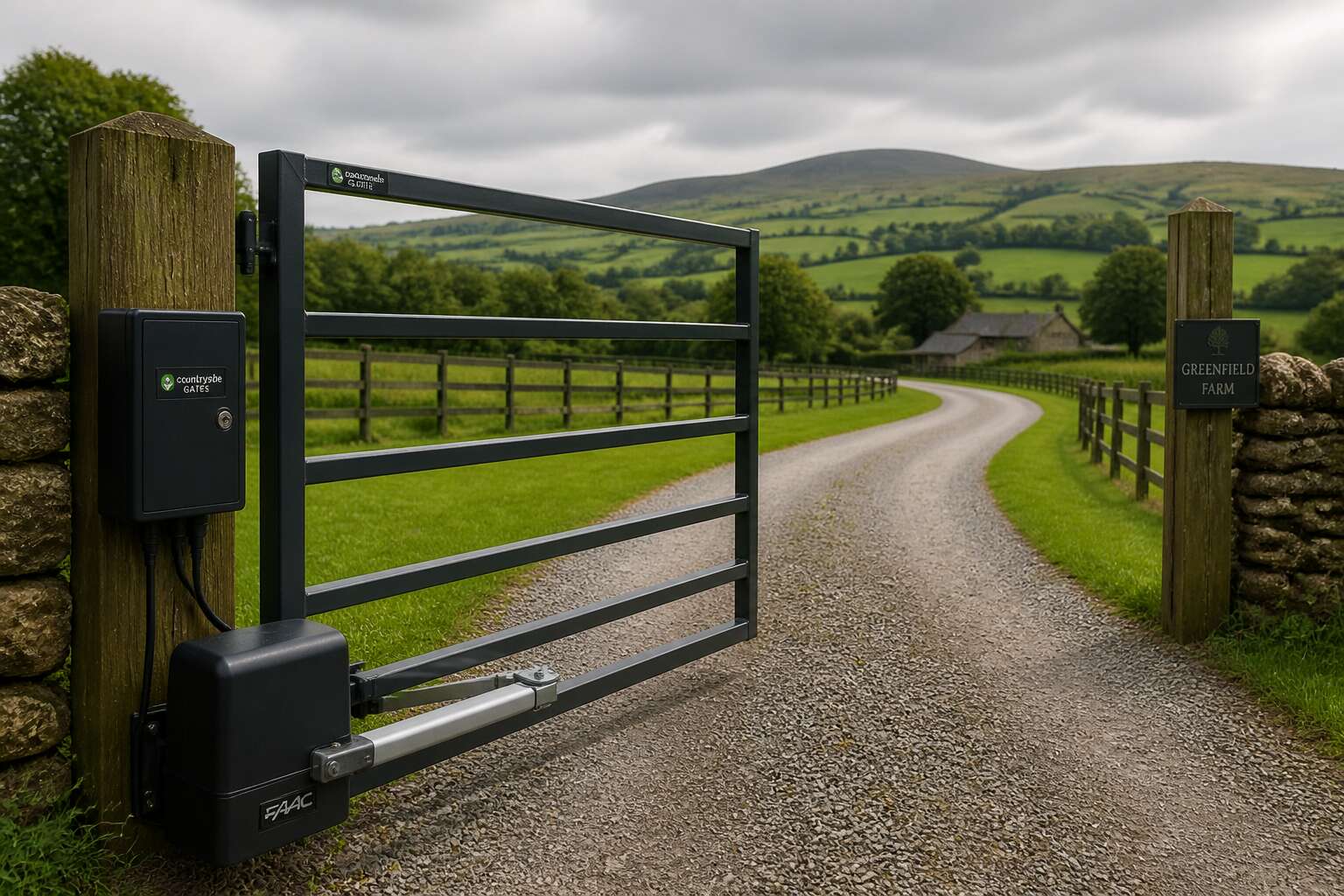
A self operating field entrance works quietly on its own. The core mechanics involve a motorised drive unit, a sensor array, and a control board that decides when to swing or slide. For an electric farm gates UK installation, these components must survive thousands of cycles without complaint.
The drive unit converts electrical energy into smooth motion using a worm gear or hydraulic piston. Motion sensors detect approaching vehicles or livestock, triggering the controller to open. Safety edges stop the gate if an obstacle appears. The practical chain is:
- Induction loops in the ground sense metal wheels
- Photoelectric beams track movement
- Limit switches confirm the gate’s position
Each element fails independently, which is why diagnosis is a skill. The control board runs a diagnostic sequence every cycle, logging faults to memory. For electric farm gates UK owners, that quiet hum is the system solving your access puzzle, one reverse at a time.
Power Solutions for Remote Rural Locations
Rural power is a fickle companion. Out here, where the grid stretches thin and dies without warning, your gate automation is only as reliable as its energy source. An electric farm gates uk setup demands more than a motor bolted to a post. It demands a backstop. Something that keeps the hydraulics alive when the lights go dark. I have seen farms lose entire days of productivity because a single fuse tripped at dawn. You cannot afford that bleed.
The architecture of a resilient access control system hinges on storage. Deep cycle batteries store enough charge to handle dozens of operations, not just a few. Solar trickle chargers replenish the reservoir slowly, methodically, across the daylight hours. The controller prioritises the draw, keeping the logic board alive even when the motor load spikes. Think of the capacity in terms of cycles per day.
– Ambient temperature eats battery efficiency by nearly twenty percent in winter.
– Gate weight dictates the amp draw per swing, not the size of the motor.
– Solar panel wattage must match the geographical latitude and its seasonal sun hours.
In South Africa, load shedding tests everything. The same principle applies to a rural electric farm gates uk property, where brownouts are as common as the wind. A quality inverter converts the stored direct current into the alternating current the motor wants, cleanly and without harsh surges that fry control boards. You are not just buying a gate. You are buying an uninterruptible power supply with a metal frame attached. Every component works to stabilise that input, because instability is the real predator. Gearboxes grind, contacts weld, and sensors misread when the voltage dances. The system that shines in the countryside is the one that flattens that chaos into a steady, reliable pulse of energy. That quiet hum under the hood is the sound of foresight.
Sensor and Activation Technologies for Farm Use
The failure of a gate sensor is rarely a sudden, dramatic event. It is a slow degradation, a misread signal that grows more frequent until a tractor idles at the closed barrier for the third time in a morning. Species-specific detection has changed this. These systems identify the actual biological signature of the animal, reducing false triggers from wind-blown debris or passing wildlife.
The activation logic has moved beyond a simple open and close sequence. Contemporary controllers learn the traffic patterns of the operation and prioritise throughput. A livestock electric farm gates uk setup can differentiate between a fast-moving vehicle and a slow-moving herd, adjusting the swing cycle accordingly. The sensor fusion sends data on direction and speed to the main board, which then decides whether to halt or continue the motion.
– Incidence sensors react to pressure on a buried loop, ideal for vehicles.
– Beam sensors detect the breaking of an infrared line, suited for tall vehicles.
– Proximity sensors use a radio frequency key fob for hands-free entry.
The real sophistication lies in the network. These sensors do not act in isolation. They communicate the state of the gateway to the central control unit, which then flags anomalies to the farm office. This constant chatter turns the gate into a data point. It reports the movement of assets, the frequency of deliveries, and the moments of unexpected activity. On a rural estate with stock at risk, this behaviour is vital. The combination of precision triggers and fast response has reduced the risk of stock escapes and has removed the friction from daily movement. The gate becomes an active component of the security perimeter, not a passive obstruction. That is the quiet value of a well-tuned activation system. It saves hours and protects assets without ever demanding your attention.
Safety Cut-Off and Obstacle Detection Systems
Safety cut-off systems determine whether an automated gate is a convenience or a liability. A gate that detects an obstruction and halts mid-cycle protects livestock, vehicles, and infrastructure. Modern controllers monitor motor torque. When a wheel rut or a stray branch creates resistance, the system reads the change and stops before damage occurs.
Obstacle detection has become more nuanced than a simple pressure edge. Some systems use force measurement to distinguish between a solid object and environmental resistance like wind. The reaction is immediate: reverse, stop, or alert. For an electric farm gates uk installation, this means the gate can operate unattended with confidence.
- Auto-reverse prevents crushing injuries to animals.
- Manual override handles power failure scenarios.
- Diagnostic alerts flag repeated obstructions.
The result is a system that respects both speed and safety. I have seen poorly calibrated gates cause more delays than broken ones! A properly configured cut-off system removes that friction.
Evaluating Farm Gate Automation Benefits
Enhancing Biosecurity and Livestock Containment
A single unlatched gate can undo months of veterinary vigilance. For South African farmers weighing automation, the true cost of manual entry reveals itself through disease vectors and straying livestock. Electric farm gates uk installations turn a simple threshold into a controlled access point. Every vehicle and animal must meet a verified chokepoint, shifting biosecurity from paperwork to enforced routine.
Consider these hidden efficiencies:
- Reduced labour for daily herding and checks.
- Lower stress in livestock that stays put when boundaries stay shut.
- Auditable entry logs that trace every movement.
These benefits compound daily. A gate that locks firmly after each pass keeps pathogens from travelling on unfamiliar tyres. Containment becomes a matter of determined boundaries rather than physical fences alone. The quiet hum of a motor replaces the shout of a farmhand chasing escapees. For operations eyeing electric farm gates uk, that hum signals reliable operation.
Reducing Daily Handling Time for Herdsmen
In a year, a herdsman might manually open and close a conventional gate several thousand times. Each interaction, often with wet hands or on uneven ground, consumes sixty to ninety seconds. It does not sound like much until you multiply it across a calendar. That cumulative loss of attention, the break in a routine for moving cattle or checking a paddock, becomes a hidden tax on every other duty that deserves focus.
Automation dissolves these micro interruptions. Consider the physical strain of lifting a heavy latch or forcing a wheel through mud, tasks that leave a person tired before the real work begins. An electric system removes that friction entirely. The herdsman stays in the vehicle. The gate cycles on its own. The minutes saved across a week might total an hour or more, time that returns to monitoring animal health, repairing fencing, or planning a grazing rotation with care.
When I weigh the daily rhythm, the advantage is clear:
– Manual handling: stop, dismount, unlatch, push, secure, remount, and reposition the vehicle.
– Automated entry: slow down, activate the sensor, and drive through without interruption.
This shift does not merely speed things up. It changes the quality of the day. Fewer physical demands and fewer chances for distraction leave a herdsman with clearer mental bandwidth for observing subtle changes in the herd. For any operation considering electric farm gates uk, the calculation goes beyond convenience and enters the realm of practical management efficiency. The quiet consistency of a motorized unit, responding without complaint to every passage, becomes a partner in the daily effort. For those who manage large acreage or frequent livestock movements, electric farm gates uk offer a compelling return on the investment of time and energy.
Protecting Machinery and Farm Access Points
A typical farm gate gets slammed, shoved, and dragged through mud thousands of times a year. That violence takes a toll on more than your patience. Misaligned hinges and a sagging frame eventually force a tractor driver to stop and manhandle the thing back into position. A damaged gate can also gouge a vehicle’s bodywork or puncture a tire during a tight pass. The repair bill for that kind of collision often exceeds the cost of the gate itself. The hidden expense of manual access is measured in replacement parts and panel beating.
Automation protects this physical asset by removing the human error from the equation. A motorized unit cycles through its arc at a consistent speed, applying even pressure to the hinges and the drive mechanism. Here is the practical difference:
– A manual gate wears unevenly due to poor alignment and ground movement.
– An electric actuator or swing arm maintains a fixed, controlled motion with every use.
– The risk of accidental vehicle contact drops sharply when the gate is not partially open.
The access point also stays intact. The posts and concrete footings remain level because the automated system does not allow the gate to drop and scrape the ground. A central pivot design keeps the weight balanced, preventing the chronic sag that plagues traditional field entrances. For anyone weighing the purchase of electric farm gates uk, the durability of the hardware is a direct financial argument. The upfront cost is offset by fewer repair trips and a longer service life for both the gate and the vehicles that use it.
Operational Efficiency During Peak Seasons
A six week harvest exposes every weak point in your workflow. Walking to a manual gate is one of them. In my years around farm yards, I have seen this time sink ignored until the busy season arrives. During peak season, a worker may cross the yard fifty times a day. At thirty seconds per stop, that is nearly half an hour of labor lost to a chore that adds nothing.
Automated access points change how you spend those hours. The gate cycles while the tractor is still moving, so the driver never decelerates. That continuity matters when the weather is closing in or the livestock are restless.
Consider the arithmetic for one week:
– Three to four minutes saved per field entry adds up quickly.
– Fewer stops reduce wear on the clutch and brakes.
– The person who used to open the gate stays on the implement or in the shed.
For farmers evaluating electric farm gates uk, the peak season calculation is straightforward. Electric farm gates uk can pay for themselves in a single harvest when you account for the labor returned.
Property Value and Curb Appeal Implications
Across the agricultural property market, first impressions carry a tangible weight. A powered entry transforms a standard holding into a more secure, modern asset. Buyers often perceive these systems as a signal of a well maintained, forward thinking operation. This perception can directly influence valuation.
The visual impact of an automated gate is immediate. It changes the lines of the farm entrance, replacing a sagging barrier with a precise mechanism. This aesthetic upgrade often extends beyond the gateway itself, prompting improvements to the immediate curbside area. A clean approach suggests that the rest of the business is managed with similar attention.
For sellers, the argument is practical. The installation of electric farm gates uk is a differentiator in a crowded market. The utility extends to any future owner, making the property more functional from day one. The financial return occurs in two ways: the initial valuation uplift and the yield from a faster sale.
Consider the features that create this distinct impression during a viewing:
– Smooth, silent operation that suggests premium quality.
– A clean, low maintenance finish that resists weathering.
– A secure lock that closes a gap in lawful entry points.
The adoption of electric farm gates uk is a long term investment in the property’s standing. It reduces the perception of manual upkeep required for daily operations. For a buyer, the promise of convenience and security is a powerful factor in the decision making process. The adjacency of this technology to the main road makes the property appear both private and professionally run.
Selecting the Ideal Automated Gate System
Matching Gate Design to Field and Terrain Dimensions
Ah, the Great British farm gate. Few things on earth humble a person like trying to force a nine foot galvanised monster back onto its hinges after a gale. The reality is that you might be eyeing electric farm gates uk suppliers for a slick, automated upgrade, but the swankiest motor on the market won’t save you if you’ve ordered the wrong dimensions. Before you part with your hard earned rand, you need to measure twice. And then measure once more for good luck, and again for spite.
The terrain is not merely a backdrop; it is the main character. A flat, concrete apron presents a very different challenge to a muddy, rutted track that slopes away at a jaunty angle. The swing of the gate needs clearance to arc through its full degree of travel without dipping into a bog or clipping a fence post. For a bi-fold system, you need the ground to be reasonably level, otherwise the panels will rack and groan like a haunted house.
You also need to consider the wind loading. A solid, sheeted gate acts like a sail, catching every gust that rolls down from the hills. A more open, tubular design for electric farm gates uk installations offers less resistance, which is kinder to the opening mechanism and your electricity bill. The length of the opening dictates the structural requirements of the gate itself. A wide opening for a tractor and trailer needs a heavier, reinforced frame to prevent sagging, which directly influences the torque required from the motor.
When you map out your access points, take a walk with a tape measure and a notepad. You are not just measuring the width of the passage; you are assessing the entire approach vector. Consider the turning circle required for your largest vehicle. If the lane is narrow and the gate is set back too far, you will be doing a three point turn just to get close enough to trigger the sensor.
A simple audit of your site will save you considerable headaches later:
1. Measure the exact clear span between the hinge post and the latch post.
2. Check the ground levels across the entire swing path for any significant fall or rise.
3. Identify the prevailing wind direction and the exposure of the site.
4. Note the available power source and the distance from the control panel to the motor.
Getting these specifications right is the difference between a gate that opens with quiet efficiency and one that requires a tractor and a length of chain to coax shut. The British weather is brutal enough without adding a mismatched mechanical system into the mix. A gate that fits its environment works with it, not against it.
Material Selection for Rural Weather Durability
Corrosion will find the weakest steel. On a coastal holding, salt-laden air corrodes cheap material quickly. For electric farm gates uk installations, the material choice determines whether the mechanism endures or degrades. Hot-dip galvanised steel remains the default for good reason. The zinc coating sacrifices itself so the core stays intact. Aluminium offers a lighter alternative that resists rust outright, though it costs more and can suffer from galvanic corrosion where it meets steel fixings. Timber looks handsome but warps in the Cape summer and rots in a Scottish winter. You want a system that endures both climates.
Here is what I check before recommending any material:
- Does the surface finish handle ultraviolet exposure without chalking?
- Are the hinge points and welds protected after fabrication?
- Can the powder coating survive stone chips from grit on the lane?
A gate that looks pristine at installation is not the goal. A gate that still swings cleanly after five winters is the real prize!
Choosing Between Swing, Slide, or Lift Mechanisms
My pet theory about automated farm gates is simple: most failures are not mechanical, they are psychological. The landowner installs a system, then spends every wet Tuesday convinced it will jam. That apprehension breeds neglect. The real task is choosing a mechanism you will trust without a second thought. Swing gates suit wide, level entrances with space to arc. Slide gates fit tight driveways where a swinging leaf would kiss your prized bakkie. Lift gates handle high water tables or uneven ground where a bottom track would clog. All three work with electric farm gates uk systems, but each configuration demands a different personality.
The mechanism also dictates your perimeter. A sliding gate runs on a cantilever or ground track. A swing gate needs nothing but hinges and clearance. A lift gate uses counterweights and vertical travel. Choose according to the terrain’s mood. In some regions these units are called electric farm gates uk, while American suppliers call them gate openers. Same beast, different passport. The one universal rule is to match the operator’s duty cycle to your herd’s impatience. Cattle queued at 5am have no respect for a motor that needs a rest.
Retrofit Kits vs. Complete Turnkey Installations
A retrofit kit keeps your existing gate structure and replaces the motor, hinge, or control unit. A complete turnkey installation supplies a new gate, posts, motor, sensors, and wiring as one package. Retrofit suits a sound gate with correct geometry. Turnkey suits a worn gate or a farmer who prefers one contractor for everything. For electric farm gates uk, the decision is practical and personal.
Retrofit demands patience and precise measuring. Turnkey demands a larger budget but less of your weekend. Many suppliers of electric farm gates uk offer both routes, so weigh the effort against the expense. Ask yourself three questions before committing:
- Is the existing gate structurally sound?
- Do you have reliable power at the gate?
- Can you tolerate a weekend of fiddly alignment?
If the answers are yes, retrofit is a satisfying project. If any answer is no, turnkey will cost more but protect your leisure time.
Evaluating UK Wind Loads and Ground Conditions
Wind loads on a manual gate are an afterthought. On an automated gate, they are the difference between smooth operation and premature wear. A gate that catches the wind like a sail will strain the motor, the hinges, and the posts. Salt-laden coastal air in the UK accelerates corrosion too, so galvanised steel or aluminium with a tough powder coat is worth specifying. Ground conditions matter just as much. Heavy clay holds water and shifts with the seasons, while sandy soils drain well but offer less lateral support.
Before you commit to a specific mechanism, walk the site and check for:
1. Exposure to prevailing winds
2. Soil type and drainage
3. Distance from the power source
These three factors determine whether a swing, slide, or lift gate suits your electric farm gates uk installation. A sliding gate on a deep foundation handles gusty sites better than a wide swing gate, which can torque the hinges in a storm. For many farmers, choosing electric farm gates uk means weighing these site realities before anything else.
Integration with Existing Fencing and Stock Systems
In the patchwork of South African farmland, where a single gate can mark the boundary between a controlled camp and the open veld, the selection of an automated system demands more than a cursory glance at the catalogue. The true art lies in the seamless integration of the new machinery with the pre-existing tapestry of your fencing and your stock’s daily routines. An electric farm gates uk mechanism must be a silent partner, not a disruptive force. It should align perfectly with the tension of your wire strands and the height of your droppers, ensuring no gap appears for a curious lamb or a determined bull to exploit.
The placement of the actuator is critical. It must work with the gravitational pull of the land, not against it. For instance, a sliding gate is often the perfect companion for a long, straight run of fencing, whereas a swing gate might suit a corner post where the stock flow naturally curves. Think about the sightlines for the animals. A gate that clatters or jerks can spook a herd, making them hesitant to pass. The transition should feel as natural as the old wooden slip-rails they are replacing.
Key alignment points to consider when planning your integration:
– The height and gauge of your existing fence netting.
– The proximity of water troughs and feeding areas to the gate line.
– The daily movement pattern of your livestock between camps.
A gate is not an island. It is a bridge between your management system and the environment. When the mechanism works in concert with your existing infrastructure, it creates a flow that saves you frustration. The opening must clear the mud and manure build-up at the threshold. The control box should be positioned where you can observe the approach without leaving your bakkie, which is a boon during the summer thunderstorms. When choosing electric farm gates uk, the ultimate goal is to have the machinery become an invisible part of the landscape, a simple answer that allows the business of farming to proceed without interruption.
Installation, Safety Standards, and Upkeep
Professional Installation vs. DIY Suitability
The romance of a self-opening gate often fades when one confronts the physical reality of the installation trench. Most property owners underestimate the civil engineering required for a robust setup. The concrete footings must extend below the frost line, and the conduit for wiring needs a clean, uninterrupted path. A poorly laid foundation here leads to misaligned posts and chronic binding. For those in the UK, where the soil shifts with relentless rain, this groundwork is the true cornerstone of longevity.
The choice between professional installation and the DIY route hinges on your appetite for risk. A professional crew brings a laser level and a torque wrench calibrated to the manufacturer’s specs, ensuring the gearbox operates without strain. The DIY enthusiast saves capital but inherits the burden of troubleshooting intermittent electrical faults in a muddy field. If you have no documented experience with low voltage wiring, the professional route is a prudent investment.
Regarding safety standards, the current regulations demand more than a simple pressure sensor. You require a system with a monitored safety edge and a photocell that resists false triggers from falling leaves. The gate should automatically reverse upon impedance, and the logic controller must log these events. Airtight adherence to these specifications is non-negotiable, particularly for properties with young children or free-roaming pets.
Whether you choose a professional or to go it alone, the sequence of tasks remains similar:
1. Survey the ground for drainage and underground utilities.
2. Set the concrete pads and allow them to cure completely.
3. Mount the hinges and verify the swing arc via a manual push.
4. Connect the motor and set the limit switches for a precise closure.
5. Test the obstruction detection system while standing clear.
Finally, upkeep determines the lifespan of your investment. A quarterly inspection of the hinge pins and a wipe of the rack gear will prevent premature wear. The control box, while sealed, requires a check for condensation, a common malady in the damp British climate. Listen for the groan of a struggling motor; it is the herald of a seized bearing. Staying ahead of these minor gremlins ensures your electric farm gates uk remain a silent sentinel, rather than a costly repair project. The real skill lies in routine, not reaction, and a well kept motor speaks of a steward who respects the land and the machinery that serves it.
Compliance with UK Safety Regulations and CE Marking
British weather is a subtle saboteur of automation. Rain, frost, and the relentless damp have a way of finding the smallest breach in your gate’s armour. Upkeep is not a chore; it is a conversation you have with your machinery, preferably with a grease gun in hand. Under the UK Safety Regulations, a quarterly inspection is more than a suggestion. The compliance paperwork for electric farm gates uk demands a trail of evidence that your system still meets CE Marking standards for safety cut-offs and emergency release.
Consider the routine habit for a custodian of a reliable automatic gate:
– Lubricate the hinge pins after a stretch of wet weather.
– Test the manual override handle when the power is disconnected.
– Examine the safety photocell beam for cobwebs or grime.
– Check the control panel’s desiccant pack to fight off internal condensation.
The herald of a future breakdown is often a quiet groan. A motor that works too hard in the wind is a motor that will fail you at calving season. The regulations exist because the industry has seen the consequences of neglect. A well maintained system is one that you can forget, until the day you need it the most. That silent reliability is the true reward for the disciplined owner who reads the manual’s maintenance chapter and verse on a quarterly basis.
Electrical Wiring and Grounding for Farm Outbuildings
Electrical wiring in farm outbuildings runs the entire automated system. Power surges from milking parlours or grain dryers can corrupt control boards. A dedicated circuit for your electric farm gates uk setup prevents this. Grounding rods sit deep in the earth, clear of water pipes.
Stray voltage can kill livestock and confuse gate sensors. For electric farm gates uk installations, test the earth fault loop impedance after trenching work. Use weatherproof junction boxes and armoured cable. Rodents chew standard PVC conduit. I have seen it ruin more than one setup.
- Run cables in steel conduit above flood level.
- Fit a residual current device on the gate circuit.
- Label the isolation switch.
- Test the earth leakage monthly.
Bond metal posts and gate frames to the earth bar. A floating earth is a silent hazard. Keep the control panel indoors or in a sealed cabinet. Moisture degrades copper quickly.
Planning Permission and Permitted Development Rules
Electrical faults cause nearly 40% of farm building fires in South Africa, a sobering figure when you consider the cost of lost livestock and equipment. Planning permission for electric farm gates uk on South African farms rarely falls under national building regulations. However, municipal boundaries often impose strict by-laws regarding road set-backs and visibility triangles. Check with your local planning commission before digging. A gate that opens onto a public road requires a different approval than one purely for internal paddock separation. Flood-prone areas may demand elevated control units. Do not assume rural land is exempt.
Installation safety hinges on the physical mounting of the system. A poorly anchored gate post can twist under the torque of a heavy steel frame, dragging cabling and sensors with it. Concrete footings must reach below the frost line and account for the expansive clay soils common in the Highveld. The control box location needs thought. Placing it near dung heaps or feed stores invites corrosion and rodent damage.
Upkeep planning depends on access. The automation adds complexity but the structure still needs manual operation during power failures. Think about how you will open the gate when the generator fails.
1. Verify the fall distance for the gate leaf.
2. Confirm the manual release mechanism is reachable from both sides.
3. Schedule a quarterly inspection of the hinge pins and spring tension.
Permitted development rules may restrict gate height near certain zones. Kwazulu-Natal and Western Cape municipalities enforce different aesthetic guidelines for farm entrances facing scenic routes. These rules exist regardless of the electric farm gates uk technology you choose. Budget for the application fee and the waiting period. It is cheaper than the fine for non-compliance later.
Seasonal Maintenance and Lubrication Schedules
Installation depends entirely on ground conditions. A gate on shifting sand or waterlogged clay will never hold alignment. Anchor posts deep enough to respect local frost lines and the swelling ground of the Highveld. Position the control box away from corrosive dust and rodent nesting. The electric farm gates uk systems work well here, but only when mounted on a stable foundation.
Safety standards go beyond the sensors. Confirm the manual release lever works from both sides during a blackout. Measure the fall distance for hinged leaves to prevent trapping. Check cable routing for chafing from livestock.
- Test the emergency stop monthly
- Inspect hinge pins for wear
- Verify spring tension on slide mechanisms
Seasonal maintenance follows the rains. Lubricate pivot points with marine grease before the wet season, then again after. Dust storms in the Karoo demand more frequent track cleaning. A quarterly schedule keeps the electric farm gates uk opener responsive when needed.
Troubleshooting Common Motor and Sensor Failures
Installation demands respect for the site’s peculiarities. A gate will not forgive a sloppy foundation, and the electric farm gates uk systems are no exception. Anchor posts must sink deep enough to bypass the frost line and reach stable soil. Position the control box where corrosive dust and curious rodents cannot reach it, or you will soon face intermittent failures that are difficult to trace.
Safety standards require more than a working sensor. You must verify the manual release lever functions from both sides, especially during a blackout when livestock is pressing against the leaf. Check the fall distance on hinged gates to prevent trapping and ensure cable routing is protected from chafing livestock. The emergency stop deserves a monthly test.
– Inspect hinge pins for wear every quarter
– Verify spring tension on slide mechanisms
– Test the emergency stop monthly
– Confirm the manual release lever works from both sides
Upkeep troubleshooting often reveals a motor failure that is actually a sensor problem. Dust accumulation on the photocell lenses or a misaligned reflector will cause the gate to reverse for no apparent reason. The Karoo dust is abrasive and finds its way into every track and bearing. Motor failures frequently trace back to power supply issues, not the motor itself. Check the voltage at the terminals under load before condemning the unit. A simple multimeter will save you a costly replacement.
Cost Analysis and Future Innovations
Breaking Down Initial Purchase and Installation Budgets
Ploughing money into a farm entrance is a one-time event, but the breakdown of that budget deserves scrutiny. A survey of recent agricultural projects shows installation labour alone often eats 30 percent of the total spend. For an electric farm gates uk purchase, the cost splits across several components:
- The gate leaf itself, with material and span driving the price
- The motor unit and control electronics
- Safety sensors, loops, and activation devices
- Concrete footings, cable runs, and trenching
These last items can surprise first-time buyers, especially in clay-heavy soils that demand deeper foundations. Future innovations are compressing these costs. Battery-backed actuators with solar trickle charging remove the need for long cable trenches, and modular electronics let farmers replace a single circuit board rather than a whole drive unit. Manufacturers designing electric farm gates uk systems now embed plug-and-play connectors that cut installation time significantly, a genuine shift for projects where the budget leans on professional fitment.
Energy Costs, Solar Viability, and Battery Lifespan
Running costs reveal a different truth than purchase price. A typical electric farm gates uk setup draws negligible power in standby, but peak actuation spikes demand. Over twelve months, the gap between mains powered and solar driven units narrows to pocket change.
Solar viability hinges on panel orientation and winter light. UK conditions demand generous sizing for December gloom. Battery lifespan, typically five to eight years, degrades faster in cold, damp environments. Lithium chemistries cycle better than sealed lead acid units.
The recurring outgoings:
– Replacement batteries every half decade
– Panel cleaning and cable inspections
– Controller firmware updates
New controllers draw 40 percent less energy than models from five years ago. That efficiency reshapes the long term cost of any electric farm gates uk investment.
Smart Connectivity and Remote Monitoring Advancements
The life cycle cost of electric farm gates uk continues to fall as controller efficiencies improve. Newer units draw significantly less standby power, and remote diagnostics reduce callout expenses. Smart connectivity now allows herd managers to monitor gate status from a smartphone, as long as the rural signal holds.
Consider what remote monitoring unlocks:
- Instant alerts when a gate fails to close
- Battery voltage trending over months
- Solar input logging for winter performance
These telemetry features transform maintenance from reactive to predictive. A gate that flags a slow actuator today prevents a full replacement tomorrow. The innovation curve shows no sign of flattening. Electric farm gates uk are becoming nodes in a farm’s broader data network.
Long-Term Durability and Replacement Part Availability
When calculating the cost of an entrance system, the upfront quote is one factor among several. The long term durability of electric farm gates uk depends on the steel quality, moisture seals, and the ease of sourcing spare parts years after installation. A gate idle for weeks because a circuit board is on backorder costs more in lost labour than the component.
Manufacturers with UK based warehouses offer faster turnaround, but overseas suppliers can leave you waiting. The relevant details include:
- Lead times for common replacements such as limit switches and gearboxes
- Whether the controller uses proprietary parts or standard components
- Availability of wiring diagrams and responsive technical support
Future innovations in electric farm gates uk focus on modular designs where actuators and sensors can be swapped without specialist tools. This approach reduces downtime and keeps older installations viable. The cost of ownership is measured in maintenance intervals and part availability, not the initial install price alone.

0 Comments