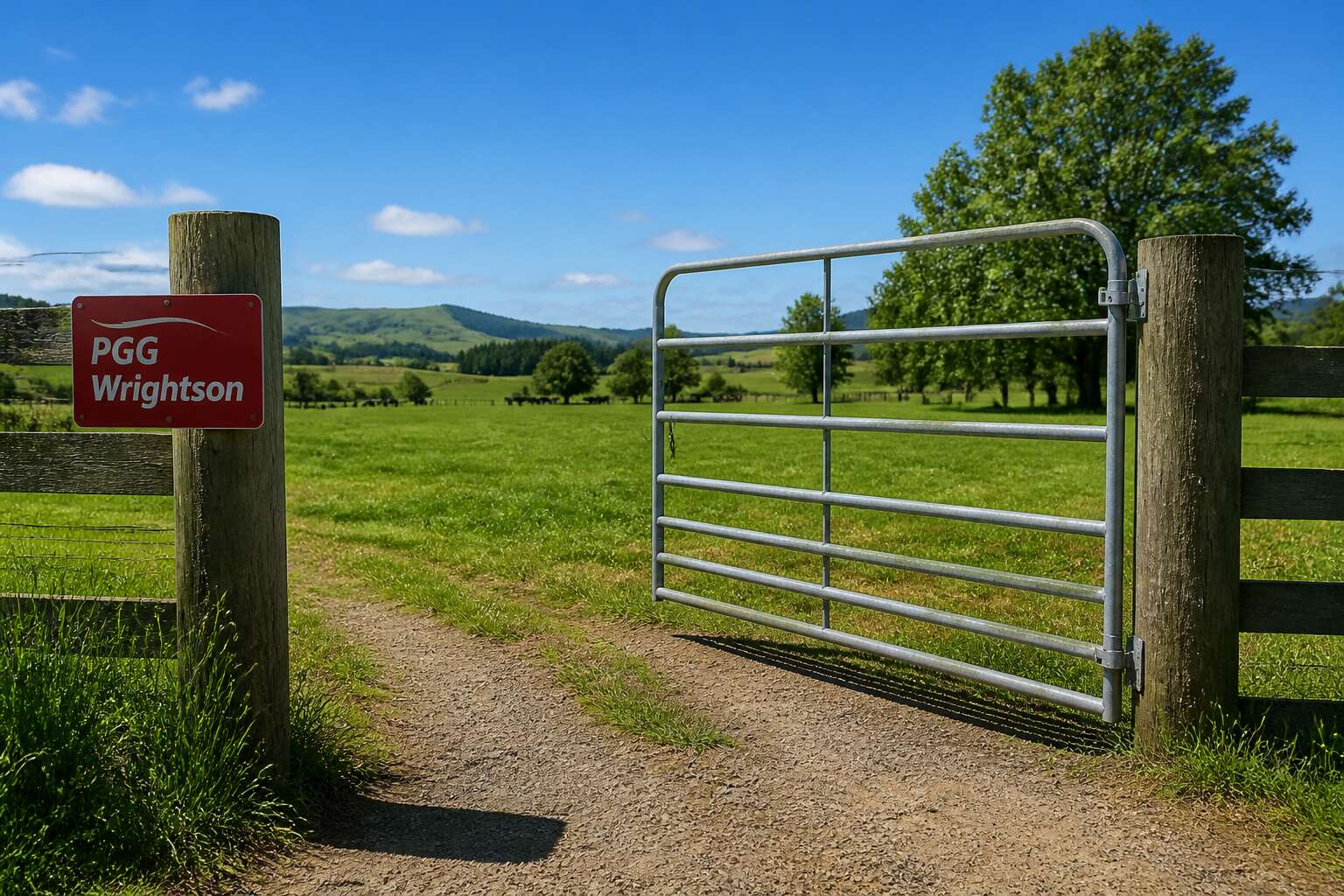
Understanding the Types of Farm Gates
Agricultural Gate Materials: Galvanized, Timber, and More
A farm gate is judged by its hinges, not its paint. In South Africa, the material you choose determines reliability. Galvanized steel offers predictable strength. Timber adds warmth but requires constant upkeep. Aluminium sits between lightness and fragility.
When selecting from farm gates pgg wrightson, consider these factors broadly:
- Galvanized: resists rust, survives coastal air, needs no painting.
- Timber: strong in compression, but warps under persistent moisture.
- Aluminium: easy to lift, but bends under heavy livestock pressure.
Aesthetics are secondary. I have watched a farmer curse a beautiful wooden gate after two wet winters. Another praised his galvanized model for staying true after years of neglect. Understand your land’s demands first; the gate follows.
Common Gate Styles: Cattle, Sheep, and Mixed-Use
Cattle gates endure constant pressure. Herds push against frames daily, so rail spacing must account for horns and calves. Sheep gates appear simpler, but they demand their own precision. I have watched lambs squeeze through gaps that looked impossible. The height of the lowest rail decides whether your flock stays inside.
Mixed-use farms face the toughest choice. In my experience, one gate must handle a Bonsmara bull and a flock of Dorpers. The farm gates pgg wrightson range includes models designed for this tension. These models differ in three measurements:
- The gap between the ground and the lowest rail
- The latch height from the seat of a bakkie
- The width required to clear a loader bucket
Gate Sizing and Configuration for Different Farm Layouts
A 4.2 metre opening feels generous until a tractor and baler pass together. Understanding the types of farm gates pgg wrightson supplies goes beyond cattle versus sheep. Operation matters more than most farmers admit. A self-latching gate spares your arm when reversing a trailer. A one-man gate with a counterweight saves time during peak weaning.
Gate sizing and configuration decide whether the gate serves your layout. Consider where the gate hangs; a weak post negates the finest frame. Measure the machinery passing through:
- Clearance width for a loader bucket
- Height for a bakkie with a canopy
- Swing radius for a trailer
A 3.5 metre opening clears most loaders, but farm gates pgg wrightson units need hinge and stay arrangements to hold that width without sagging.
Local conditions shape configuration: wind, slope, traffic volume. In my experience, a gate on a slope needs different hinge alignment than flat ground.
Automatic vs Manual: Choosing the Right Operation Method
Most farmers default to manual operation out of habit, not analysis. The ritual of lifting a latch, swinging a heavy frame, and securing it again feels productive. Yet that same ritual, repeated hundreds of times across a season, exacts a toll on your patience and your body. A heavy gate that requires two hands and a shoulder shove becomes the bottleneck in a fast-moving operation.
Manual gates still hold their ground. A well-balanced farm gate pgg wrightson model with a counterweight handles daily traffic without a power source. It suits remote paddocks where electricity and solar infrastructure remain impractical. The simplicity acts as its own virtue. Fewer moving parts mean fewer failures. You can repair a hinge with a spanner, not a call to a technician.
Automatic gates introduce a different psychology. They cost more upfront, but they remove friction from high-traffic zones like yards and feedlots. Consider these operational benefits:
– Reduced truck idling time at entry points
– Better security control for restricted areas
– Remote operation from a vehicle cab during weather extremes
– Consistent closing prevents livestock escape
A swing gate with a solar powered actuator performs well in the Karoo where heat and dust punish equipment. The margin for error lies in installation. A weak concrete footing or misaligned sensor will defeat any automation. The human remains the weakest link. You still need a person who understands the system and checks it during routine farm rounds.
Manual operation suits low frequency use. Automatic suits frequency. The real decision rests on how many times you traverse that opening per day. Ten trips through a manual gate changes your perception of ten seconds. A hundred trips changes your perception of the entire farm layout. The pgg wrightson range offers both systems, but your choice should reflect the rhythm of your daily work, not the novelty of the mechanism.
Key Factors in Choosing a Farm Gate
Durability and Weather Resistance in Rural Environments
South African weather is a brutal taskmaster for any farm infrastructure. A standard suburban gate will quickly fail under the harsh combination of Highveld UV radiation and coastal salt-laden air. The choice of a gate hinges on its ability to withstand these specific, aggressive conditions without constant upkeep. Selecting a product that prioritises metallurgical integrity and protective coatings ensures the initial investment isn’t squandered on premature corrosion.
The measurement of durability extends beyond the metal frame to the joints and fixtures. Rural environments subject gates to heavy livestock pressure, mud, and the constant torque of wind. A gate that relies on weak hinges or inadequate welding will sag or drop decisively.
Key considerations for long-term performance in severe climates:
– The specific galvanizing weight, which determines the zinc layer’s resistance to scratching and rust.
– The grade of steel used, as high-tensile options resist bending from cattle pressure.
– The quality of the hinge pins and catches, which must tolerate continuous vibration and weight.
– The design of the frame itself, which should prevent water pooling to avoid accelerated rusting.
Ultimately, the true cost of a gate is not its ticket price, but its lifespan under duress. Often, the most reliable farm gates pgg wrightson offers are those engineered for the rough, unforgiving realities of the South African landscape. They are built to absorb the daily knock of a herd and the relentless summer storms, standing as a quiet sentinel that allows the farmer to focus on the living pasture rather than the rusty hardware. That quiet reliability is the real weather resistance that matters.
Ease of Use and Accessibility for Daily Farm Work
Time spent fighting a stubborn gate is time stolen from feeding, herding, and repairs. A gate that demands two hands, a shoulder, and a few choice words every time you move livestock becomes a daily frustration.
The best farm gates pgg wrightson carries are those that respect your routine. The latch should open cleanly with one gloved hand, and the swing should clear the mud and stones that accumulate at the post base. Consider the sightlines from a tractor seat, as a gate you cannot see properly is a gate you will hit.
- Check the latch height, it must align with the operator’s reach from a vehicle.
- Look for self-closing mechanisms that prevent the gate from swinging into the path.
- Ensure the opening arc does not interfere with power lines or water troughs.
Accessibility is a practical requirement, not a convenience. The farm gates pgg wrightson range is built around this daily reality, with hinges and latches positioned for real-world use.
Strength and Animal Containment: Ensuring Safety
A gate that looks solid can still fail under pressure. Animals test boundaries constantly, often with their full body weight. Consider the farm gates pgg wrightson stock and how the gauge of steel relates to the class of animal. The strength of farm gates pgg wrightson offers must match the livestock you run. Sheep and cattle exert different forces, and a gate built for one may buckle under the other.
The frame construction and bracing determine how the gate absorbs impact. A sagging hinge or a bent drop rod creates gaps that clever animals will exploit. Check the locking mechanism, because a latch that springs loose under pressure turns a secure enclosure into an escape route.
Containment is about the gate holding firm during storms, crowding, and chaos. When a herd pushes against the rail in a panic, the gate is the only barrier between them and the road.
Aesthetic Considerations for Your Farm’s Entrance
The first impression of a farm is not the homestead, but the gate. It is the handshake before the words, a silent statement of your operation’s standards. A rusted, leaning structure whispers neglect, while a straight, well-hung gate suggests order and pride. This visual weight matters, especially on the commercial road frontage where passersby form opinions in seconds.
Aesthetics are not merely vanity; they are a reflection of management philosophy. For the homestead entrance, consider a design that complements the architecture of the main house. Timber or a powder-coated finish offers warmth for a domestic setting, while the hardwearing reliability of farm gates pgg wrightson provides the backbone for the harsh perimeter. The choice is a dialogue between beauty and brute force.
The gate must also serve as a silent guardian for security. In rural South Africa, visibility is a form of protection. Consider how the entrance reads at night. Does the design allow a clear view of the driveway, or does it offer cover? The physical presence of a substantial barrier often speaks louder than any alarm system.
When selecting for the entrance, focus on these elements:
– The visual weight of the frame in proportion to the opening
– The quality of the hinges, as they bear the brunt of daily use
– A locking system that is both robust and convenient for quick exit
During load shedding, a manual latch that you can operate by feel in the dark is invaluable. The selected gate must be a barrier that functions flawlessly when the power is out and the pressure is on. The choice between a lightweight design for the garden and a heavy-duty model for the cattle camp is distinct, and the engineering of farm gates pgg wrightson ensures the integrity of the boundary remains absolute.
Budget Planning and Long-Term Cost Efficiency
In farming, a gate is seldom a single expense. It is a series of payments spread across its service life, made in rust treatment, hinge replacements, and lost hours when a latch fails at the wrong moment. The purchase price is only the first instalment.
Budget planning requires calculating cost per year of service, not cost per metre of steel. A lighter unit may survive in a sheltered garden, but a cattle camp will test it within months. Galvanised thickness, bracing, and hinge configuration determine how many times you will pay.
Consider the true cost drivers:
- Freight and installation, which can exceed the gate price on remote farms
- Ongoing maintenance: greasing, painting, replacing worn pins
- Labour costs when a gate bends under animal pressure
The farm gates pgg wrightson range is engineered for a long service life, lowering annual ownership costs even when the upfront figure appears steep. For the commercial operation, this is the decisive factor. A gate that stands for twenty years is an asset you close every day!
Installation and Maintenance Best Practices
Site Preparation: Post Setting and Ground Conditions
The lifespan of any installation, including those sourced from farm gates pgg wrightson suppliers, begins with the soil beneath it. Ignoring ground conditions is a common oversight that leads to sagging hinges and misaligned latches within a single season. For a Gate that must swing freely over uneven terrain, the initial site survey is not a formality; it is the blueprint for structural integrity.
Proper site preparation requires clearing the immediate area of vegetation and rocks that could obstruct the swing arc. The post setting itself demands a hole deep enough to seat the post below the frost line, or for South African conditions, below the level of significant topsoil movement. A concrete collar around the base offers lateral stability, but the drainage of that footing is critical. Without adequate drainage, water pooling around the post will accelerate corrosion in the metal over time.
For areas with heavy clay, the expansion and contraction of the soil can exert enormous pressure on the posts. Here, a gravel backfill around the concrete, rather than full concrete contact with the soil, acts as a buffer. This practice lets groundwater escape and reduces the heaving forces that compromise alignment.
Once the gate is hanging, maintenance becomes a routine of observation. Check the hinges for wear and the tension of the latch mechanism. The coating, whether galvanized or powder-coated, is your first defense against rust. Address any chips or scratches immediately with a touch-up paint to prevent oxidation from spreading.
– Inspect the welds on the frame regularly for hairline cracks, particularly where the gate meets the hinge stile.
– Verify the gate drops evenly across its width; adjust the hinge bolts to compensate for post settlement over time.
– Clear debris from the bottom rail to ensure drainage holes, if present, remain open and water does not collect internally.
Securing the gate hardware with anti-seize compound on threads will simplify future adjustments. It is the small, consistent effort in these details that keeps the daily operation of your farm smooth and dependable.
Hinge and Latch Installation: Step-by-Step Guidance
Hanging a gate properly comes down to hinge placement. On farm gates pgg wrightson models, attach the hinge plates to the gate leaf first, leaving the bolts finger tight. Lift the gate onto the post brackets and check the swing before committing to a position.
- Use a spirit level on the top rail to confirm the gate hangs evenly.
- Tighten the hinge bolts from the bottom hinge upward.
- Test the latch engagement with the gate closed.
A gate that drops on one corner usually signals post movement. The latch striker should sit level with the catch plate, and the gate should close without lifting or dragging. Applying anti-seize compound to the hinge threads makes future adjustments easier, and a quick visual check of the latch alignment each season keeps the daily rhythm of farm work uninterrupted. Farm gates pgg wrightson hardware performs well, but the installation sequence determines how long the gate stays true.
Periodic Maintenance: Corrosion Prevention and Lubrication
Corrosion is patient. It works on a farm gate for years before the hinge finally seizes. Farm gates pgg wrightson hardware lasts longest with a stubborn routine. Every season, I check each gate and spend a minute on maintenance. That minute buys a decade of smooth movement!
Periodic maintenance means catching rust before it spreads. Check the bottom rail and hinge brackets, since those trap moisture. Clean off surface oxidation with a wire brush, then apply a zinc rich primer. For moving parts, lubrication is the other half. A dry hinge grinds down the pin and collar.
- Clear grit from the pivot points.
- Grease the hinge pin with marine grade grease.
- Cycle the gate twice.
The routine takes under two minutes per gate. The payoff shows when you move stock at dusk and the gate swings without fuss. Farm gates pgg wrightson reward the farmer who pays attention.
Troubleshooting Common Gate Issues: Sagging, Sticking, and Misalignment
A sagging gate has a cause. The hinge side has shifted, or the post has moved under the weight. I see this often with farm gates pgg wrightson installations where the ground settles unevenly after the first rains. Sagging shows in the gap between the gate tip and the latch post. Sticking is different. It is a clearance problem, where the gate rubs against the ground.
Misalignment starts small. A post leans a few degrees and every gate movement becomes awkward. Check the hinge brackets first. Measure from the gate top to the ground on both sides. A difference over 15 mm calls for resetting.
Failure patterns repeat:
- Sagging traces to a worn hinge pin or a leaning post
- Sticking follows ground contact or a drifted latch
- Misalignment starts after wet ground shifts the post
Each one needs a different correction, and getting that wrong makes the problem worse.
When to Replace Your Gate: Signs of Wear and Structural Weakness
Installation and maintenance form the contract between a gate and the land it serves. The first season tests everything. When the soil drinks the summer rains and shifts in the night, a gate that stood true will find its weakness. We see farm gates pgg wrightson for sale across the highveld, and the ones that endure are those whose posts were sunk deep and braced against the load they carry. The frame should sit level, the hinges greased, the latch aligned to its keeper. But maintenance is not a ritual for its own sake. It is the quiet act of listening for a groan, a stick, a drag that did not exist the month before.
There comes a moment when repair gives way to resignation. The steel has thinned to a whisper, the galvanising eaten through in a pattern of rust that spreads like a slow hunger. A gate that sags despite a fresh post, a frame that has twisted in its own torque, these are beyond the kindness of a wrench.
1. The hinge plates have cracked or pulled from the frame.
2. The gate has a pronounced bow when closed against the latch.
3. The metal at the base has rusted through from constant ground contact.
4. The frame has broken a weld and the gate no longer holds its shape.
When these signs appear, the old gate has finished its story. It is time to measure the opening anew and bring in a replacement that will stand against the coming years with the same quiet certainty the first one had.
PGG Wrightson: A Trusted Partner for Farm Infrastructure
Overview of PGG Wrightson’s Product Range for Farm Gates
Nearly every working farm in South Africa has a gate that fails at the worst possible moment. PGG Wrightson has spent decades addressing that problem. Their farm gates pgg wrightson range covers everything from lightweight wire units for internal paddocks to heavy-duty steel barriers for perimeter security. The catalogue matches each product to specific terrain and livestock pressure.
Here is what you can expect when browsing their infrastructure lineup:
– Galvanised steel options for coastal regions with high salt air
– Timber and rail combinations for equestrian properties
– Custom swing and sliding configurations for uneven ground
Each gate arrives with matching hinges and latches designed for the South African climate. That attention to detail means less time repairing and more time working.
Quality Standards and Durability Testing Behind the Products
Behind every catalogue entry lies a question most buyers never ask: will this gate still hold when everything depends on it? PGG Wrightson answers with controlled obsession. Their durability testing subjects farm gates pgg wrightson to salt spray, load cycling, and weld fatigue analysis long before a unit reaches your property.
The quality standards measure more than metal thickness. They measure the relationship between gate and latch, between coating and climate, between the hinge’s action and the hand that pulls it daily.
- Weld integrity checks under simulated livestock pressure
- Corrosion resistance testing calibrated to coastal South African air
- Latch alignment verification across thousands of open and close cycles
When infrastructure fails, work stops and animals wander. That understanding drives every quality decision. Farm gates pgg wrightson represent that commitment in steel, timber, and craftsmanship.
Expert Advice and On-Farm Support Services
Communities whisper that a farm’s true character reveals itself not in the homestead, but at the threshold where land meets the road. In South Africa, where the sun scorches and the wind carries salt from the distant coast, that threshold demands more than casual consideration. The expertise offered alongside farm gates pgg wrightson emerges from countless hours spent in these very landscapes, understanding what the brochures never mention. This is not theoretical knowledge, it is the accumulated wisdom of people who have watched gates swing through droughts, floods, and everything in between.
The on-farm support extends beyond the initial purchase. It involves honest conversations about your specific terrain, the breed of livestock that will test the structure daily, and the realities of your particular climate. When you discuss installation, the guidance shifts to the practical. The depth of the post hole for your soil type, the correct tension for your wind exposure, the alignment that will prevent that dreaded sagging years from now.
During a site visit, the advisor observes the details that matter:
– The prevailing wind direction across your property
– The drainage patterns around your gateways
– The daily traffic flow of animals and machinery
– The existing infrastructure and how a new gate will interface with it
This level of attention ensures that farm gates pgg wrightson serve as more than a barrier. They become a seamless extension of your daily rhythm, a quiet presence that requires no thought, no maintenance worry, no second glance. The advice continues long after installation. A phone call when the latch feels stiff, a question about seasonal maintenance, a query about upgrading components as your operation evolves. This is the support that transforms a simple purchase into a lasting partnership, one built on a shared understanding of what it takes to keep a farm running.
Warranty and After-Sales Care: What to Expect
When the wind has tested a hinge for five thousand swings and the latch still clicks with a farmer’s satisfied certainty, that is the quiet signature of proper after-sales dedication. PGG Wrightson understands that the true value of farm gates pgg wrightson is not measured in the moment of delivery, but in the decade that follows. Their warranty and after-sales care reflect this philosophy, offering a comprehensive shield against the unforeseen.
The warranty coverage is substantial. It protects against manufacturing defects and material failures that might emerge under normal agricultural use. Should a gate show premature fatigue, the claims process is handled with minimal friction.
– Clear documentation for all certified gates
– Direct regional support contacts
– Replacement priority for critical infrastructure
The after-sales care extends into a proactive relationship. Seasonal reminders arrive when rust would first appear on untreated steel. A service check happens before the heaviest rains of the Cape season. The 0800 line connects you to people who know the difference between a production farm and a lifestyle plot.
This is the quiet promise embedded in the metalwork. Purchasing farm gates pgg wrightson means gaining a partner who guards the boundary of your operation as carefully as you do. When the first hinge begins to groan after years of faithful service, you will find the solution already waiting. That is the mark of a trusted collaborator.
Integration with Other Farm Infrastructure: Fencing and Gates
A perimeter is a system of interdependent components. On South African farms, the relationship between gate and fencing determines how effectively you manage livestock movement and secure your boundary. Farm gates pgg wrightson are designed to work within this broader system, not as isolated components.
Consider the transition point where gate meets fence. The hinge post carries tension from both directions. The latch must align perfectly with the fence’s line of pull. When these elements work together, the gate becomes an extension of the boundary rather than a break in it.
Integration points to evaluate:
- Gate height should match your fence’s top wire height
- Strainer posts at openings need proper bracing for gate weight
- Hinge placement must align with fence tension lines
The farm gates pgg wrightson range accounts for these structural relationships. A perimeter only holds when every transition point carries its share of the load.
Cost Analysis and Value for Money
Comparing Prices Across Regional and Online Suppliers
The difference between a regional quote and an online listing can be startling, often shifting by nearly forty percent for identical specifications. In the dry reaches of the Northern Cape, a farmer once told me that a gate’s true cost reveals itself only after the fifth year of service. Regional suppliers bundle delivery, site assessment, and the quiet assurance of a local contact, while online portals tempt with lower base prices that freight charges quickly erode.
When comparing farm gates PGG Wrightson, itemise every expense. The galvanised coating, hinge gauge, and weld quality all dictate lifespan, so a cheap unit that fails within five winters is no bargain. Request written quotes from three regional dealers and pit them against two online suppliers, then factor in transport delays that stall your fencing project.
- Confirm whether the price includes VAT and pallet charges.
- Ask if delivery covers your gate post depth and ground conditions.
That final figure, not the sticker price, determines true value.
Long-Term Cost Savings: Maintenance and Durability
A gate’s purchase price tells you little about its lifetime cost. The real expense shows up in rust treatment, hinge replacements, and the hours spent correcting a sagging frame. Farm gates pgg wrightson units use heavier steel and hot-dipped galvanising, so the cost profile shifts from constant repair to simple upkeep. The maintenance cycle differs sharply. A cheap gate demands repainting every second year. A properly coated gate needs only hinge oil and a wash-down. Over a decade, that difference covers the initial price gap several times over.
- Check the galvanising weight. Higher zinc application means fewer corrosion touch-ups.
- Inspect hinge welds annually. A cracked weld costs more than a replacement pin.
- Budget for latch maintenance. A seized latch leads to bent frames.
The value emerges in the fifth year. That is when the cheap gate starts failing and the quality unit keeps working. Farm gates pgg wrightson show their value through reduced maintenance and longer service intervals.
Bulk Purchase and Trade Discounts for Large Operations
When you buy fifty gates, the unit price behaves differently. Suppliers discount for scale, and farm gates pgg wrightson pricing reflects tiered trade structures. A large operation in the Karoo or Free State can negotiate a per-unit rate that a single homestead cannot. That difference matters when outfitting multiple paddocks, labour quarters, and holding pens.
Beyond the sticker price, consider freight. One delivery of many gates costs less per gate than five separate deliveries. Some suppliers offer consolidated shipping, which reduces the total landed cost.
- Compare trade quotes from multiple rural suppliers.
- Ask about palletised delivery to your nearest depot.
- Request a written price break for quantities above twenty units.
The negotiation hinges on timing. Ordering off-season, before the winter stock move, often unlocks a better rate. Farm gates pgg wrightson stockists may hold surplus inventory and prefer a quick turnover. For a large operation, early planning and a single purchase order beats piecemeal buying.
Financing and Lease Options for Capital-Intensive Purchases
The real cost of a gate system is not the sticker price. Interest payments, deposit requirements, and the timing of cash flows all factor into the total. For farm gates pgg wrightson, a buyer can choose between a cash purchase, a term loan, or a lease structure. Each path carries a different effective interest rate.
Lease agreements on agricultural equipment, including gates, spread payments over multiple seasons. This suits operations where income arrives after harvest or livestock sales. A term loan may offer ownership from day one, but the monthly repayment stays fixed regardless of seasonal income.
The comparison varies with these variables:
1. The quoted interest rate versus the lease factor
2. VAT treatment on rentals versus asset purchases
3. End-of-term purchase options and residual values
A farmer in Mpumalanga or the Western Cape will see different numbers. The value of farm gates pgg wrightson depends as much on the financing structure as the steel in the frame.

0 Comments