Key Factors in Evaluating Fence Quality
Material Composition and Structural Integrity
Most fences rating exercises fail because they focus on surface rust and missing paint, while the material composition and structural integrity determine true quality. I have seen galvanised steel posts that looked pristine from afar, yet the internal cross members had corroded to dust.
When evaluating quality, check the gauge of the steel or the treatment of the timber. A thicker gauge resists bending, but only if the welding is continuous and the joints are sealed. Here is what I examine on every fence:
- Welding points for spatter or cold laps
- Galvanisation thickness, measured with a magnetic gauge
- Bracing angles at corners and gates
These details separate a ten year fence from a thirty year fence. In South Africa, where termites and coastal salt are relentless, the structural integrity of a fence often matters more than its appearance. A proper fences rating must assess the underlying structure.
Climate Resistance and Weather Endurance
In the Karoo, a fence endures different conditions than one in Durban. The sun bakes the galvanising until it flakes. The wind drives sand into every overlap. Coastal salt corrodes chain link fittings within months. These forces determine whether a fence survives its first decade!
I have seen fences rating exercises ignore this entirely. A fence that looks sound in winter can fail completely after one highveld summer storm. Ultraviolet radiation breaks down polymer coatings. Thermal cycling, from freezing mornings to blazing afternoons, loosens fittings that seemed immovable.
Durable installations share common features:
- Powder coating with UV stabilisers
- Hot dip galvanising above 600 microns
- Stainless steel fittings for coastal zones
The microclimate dictates everything. Rain, wind, and sun attack each material differently. A fences rating that ignores weather patterns misses the point entirely.
Installation Precision and Workmanship
The promise of a strong material means nothing when the installation betrays it. Time and again, I have witnessed a superior fence undone by careless hands. A fence rating that ignores workmanship is a hollow measure. The true character of a structure reveals itself in the quiet details: the depth of the post hole, the tension of the wire, the precision of the weld.
There is a particular horror in seeing a gate that sags before its first season. The hinges strain, the latch misaligns, and the whole framework begins its slow surrender. Poor installation accelerates every flaw. It creates entry points for moisture and stress that no coating can withstand. The ground shifts, the wind pushes, and without proper anchoring, the entire line succumbs.
Any robust fences rating must account for the human element. Observe the uniformity of the spans and the level of the rails. Look for the subtle signs of care, or the glaring evidence of haste.
– Accurate spacing between posts to ensure consistent load distribution
– Correct bracing at corners and end runs to prevent leaning
– Proper fastening techniques that avoid warping or splitting the materials
These are the silent indicators of quality. A perfectly straight fence can still fail if the posts are not set deep enough to resist the pull of wet earth. The workmanship is the unseen foundation, the decision made in the moment that determines the structure’s fate. It is the difference between an installation engineered for longevity and one that merely marks time until its collapse.
Aesthetic Appeal and Design Versatility
A fence is the first thing visitors notice. Its aesthetic appeal shapes the perceived value of your entire landscape. A well designed boundary can elevate a modest home into a striking statement, while a mismatched barrier drags the finest architecture down.
Design versatility determines how seamlessly a fence integrates with its environment. The options are vast:
- Horizontal slats for a modern, clean line
- Woven panels that play with light and shadow
- Mixed materials like timber and steel for industrial character
- Adjustable louvres for airflow and privacy
Consider the character of your region. Coastal homes benefit from open, wind friendly designs, while suburban plots often demand privacy without the weight of a solid wall. The best fences rating considers these choices critically. A structure that looks magnificent on day one must still suit its setting years later. Look for systems that allow customization in height, color, and texture. The true test is whether the fence feels like an original part of the property, not an afterthought.
Understanding Different Fence Materials and Their Ratings
Wood Fencing: Classic Beauty vs. Maintenance Demands
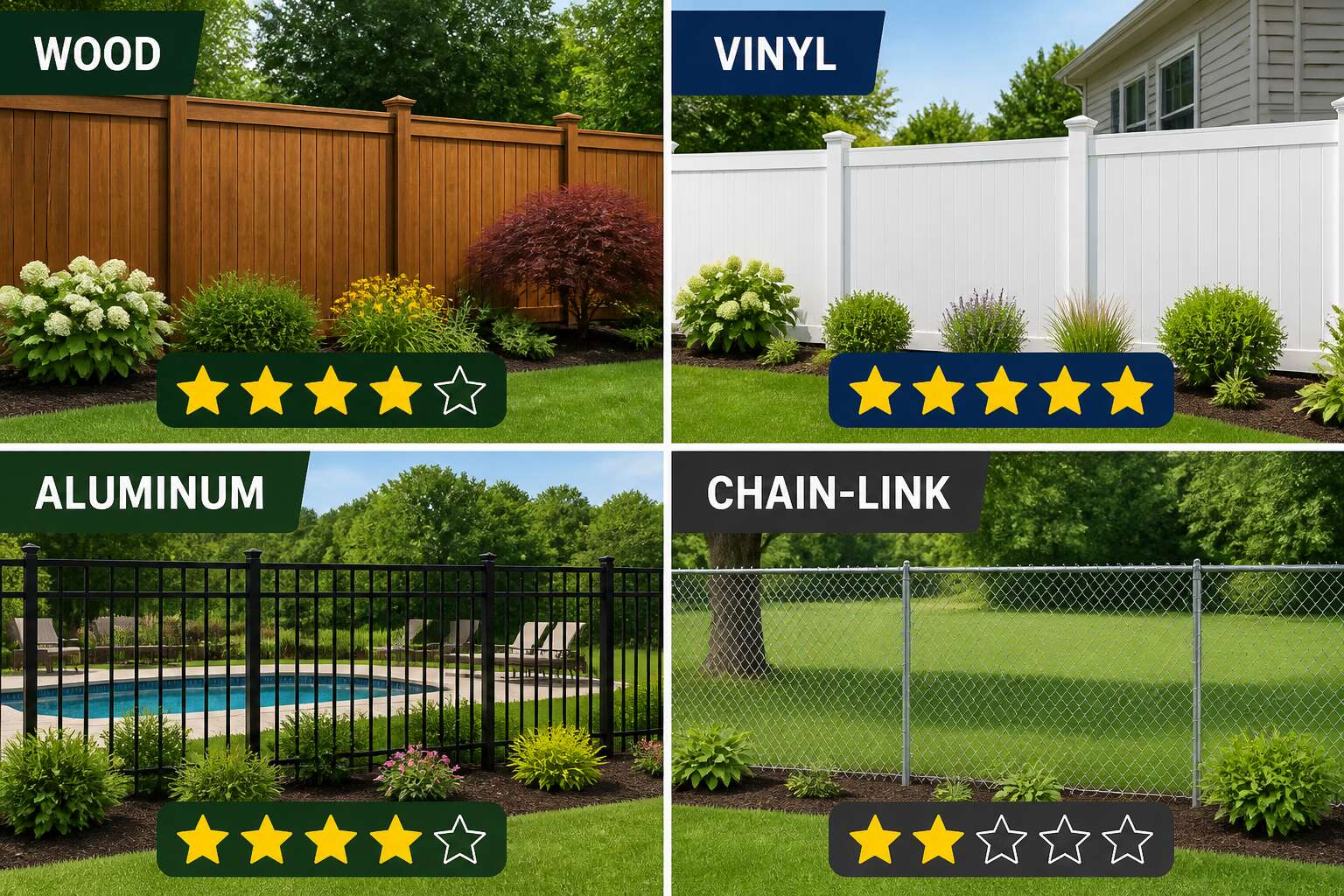
Few materials match timber’s warm presence, but beauty asks for a price. The fences rating for wood often falls between 7 and 9 for aesthetics, while durability scores slip without regular care. In South Africa, I have seen homeowners choose hardwood for its grain only to face rot within five years.
Consider what drives that rating in practice. The wood’s density matters, but so does your climate. Coastal humidity accelerates decay; Highveld sun dries and cracks. A proper sealant extends life, yet reapplication is never ending. That maintenance burden shapes every honest assessment.
- Moisture exposure from rain or sprinklers
- Termite pressure common in warmer regions
- Frequency of staining or sealing cycles
When you compare options, remember that a high fences rating on paper means little if you ignore the upkeep.
Vinyl and PVC: Low-Maintenance Alternatives
Plastic lumber has transformed from an eyesore into a serious contender, and the fences rating for vinyl and PVC reflects that evolution. These materials have abandoned that cheap, waxy sheen of the past for paler wood tones and textured grain.
For a South African homeowner, the appeal is the absence of sanding, staining, and sealing. Rainwater and blinding Highveld sun barely register on the material. A heavy downpour actually serves to wash away the accumulated dust, leaving the panels pristine.
While the initial cost is steeper than treated pine, the long-term arithmetic shifts. You are paying for downtime, for a product that resists termites and fungal attack without chemical intervention. It is a clean, modular system.
The fences rating for vinyl hinges on these factors:
1. UV stability: Cheaper polymers fade and chalk under severe African sun.
2. Flexural strength: Panels must withstand strong wind loads without bending.
3. Impact resistance: A rogue cricket ball or falling branch should not crack the rail.
Aesthetics still present a compromise. The material emulates timber, but it lacks the organic warmth of the real thing. Yet, time is a currency, and the maintenance savings are a significant reward. The rating for aesthetics is a solid 7, but the practicality score is a perfect 10.
Metal Options (Aluminum, Steel, Iron): Strength and Security
Ask any security consultant in Johannesburg and they will tell you the same thing: the fence determines who gets onto your property. Metal options deserve serious attention in any fences rating, though they differ more than most buyers expect. Aluminum resists rust and stays light, but it bends under impact. Steel delivers immense rigidity for its thickness, yet scratches require immediate attention. Wrought iron carries the classic aesthetic, but its joints need periodic inspection.
In my experience, the visual weight of a solid metal barrier changes behavior. A flimsy chain-link or a wobbly wooden palisade invites testing. A properly anchored steel system signals that entry will be loud and difficult.
Consider these distinctions when comparing scores:
- Aluminum suits low-risk perimeter areas where maintenance matters most.
- Steel offers the best strength to weight ratio for security-focused installations.
- Iron provides the heaviest presence but demands ongoing care.
Your final fences rating depends on which tradeoff you can live with.
Composite and Recycled Materials: Eco-Friendly Choices
Composite and recycled fencing enters any fences rating with a different set of credentials. These boards blend wood fibre and reclaimed plastic, or entirely reprocessed polymers. The result is a material that ignores rot, termites, and the sun’s bleaching effect! I have seen recycled options outperform virgin materials in coastal towns like Durban, where salt air corrodes most things.
One advantage is the predictable lifespan. Composite does not splinter or crack. Another is the reduced carbon footprint. The manufacturing process uses less energy than producing new steel or PVC.
When I compare the full picture, composites rarely win on beauty alone. They win on compromise. If your priority is a fence that lasts decades without staining or sealing, this category changes the fences rating calculation entirely.
Chain Link: Economy and Functionality
Chain link fencing rarely tops a fences rating for elegance. It wins on economics and raw utility. A single panel costs a fraction of timber or steel alternatives.
Its diamond mesh design lets wind pass through, reducing stress on posts. That matters in Cape Town’s south-easter or the Highveld thunderstorms. The galvanised coating resists rust, and the open weave keeps sightlines clear.
- Most affordable option per linear metre
- Quick to install on uneven ground
- Requires little maintenance beyond tension checks
Functionality extends beyond security. Schools, farms, and industrial yards rely on it because it defines boundaries without blocking light. When durability and cost drive your fences rating, chain link often outperforms heavier materials.
How to Assess Fence Durability and Longevity
Expected Lifespan of Common Fence Types
Standing at a boundary line, you see the truth quickly. The way a fence leans after a storm, the small rust trails at each hinge, the softness at the base of a wooden post. These are the signs that matter. A fences rating should be built from such quiet evidence, not from marketing photos. Durability comes down to a few key checks:
- Post stability in wet ground
- Security of rail connections
- Even distribution of wind loads
In South African conditions, expect a dependable fence to last between 18 and 35 years. But that lifespan shifts with soil type, rainfall, and temperature swings. Coastal climates eat into metal faster, while highveld frost tests concrete and timber equally. So walk your fence line regularly, press on every post, and look at the joints. That assessment will tell you more than any warranty.
Signs of Wear, Rot, Rust, or Damage
Time leaves its signature on every boundary. A treated pine post that once rang solid under a hammer now sounds dull and hollow at the base. That is wet rot. Fences rating should account for this quiet deterioration.
Rust behaves differently. It starts as an orange bloom on galvanised mesh, then flakes and exposes bare steel. Tap the metal. If chips fall away, the corrosion has depth. Paint may still look intact, so look beneath it.
Damage often shows as misalignment. A gate that used to latch cleanly now catches, or a panel that sits lower on one side:
- Holes at the base of timber posts where moisture collects
- Powdery residue on metal surfaces
- Cracks where rails meet posts
These symptoms reflect soil conditions and weather exposure. Careful inspection changes how you view any fences rating.
Impact of Proper Sealing, Staining, and Treatments
I assess fence durability by pressing a fingernail into timber near joints. Softness signals failed treatment. On steel, I scrape a coin across the coating. Flaking reveals exposed metal! These tests align any fences rating with actual condition.
Proper sealing and staining profoundly impact longevity. Unsealed wood absorbs moisture, causing rot. Treated surfaces repel water and block UV rays. South African sunlight demands robust products. Penetrative oils soak deep, while film-forming sealants provide a surface barrier. Reapplication every few years extends service life.
Structural Stability and Wind Load Resistance
Assessing structural stability begins with the ground. In South Africa, wind loads can exceed 120 km/h along the coast, so a fence’s footing matters more than its finish. I check the depth of concrete footings and the spacing of posts. These elements determine whether a panel survives a storm or fails at the anchor. To test wind resistance, push against the fence at points. Movement indicates weak anchoring. Consider these factors for a robust fences rating:
- Post spacing: closer intervals reduce flex
- Rail stiffness: heavier rails resist bending
- Bracing at corners: critical for high wind zones
The interaction between durability and wind load is subtle. A solid material like steel can still fail if the structure lacks torsional rigidity. Conversely, a flexible material with deep posts might outperform a rigid one. I weigh these variables because longevity hinges on the entire system, not merely the surface.
Warranty and Manufacturer Guarantees
When I inspect a fence for long term performance, the warranty tells me more than the brochure ever will. A manufacturer that backs a product for 20 years has done the math on its durability. In South Africa, UV exposure and moisture test every component, so guarantees vary wildly between brands.
To get a reliable fences rating, look past the fine print and ask what is actually covered.
- Does the warranty include colour fading or only structural failure?
- Are hinges and fasteners part of the guarantee?
- What is the process for a claim if the installer goes out of business?
These details separate marketing from real assurance. I have seen five year warranties on steel that rusts in two, and lifetime guarantees on vinyl that cracks at the seam. The manufacturer’s confidence is a practical signal, as long as you verify it.
Real-World Performance from Consumer Reports
Consumer reports offer a mirror that marketing cannot polish. I trust the aggregated experiences of thousands of owners more than any brochure. Those long term surveys reveal what UV rays, termites, and daily use actually do to a fence over a decade. A reliable fences rating emerges from recurring complaint patterns. If multiple owners report warping after three summers, that evidence outweighs any theoretical promise.
The real performance data sources:
– Owner surveys spanning different climate zones
– Independent field tests conducted by research labs
– Replacement frequency statistics from contractors
These numbers translate into practical expectations. A fence that endures ten South African summers without losing structural integrity earns its place in any honest fences rating. That evidence grounds every recommendation I make.
Safety and Security Considerations in Fence Selection
Height, Climbing Deterrents, and Privacy
The veil of security a fence provides is often a matter of perception versus reality. A mere boundary line does little to deter a determined intruder; it is the calculated height and the difficulty of ascent that truly fortify a property. When considering a fences rating, the vertical measure is paramount. A fence that stands below waist height invites a casual step over, while a formidable six-foot barrier presents a psychological and physical challenge that many will not accept.
To further complicate the climb, we must consider the tools of deterrence. Flat, horizontal rails become a ladder for the opportunistic. The savvy homeowner will look for designs that deny footholds, forcing any climber into a slow, awkward, and highly visible struggle. Specific features can elevate a fence’s defensive profile.
- Anti-climb spikes or rotating tops that offer no purchase.
- Dense vertical pickets with narrow gaps, preventing finger and toe holds.
- Smooth, slippery surfaces on the upper portion to foil a grip.
These physical obstructions are the first line of defense, turning an easy vault into an event of noise and effort.
Beyond the physical barrier lies the more subtle power of privacy. A solid, opaque panel does more than block sightlines; it creates a narrative void. The intruder cannot see the layout of the yard, the presence of a dog, or the movement patterns of the household. This uncertainty is a potent weapon for the defender. A high fences rating often correlates with the owner’s ability to control the visual narrative, forcing outsiders to operate on assumption rather than knowledge, which is a risk most are unwilling to take.
Pet and Child Safety Features
One loose picket can undo a decade of vigilance. In South Africa, where boundary walls often double as playground barriers, the stakes are higher than mere privacy. A fences rating that fails to account for small hands and sharp claws is a ticking liability.
Children test every gap. Dogs test every corner. The ground line becomes an escape route for diggers, so a concrete footer or buried wire mesh is essential. Self-closing gates with child-proof latches, and vertical bars spaced under 100mm, prevent both head entrapment and climbing leverage.
- Rubber caps on all post ends
- No sharp edges or jagged welds
- Lockable pedestrian gates for full control
Your fences rating should mirror the chaos of a busy household. If it doesn’t, the rating is just a number, not a safeguard.
Gate Security and Latching Mechanisms
A fence’s gate is its most vulnerable feature. In South Africa, where perimeter security is paramount, a weak latch undermines the entire wall. A fences rating that ignores gate hardware is incomplete.
Self-closing hinges and spring-loaded latches work when the strike plate aligns perfectly. A single millimeter of sag compromises the entire gate. For pedestrian gates, choose a latch that locks automatically but releases from inside during emergencies. Keyed handles add security, yet complicate access.
Gate hinges need the same attention. Hidden hinges resist prying, and through-bolts anchor the frame to the post. For sliding gates, cantilever systems eliminate ground tracks that thieves lift. To strengthen any installation:
- Install anti-lift brackets on all hinge points.
- Add a drop bolt to the passive gate leaf.
- Position the latch handle at least 1.5 meters from the ground.
These details turn a fences rating into a genuine safety measure.
Visibility, Sightlines, and Neighborhood Safety
Every solid fence reduces what you can see. In South African security terms, sightlines often matter more than sheer height. A fences rating should weigh visibility alongside material strength.
Neighbourhood safety depends on natural surveillance. When residents see each other’s grounds, intruders lose cover. Palisade fencing, spaced slats, and decorative perforations all preserve sight while maintaining boundary control.
Consider these visual security additions:
- Corner view panels near driveway ends
- Transparent glazing inserts at adult eye level
- Upper railing sections above a low masonry base
Each feature lets you monitor the street without compromising perimeter integrity. A hidden blind spot behind a solid wall is not privacy. It is a vulnerability. Design for observation, not isolation!
Cost vs. Value: Rating Fences by Return on Investment
Upfront Material and Labor Costs
A R150 000 perimeter wall and a R30 000 palisade can both fail the same financial test. The fences rating for return on investment rarely stems from the sticker price alone. Upfront material and labor costs in South Africa vary wildly by province, yet the true metric is cost per year of service. A cheaper timber option may demand re-treating every two seasons, while a steel mesh system endures with minimal intervention.
When I calculate ROI for clients in Pretoria, I divide the total installed price by the expected lifespan. Concrete panels often cost R1 200 per metre, but their fifty year usability dwarfs the R600 wooden alternative that rots in fifteen. Labor costs also shift the equation, especially where skilled installers are scarce. A low quote may mask inferior workmanship, leading to early replacement. So, rate fences on long term ownership, not the initial invoice.
Long-Term Maintenance Expenses
Ever noticed how a bargain fence becomes a costly burden? The initial quote is a seductive number, but the long term maintenance expenses reveal the truth. A R2,000 timber panel that needs oiling every two years will cost you R10,000 in labor and sealant over its short life. The real fences rating hinges on the annual cost of ownership, not the sticker.
The weather in Gauteng attacks unprotected steel, creating rust that travels quickly across the surface. Painting a metal fence every three years costs roughly R45 per metre. Concrete panels might crack, but hydraulic cement fills the gap for R20 a pop! Here is the breakdown:
- Timber: Oil treatment every 18 months, R60 per metre per service.
- Steel: Rust converter and paint, R75 per metre per cycle.
- Concrete: Occasional crack sealing, R15 per metre over decades.
Add those figures to the initial cost, and the equation flips. A cheap chain link fence with a vinyl coating costs a fraction of a steel palisade, but the vinyl peels in five years, exposing the metal. You will pay for that damage in accelerated replacement. A proper fences rating factors in these recurring penalties. The installation invoice is a down payment, not the final balance.
Property Value Increase and Curb Appeal
Property valuers in Gauteng use a simple rule: a fence’s contribution to resale value depends on what the next owner sees first. The boundary shapes a buyer’s first impression. A fences rating that ignores curb appeal misses the point in a competitive market.
The return on investment varies by material. A brick wall with an automated gate often recovers its full cost in added property value. A vinyl fence in a security estate may add less, since buyers read it as a design choice.
A practical scale of value recovery:
- Brick and masonry with access control: highest resale recovery.
- Steel palisade in good condition: solid recovery in higher-risk suburbs.
- Timber or vinyl: moderate recovery, dependent on style.
The fences rating must balance the installation expense against the projected resale uplift, because a home that looks defended and well kept invites stronger offers at sale time.
Insurance Premium Impacts and Liability
Two seemingly identical properties on the same street can carry drastically different insurance premiums. That variance often traces back to the perimeter and its security features. A robust fences rating can be the deciding factor in how insurers quantify risk in South Africa. A sturdy boundary reduces the likelihood of a burglary claim, which can translate directly into lower annual premiums. Conversely, a dilapidated fence invites liability. If a loose panel falls on a passerby, or a gate swings into a vehicle, the property owner carries the responsibility for those injuries and damages.
The financial picture changes when we add the concept of liability to the cost equation. A cheap fence that fails and causes damage will cost far more than the savings on installation. The core of the fences rating must therefore weigh the initial spend against the projected financial benefit, which includes both the resale value and the insurance savings.
When rating a fence for its true financial return, consider these specific factors:
– The perceived security level by the insurance underwriter.
– The material’s ability to withstand local weather without becoming a hazard.
– The compliance with municipal by-laws to avoid legal penalties.
A premium installation of steel palisade delivers a higher upfront cost, but it often meets insurer requirements for high-risk areas, potentially offsetting that cost over time. A cheaper timber option lowers the initial outlay but can become a liability when it rots and collapses in a storm. The fences rating that ignores this long-term obligation is an incomplete assessment of value. Each rand spent on a durable, safe perimeter is a rand that protects the homeowner from both intrusion and litigation.


0 Comments