Understanding Pool Barrier Regulations
Local Building Codes and Permit Requirements
I have reviewed permit applications that failed because homeowners underestimated how strictly municipalities enforce pool barrier rules. South Africa’s SANS 10400 standard defines the minimum, but local building codes often demand more.
Your municipal authority regulates what you construct around your pool area. Johannesburg, Cape Town, and Durban each interpret the national standard differently, so consult your local planning department before purchasing anything! The permit process exists because drowning prevention depends on correct installation.
Typical barrier specifications include:
- Minimum heights ranging from 1.2 to 1.5 metres
- Self-latching gates with release mechanisms out of reach
- No climbable horizontal members on the outside face
Inspections happen at specific milestones, and failing one means expensive rework. Understanding these codes before choosing fences around pools protects your family and your investment.
Standard Height and Spacing Rules
The arithmetic of pool safety is unforgiving. A gap of 100 millimetres might seem trivial, yet it is exactly the kind of dimension that defines compliance under SANS 10400. For fences around pools, the national standard sets the baseline, but the real challenge lies in understanding how height and spacing interact.
Height rules are straightforward on paper. The barrier must stand at least 1.2 metres high. Spacing rules demand more attention:
- Vertical members must be no more than 100 millimetres apart to prevent a child squeezing through.
- The gap between the bottom of the fence and the ground must not exceed 50 millimetres.
- Horizontal rails on the outside face must be positioned to eliminate footholds, often requiring a 900 millimetre vertical clearance between rungs.
These dimensions are not suggestions. Municipal inspectors measure them precisely, and getting the spacing wrong turns a beautiful boundary into a dangerous illusion.
Gate Self-Closing and Self-Latching Mechanisms
The gate endures more wear than any other component of a pool barrier, and inspectors see the results daily. Nearly a third of pool barrier failures happen at the gate, not along the fence line. Every entry and exit stresses the hinges, the spring, and the latch. Over time, a self-closing gate can slow to a lazy swing, and a self-latching mechanism can fail to engage. SANS 10400 and municipal inspectors treat gate hardware as critical. The gate is not a convenience. It is a transitional zone where adult discipline meets child curiosity.
Inspectors often test the gate by opening it halfway and releasing. It must return to the closed position and latch on its own. They also check:
- The release mechanism sits beyond a child’s reach
- The latch engages without any manual assistance
- The gate cannot be lifted out of its frame
These details matter because the most robust fences around pools are rendered useless by a gate that stays ajar.
Compliance With Pool Safety Laws
Compliance with pool safety laws in South Africa is unforgiving. The National Building Regulations and SANS 10400 define what counts as a lawful barrier, and municipal authorities enforce these standards. Get it wrong and you face criminal liability, invalidated insurance, and civil claims if an incident occurs. The law does not care about your intentions.
Understanding fences around pools means recognising that regulatory compliance is an ongoing obligation. A barrier installed ten years ago may not satisfy current requirements. I have seen inspectors examine the perimeter for deviations, rust, structural weakening, and alterations that compromise the original approval. Their mandate is straightforward: prevent access, prevent drowning.
The legal framework also demands documentation. Property owners should maintain records of installation, approval certificates, and inspection reports. When a dispute arises, paperwork becomes your primary defence. That is the unglamorous reality of pool ownership in South Africa, and it deserves serious attention!
Inspections and Certification Process
An approval certificate for fences around pools is not a lifetime pass. It is a record of compliance on a single day. In South Africa, the certification process hinges on meticulous inspection, and those inspections rarely follow a predictable schedule.
Inspectors examine the barrier for corrosion, shifting posts, and any alterations that could create a foothold. They verify that the original installation matches the approved plans. I have watched an inspector measure gap widths with a calibrated wedge, not a tape measure. That level of precision separates a compliant fence from a costly failure.
Certain elements draw immediate attention:
- Structural connections between panels and posts
- Unauthorised DIY modifications
- Wear around latch mechanisms
After a successful inspection, the certifying authority issues documentation that should be filed alongside the original approval. Fences around pools, however, do not remain static. Municipal databases lag behind actual site conditions, so professional reports become the only reliable evidence of ongoing compliance.
Exploring Pool Fencing Materials and Styles
Aluminum Mesh and Removable Fencing Options
Aluminum mesh and removable fencing deliver a flexibility that static barriers lack. For South African homes, these modern fences around pools merge safety with style, letting you see through while keeping children out.
The mesh is woven from powder coated aluminium, robust yet light enough to unclip and store. Removable panels slide into ground sockets, so you can open your garden for a braai or clear the deck for repairs. This adaptability matters in a climate where outdoor living changes with the light.
Consider these options for your own boundary:
- Aluminum mesh with fine grid spacing
- Removable fencing secured by keyed locks
- Freestanding panels that need no permanent posts
Each style answers a different need. Mesh offers constant sight lines for supervision, while removable sections ease access for cleaning equipment. The best fences around pools respect both your family and your landscape.
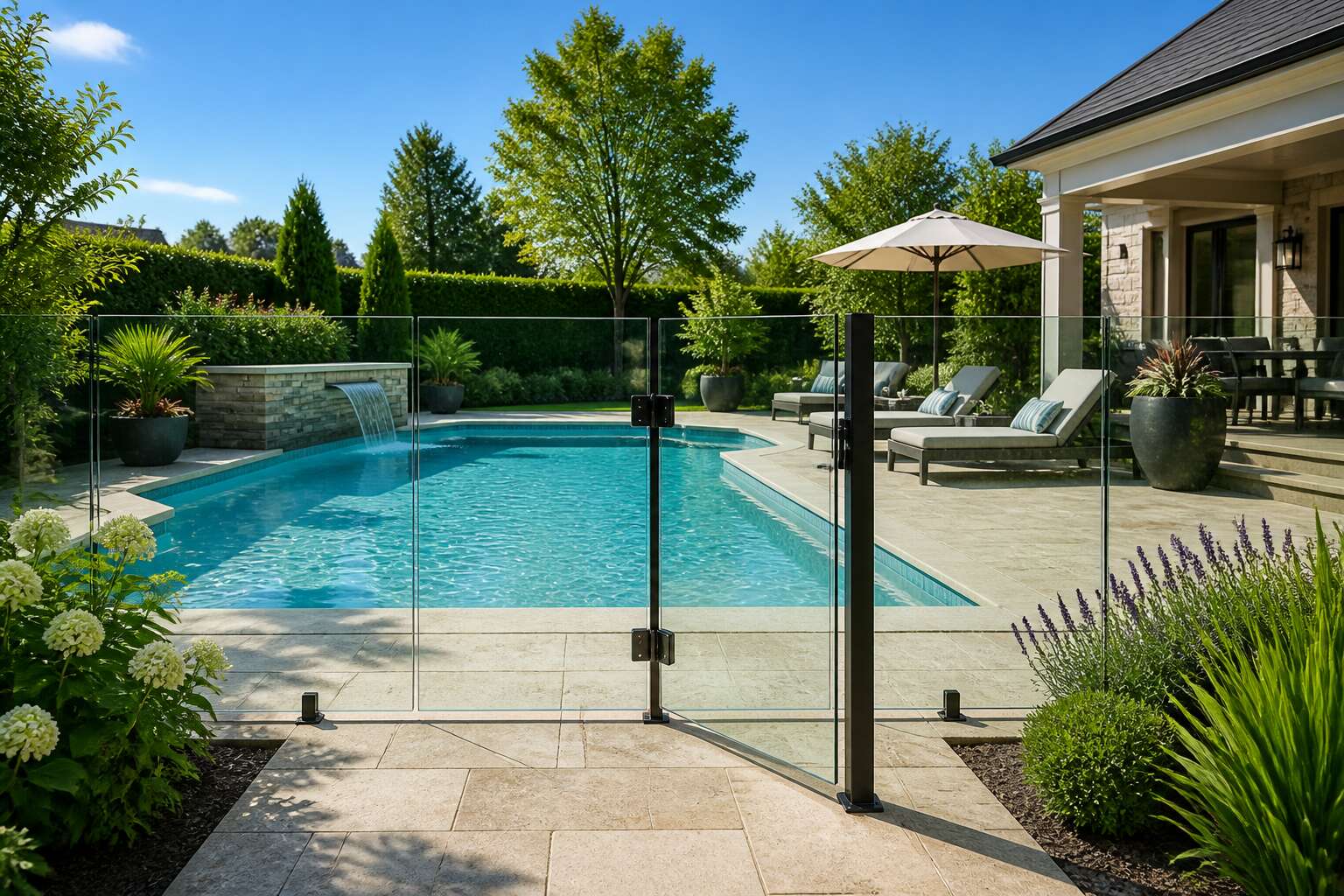
Glass Pool Fencing for Unobstructed Views
Glass panels eliminate the visual clutter of solid barriers. A recent industry survey found that 58% of Cape Town property owners rate garden sightlines above privacy when selecting fences around pools. This material transforms a compliance measure into a transparent stage for your water feature.
Tempered glass tolerates intense solar gain and corrosive sea spray. Slim stainless clamps secure each pane, leaving the eye free to travel across the lawn. Among all fences around pools, glass delivers the least obstruction. I recommend it for narrow plots where every centimetre counts.
Consider the practical variants:
- Frameless panels with polished edges
- Hinged gates using magnetic self clamping
- Low iron glass for natural colour accuracy
Each configuration alters how light bends over the water.
Wrought Iron and Steel Durability
Steel will not give you a view. It will give you certainty. In a country where sea spray and summer thunderstorms work overtime, wrought iron and steel remain dependable barriers. These materials tolerate rough handling, stray soccer balls and the occasional runaway trolley. They need a protective coating, though. Bare steel rusts. Galvanised steel resists. Powder-coated steel stands up to salt air and chlorine.
Wrought iron brings a heavier, more ornate character. It handles coastal corrosion better than standard steel, but only if the paint job stays intact. Every scratch is an invitation for oxidation. Routine checks become a habit, not a chore. For period homes, spear-topped spindles or scrollwork add a traditional rhythm.
- Hot-dip galvanising for coastal exposure
- Polyester powder coating in matte or satin
- Zinc-rich primer before the top coat
When you weigh all fences around pools, the steel family offers the highest impact resistance. Glass shows off your water feature. Steel protects it. That trade-off matters if your backyard doubles as a rugby pitch for the kids.
Vinyl and Composite Material Advantages
South Africa’s sun is relentless. It fades, cracks, and warps many materials within a few seasons. For homeowners, fences around pools face extreme UV and constant moisture. Vinyl and composite materials handle these conditions without issue. They do not rust, rot, or corrode when splashed with chlorinated water. This makes them practical for homes near the coast or in high-veld areas with hard water.
Composites often blend wood fibre and recycled plastic. They offer the warmth of timber without the splintering or annual oiling. Vinyl stays cooler to the touch than steel, which matters on a 35 degree afternoon. These materials are also lighter, simplifying installation and reducing strain on gate hinges.
- No painting or sealing required.
- Resistance to impact from stray balls.
- A smooth surface that prevents snags on swimwear.
For budget conscious owners, the lower maintenance cost over ten years often beats the initial saving from cheaper materials. When you compare your options, vinyl and composite fences around pools offer a smart middle ground.
Wood Privacy Fences and Maintenance Needs
There is a reason many South African homes use wood fences around pools for privacy: they look stunning for about eleven days. Then the sun, the rain, and the pool’s chemical breath start their slow work. Timber is a demanding employee. It warps, it splinters, it hosts termites who treat your fence like a buffet.
Regular maintenance becomes your new hobby. You will sand, seal, stain, and repeat. Miss one season and the wood turns grey and brittle. For those who prefer their weekends for braais, this is a problem.
- Reapply water repellent every six months
- Replace rotten panels after each highveld storm
- Check for wood-boring insects
In comparison, vinyl and composite materials ask for almost nothing. But if you love the natural grain, be prepared. Wood fences around pools survive only eight years without attention. With care, perhaps twenty. I would rather spend my Saturdays elsewhere.
Key Design and Placement Considerations
Optimal Distance From the Pool Edge
The space between the pool coping and the fence line determines whether a barrier functions as a true obstacle. Fences around pools placed directly against the edge give a child who slips through a gate no buffer zone. In my inspections, I have seen too many pools where the fence hugs the coping. South African municipalities often require 1.5 metres of clearance, though one full metre is a practical minimum for most residential installations. That distance allows a fall to land on solid ground rather than open water.
This setback also affects maintenance. A narrow gap traps leaves and creates moisture that corrodes metal fixings. Consider the slope of your property and the swing of your gate.
- A sloped erf demands stepped posts, changing the effective distance.
- An inward-swinging gate needs extra room for the hinge.
- Recessed coping permits a closer fit, but never below the regulated minimum.
For all fences around pools, the optimal placement is the one that forces a deliberate pause before entry.
Handrail and Ladder Entry Points
The handrail and ladder entry point is where fences around pools often fail. A railing that sits within reach of the barrier gives small children a step up. I’ve seen this in too many backyard inspections: the fence is sound, but the ladder or handrail creates an unintended launchpad. Keep at least 50 millimetres of clearance between the fence line and any fixed rail. For above-ground pools, remove or secure the ladder when the pool is not in use. The placement of the gate should align with the ladder’s orientation so an adult can monitor both at once.
- Handrails with horizontal rungs act as a ladder next to the fence
- Ladder feet that grip the coping can be pried away, leaving a gap
- Folding ladders stored near the fence invite mischief
A simple rule for fences around pools: any handrail that offers a foothold within 300 millimetres of the barrier should be redesigned or shielded. This keeps the entry point honest, forcing anyone who enters to do so deliberately and within your sightline.
Visibility and Childproofing Features
A child can slip out of sight and into the water in under seven seconds. Visibility is the first childproofing feature, not an option. Position fences around pools so the gate aligns with your sightline from the kitchen or braai area. If you cannot see the water from where you spend the afternoon, the design is wrong.
Solid panels hide danger. Mesh or glass fencing keeps the view open while holding the barrier firm. Keep planters, chairs, and toys away from the perimeter; they offer a climb and block your view.
- Hang the gate so it swings away from the pool.
- Fit a two hand lock with a thumb turn, mounted high.
- Test the self latch so it catches on every swing.
Fences around pools should also signal at a child’s eye level. A bright latch or contrasting edge creates hesitation. That pause gives you time to respond.
Maintenance, Safety, and Enhanced Features
Routine Inspection and Corrosion Prevention
The South African coast offers a brutal test for any installation. Chlorine and salt air conspire to eat unprotected steel within months. Routine inspection becomes a ritual, not a chore. Check for telltale orange blooms and white powdery deposits, signs of corrosion taking hold. Examine the welds and joints first, because that is where failure begins. Also consider:
- Rust streaks beneath powder coating
- Loose anchor bolts at the base
- Seized springs and stiff hinge pins
Corrosion prevention starts with the right material selection, but even marine grade steel needs attention. South African humidity accelerates galvanic corrosion where dissimilar metals touch. Apply a lanolin based inhibitor to threads and moving parts. Rinse salt spray off weekly near the coast. Enhanced features like sacrificial anodes or zinc rich primers extend lifespan dramatically. Fences around pools must endure sun, wind and water. A twice yearly inspection catches problems before they demand replacement. Fences around pools with proper maintenance remain secure for decades.
Installing Alarms and Security Systems
Every second counts when a child slips through a gate! Alarms and security systems transform fences around pools from passive barriers into active guardians. Sensor technology has advanced beyond simple magnetic contacts. Modern systems detect movement, water disturbance, and even tampering.
- Gate alarms trigger when a latch opens unexpectedly
- Surface wave alarms sense when something enters the water
- Wearable wristbands alert you the moment a child submerges
Choose systems with separate power backups. South African load shedding can disable poorly designed alarms. Battery backups and solar options keep protection alive during outages. Wireless sensors integrate with smart home hubs, sending alerts straight to your phone. Pair these alarms with existing fences around pools to close gaps in supervision. No system replaces an attentive adult, but a well installed alarm buys precious time.
Choosing Non-Climbable Designs
Non-climbable designs turn fences around pools into true barriers. A fence that offers footholds invites disaster. Horizontal rails, lattice patterns, and decorative scrollwork become ladders for small feet. The safest designs present flat, vertical surfaces with no purchase for tiny toes.
Maintenance preserves these safety properties. Rust creates rough patches that grip climbing shoes. Loose brackets widen gaps. A wobbly panel is a weakness. Inspect after heavy rain and the windy highveld season.
- Keep garden furniture, planters, and tree branches away from the fence line
- Ensure soil erosion has not exposed a gap beneath the bottom rail
- Replace decorative finials that could serve as a handhold
Regular upkeep keeps the non-climbable promise intact. Fences around pools only work when every element, from the latch to the last picket, refuses to cooperate with a child’s natural curiosity.
Landscaping Integration and Clearance Zones
Landscaping integration determines whether fences around pools actually perform their function. I have walked past too many Johannesburg homes where a perfectly respectable barrier is undermined by a friendly hedge. Garden furniture is the obvious culprit, but plants are the real offenders. A dense row of shrubs creates a platform. An overhanging branch becomes a step.
Clearance zones demand vigilance. Soil erosion, mulch build-up, and fallen debris all change ground levels over time. After highveld storms, the ground shifts in ways that surprise even attentive homeowners!
The maintenance rhythm rarely changes:
– A clear radius around the entire fence line
– Pruning for any vegetation that grows near the top rail
– Ground levels that stay stable after heavy rain
These habits keep fences around pools honest. The structure is only half the story. A fence surrounded by open, level ground gives a child nothing to work with, which is precisely the point.
Seasonal Care and Weather Damage Repairs
Highveld summers punish exposed materials. Ultraviolet rays bleach powder-coated rails while hail dents aluminium mesh. Winter temperature swings loosen fixings. Fences around pools endure more abuse than any other boundary on a property.
Seasonal care means inspecting after each severe weather event. Look for cracked welds, bent sections, and rust bloom near base plates. The ground moves after thunderstorms, and that movement stresses the posts. I have seen wind loosen panels overnight.
Repairs require matching the original specification. Galvanised components need re-galvanising, not paint. Aluminium sections should be replaced with identical alloy grades. Timber posts need checking for rot at ground level.
A maintenance checklist covers the essentials:
- Check bolts and hinges for tightness after storms
- Inspect infill panels for tears and deformation
- Clear debris that traps moisture against metal
- Test gate alignment after heavy rain
Small issues become large failures quickly. Fences around pools fail without warning.
Upgrading to Smart Locks and Sensors
Routine maintenance keeps fences around pools functional year round. Lubricate hinges quarterly and examine welds for hairline cracks. A fence that looks solid can still fail a push test! Spend thirty seconds checking each post anchor. These inspections prevent costly failures.
Safety goes beyond the self-closing gate. Check the gap between gate and frame. Children can squeeze through gaps wider than 100 millimetres. Ensure infill panels sit flush with rail channels. Loose mesh turns a compliant barrier into a liability.
Smart locks and sensors add another layer for fences around pools. Systems alert you when a gate opens or stays ajar. Sensor packages monitor fence line tampering. Enhanced features pair well with these systems.
- Keypad entry with temporary codes
- Motion sensors that trigger an audible warning
- Wi-Fi connected alarms that push notifications to your phone
Choose components rated for outdoor exposure. Electronics must tolerate Highveld humidity and summer UV.



0 Comments