Essential Types of Gate Closures for Rural Properties
Traditional Hinge and Hook Systems
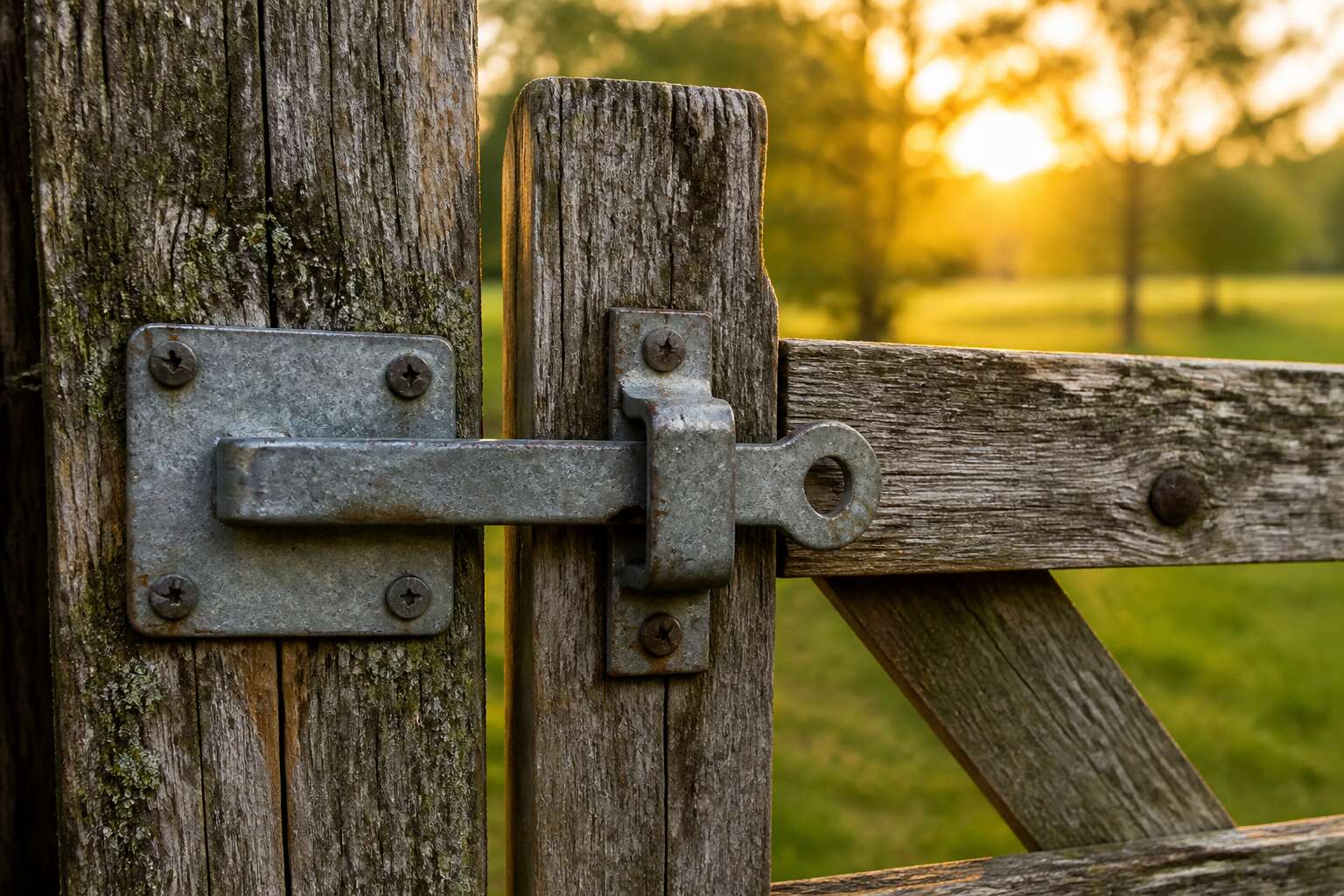
On many rural properties, the traditional hinge and hook system remains a reliable choice for farm gates latches. These closures use a simple pin that drops into a fixed eye, offering decades of proven function without complexity. The hinge side carries the gate’s weight, while the hook side keeps it aligned against wind and wandering herds.
Common variations on working farms include:
- A drop hook with a spring retainer for windy areas
- A chain and staple loop for gates that sag over time
- A double hook for cattle grids where vibration can loosen other fittings
Each version of these farm gates latches has a distinct character, yet all share a direct and sturdy design. A well fitted hook needs no regular oiling, and it lets a farmer swing the gate open with one hand while carrying a feed bucket.
Spring-Loaded Tension Latches
Spring loaded tension latches bring quiet order to a busy farmyard. These farm gates latches use a spring in a cylinder, with a bolt that snaps into a striker plate. The tension holds the gate against wind and curious animals, yet you release it with a simple lift of thumb. I have watched farmers replace broken chains with these units on camps with daily traffic. Predictability matters when your hands carry tools or feed.
Where should you consider them?
- On gates that swing open toward a slope
- For small stock pens where self closing prevents escapes
- On gateways between grazing camps that catch strong gusts
The spring tension can be adjusted for the gate’s weight, though heavy timbered gates may strain the mechanism. Pair them with a solid hinge setup and check for rust after wet seasons. That small attention keeps these farm gates latches working for years.
Heavy-Duty Drop Rods and Pins
A drop rod is a thick steel pin that slides vertically into a socket fixed in the ground. It holds the gate in place with pure mechanical weight. There is no spring to fatigue and no hook to bend. The gate simply rests against a solid column of metal.
Heavy-duty drop rods and pins suit farm gates latches on remote camps where maintenance visits are rare. Lift the handle, swing the gate, drop the pin. That repeatability matters when dust and mud coat everything by mid-winter.
- Use them on large swing gates that carry significant weight
- Install them where wind gusts would defeat lighter latches
- Match the pin diameter to the gate size for reliable seating
The socket must stay clear of soil and stones. A few seconds of clearing with a boot tip beats replacing a bent pin. These farm gates latches tolerate rough handling and remain dependable for years.
Chain and Slide Bolt Fasteners
Most farmers still trust a length of chain over any clever mechanism. Chain and slide bolt fasteners are the plainest farm gates latches you will find on a rural property. They cost little, break rarely, and any person with a spanner can fix them.
A chain wraps around the gate post and the gate frame, then hooks onto a pin or secures with a padlock. The slide bolt works differently. It is a solid steel bar that shoots horizontally into a striker plate sunk into the post.
- Chain links wear at the contact point; replace them before they shear
- Slide bolts need a clean striker recess to seat fully
- Both options suit gates that do not swing too often
I have seen chains outlast their original owners. These simple devices accept a bit of sag, a crooked post, even a broken hinge. The chain takes up slack, while the slide bolt gives a positive lock. Neither depends on springs or gravity, so they fail only when the metal gives out.
Magnetic Snap Alternatives for Quick Access
At dusk, the wind carries the sound of every loose gate in the district. Farm gates latches reveal their character in that hour. Essential types of gate closures for rural properties are plain and unyielding:
- Ring and pin: a forged ring drops over a steel pin.
- Wooden batten: an oak beam slides through a fixed cradle.
- Hasp and staple: a flat loop accepts any padlock.
These closures tolerate a crooked post and a sagging hinge. They have no springs to lose and no pins to shear. Magnetic snap alternatives for quick access offer a different trade. A rare earth magnet pulls the gate flush with a crisp click. You can open them with an elbow or a hip. But they demand a clean striker surface and a hinge that does not drag. Rust weakens their pull, and a gate that swings too far will never seat.
Materials and Durability Considerations for Gate Hardware
Galvanized Steel for Rust Resistance
I have seen a good gate brought low by nothing more than its own skin. Rust is a slow executioner. In South Africa, where summer storms and coastal mist conspire against bare metal, thechoice of hardware becomes a matter of quiet survival. Farm gates latches must endure years of sun, rain, and salt-laden air, yet they often receive the least thought.
Galvanised steel answers this hostility with a sacrificial layer. Zinc, being more reactive than the underlying steel, corrodes first, sparing the frame and mechanism. A proper hot-dip galvanisation covers every recess, every lip, every hard-to-reach corner. Thicker coatings resist scratches better; a single deep gouge can become a rust point. Installers who drag latches through gravel, or who hammer them carelessly, undo years of protection in minutes.
- Ask for the coating weight, not just the label.
- Check cut edges on custom lengths; these need re-coating.
- Inspect for transport dings; a dent can crack the zinc.
When selecting farm gates latches, remember that rust respects no promise, only preparation. Galvanised steel does not whisper faraway promises, but it grants decades of service. That is a quiet kind of honesty, one your gate will thank you for.
Stainless Steel in High-Moisture Environments
Salt-laden coastal air does not treat all stainless steel as equal. Grade 316 adds molybdenum, an element that resists chloride ions. A latch built from 316 delivers more reliable service than 304 in this climate.
Stainless relies on chromium to form an oxide film across its surface. That film repairs itself after scratches, drawing fresh chromium from the metal below. This self-healing trait suits a mechanism opened thousands of times each season.
Thinly plated steel chips and pits, but stainless keeps its structure. Marine environments demand attention to moving parts where water pools. Selecting farm gates latches with stainless pins and springs, rather than only a stainless casing, keeps the mechanism functional near the coast.
Wrought Iron and Cast Iron Options
Wrought iron has guarded South African farmsteads for over a century. Its fibrous grain bends under pressure rather than snapping, a trait that matters for farm gates latches exposed to livestock shoving and gusting Cape winds.
Cast iron is harder and cheaper to cast, but brittle. A heavy gate dropped onto a cast iron latch can crack it clean through. Both metals need painted protection, especially where summer thunderstorms drench the veld.
- Wrought iron: flexible, forgivable, repairable by any local blacksmith.
- Cast iron: rigid, affordable, prone to fracture under sudden shock.
Polymer and Coated Finishes for Weatherproofing
The South African sun does not negotiate. It peels paint and cracks rubber. For farm gates latches, polymer compounds resist UV damage, corrosion, and do not require repainting. That saves a farmer time and frustration.
Coated finishes protect metal from moisture and abrasion. Powder coating is a durable layer, but its performance depends on the base steel. Consider the typical choices.
- Nylon coated latches: smooth and quiet, kind to hands.
- Polyester powder coatings: retain colour in harsh sunlight.
- Plastisol dips: thick and cushioned, but degrade over years.
Inspect coated edges regularly. Salt and moisture sneak into any scratch. A good finish delays failure, but no coating replaces a sound design.
Maintenance Needs Across Different Materials
The sun beats down, then rain, then salt wind. A latch made from the wrong material will remind you within months. Farm gates latches need maintenance, regardless of price. The trick is knowing what your specific gate asks for.
Mild steel rusts quickly if you ignore it. Aluminium saves weight but loses rigidity under heavy loads. Brass looks sharp but needs polishing to avoid tarnish. Each demands a different routine. I have watched farmers oil a hinge for years, then forget a sliding bolt, and pay for it later.
- Mild steel: wipe away dirt, apply thin oil monthly.
- Aluminium: check for bent edges after storms, and tighten screws.
- Brass: clean with mild soap, avoid abrasive pads.
Yours may use galvanised or coated metal, but farm gates latches still demand maintenance. The base material decides how often you inspect, how fast wear spreads,and when replacement becomes cheaper.
Installation Best Practices for Secure Enclosures
Positioning the Strike Plate Correctly
The strike plate is the quiet anchor of any secure enclosure, yet it is often the most neglected piece. In over a decade of working with farm gates latches, I have seen more failures from a misaligned plate than from worn springs or bent hinges. It takes only a few millimetres of drift for the whole system to feel loose.
Position the plate so the latch bolt meets it dead centre, not skimming the edge. Use a pencil to trace the bolt’s resting point, then mark the screw holes through the plate itself. This simple method prevents guesswork.
- Check the gate’s drop with a spirit level before marking.
- Set the plate depth so the bolt seats fully without forcing.
- Always use rust resistant screws that match the post material.
Once fixed, test the closure slowly. A correct strike plate should accept the bolt with a clean, solid click. If it strains, shave the post surface rather than bending the plate. Farm gates latches rely on that exact meeting point every single day.
Aligning the Latch with the Gate Frame
A gate frame leaning one degree will defeat any latch within a season. I have seen it on farms. Before mounting, run a plumb line down the hinge and latch sides. The frame must hold its plane under full load!
Align the latch body with the gate’s closing arc, not the post’s visual face. The gate swings in an arc; the frame stands still. Use a spacer block to match the gap, then tighten screws progressively.
- Check for frame twist top and bottom.
- Set latch height against the striking edge.
farm gates latches rely on a true frame. Plumb frame, level gate, clean line of action.
Tools and Hardware Required for a Solid Fit
Any farmer with a drawer full of mismatched hinge bolts knows the distance between a cheap prop and a secure enclosure. Before touching a screwdriver, assemble the right kit. Half of all farm gates latches fail from a stripped screw head and a tired battery. Good installation demands specific tools, not vague optimism.
- A cordless drill with a working clutch
- Sharp masonry bits for concrete posts
- Galvanized hex head bolts and lock washers
- A spirit level with a magnetic base
Galvanized fasteners outlast polished hardware by years. Pre-drill pilot holes and counterbore the heads to keep timber from splitting. The drill torque dictates how the bolt seats. Use a high setting for steel, a lower one for soft wood. A clean, straight hole ensures that farm gates latches engage properly every time. The right hardware turns a tedious chore into a thirty minute job and keeps your livestock where they belong.
Adjusting Tension for Self-Latching Operation
Secure enclosures begin with the latch housing’s seating. A misaligned face invites wear and intermittent clicks. For farm gates latches, the vertical plumb of the housing matters more than the gate’s own level. Check the gap between the gate and the post; a gap wider than a thumb’s width defeats any self-latching mechanism. I always set the assembly against the gate face, then trace the bolt’s path with a pencil before drilling.
Adjusting tension for self-latching operation demands a deliberate sequence. Turn the tension screw in small increments, testing the gate’s swing each time. The latch should catch as the gate reaches its natural resting point, not before. Over-tension destroys the bolt’s seating. Under-tension lets the gate rattle. The correct tension engages with a firm, quiet click.
Adding Shim Plates for Uneven Surfaces
The ground under a farm gate never stays true. South African frost heave and downpours tilt posts, creating gaps that defeat many farm gates latches. A shim plate corrects this. Its thickness matters more than its width. Start with a 1 mm galvanised shim, test fit, then stack only as needed.
When I installed farm gates latches on the Highveld, I learned to accept uneven surfaces. Clean the post face, remove rust scales, then set the housing flush. If it rocks, use scattered shims to mimic the post’s angles. Tighten the bolts, starting with the one nearest the gate, preventing twisted stress. Work in this order:
- Place each shim on the low spots of the mounting face.
- Torque the bolts steadily; check for rocking movement.
- Add another shim if the wobble persists.
A quiet, solid seating under finger pressure is the signal that all is correct.
Safety and Livestock Management Essentials
Preventing Accidental Openings from Wind or Animal Pressure
In my years working across South African farms, I have seen more escapees caused by a breezy afternoon than by faulty hinges. The right farm gates latches must resist persistent wind and the deliberate nudge of a curious cow.
When pressure builds against the gate, a latch that relies solely on gravity can fail. Tension that holds the mechanism closed is critical. A self-latching design with a positive lock prevents the gate from springing open after a gust, yet animal weight bends weaker components over time.
Common sources of force include:
- Gusts funneling through open paddocks
- Herds leaning against the frame during feeding
- Calves rubbing and testing the edge
Easy Operation While Wearing Work Gloves
In the Karoo, a farmer’s hands rarely leave the gloves. A latch that demands bare fingers is a hazard, especially when cold wire steals dexterity. The best farm gates latches account for thick palms and stiff fingers. They offer levers, not knobs. They require a push, not a pinch.
Consider these features when handling gates in rough conditions:
- Oversized handles with textured grips
- Spring mechanisms that open with a fist
- Clear visual indicators for locked position
Livestock management rides on this simplicity. When a ewe bolts, you cannot fumble with a fiddly catch. Positive engagement, quick release, and a mechanism that works through leather and grime keep both handler and herd safe. Overlook this and you trade minutes for escapes.
Choosing Child-Friendly and User-Friendly Fasteners
Most farmers ignore the gate until a child proves too curious. A latch that suits an adult’s grip often defeats a toddler’s fingers, but the reverse frustrates workers. The solution is in intention, not complexity.
Consider the threshold difference. A child sees a gate as a boundary, but an adult sees it as a chore. The best farm gates latches use a two-step release that demands a lift and a turn. A preschooler rarely has the coordination to complete both, while a gloved hand manages the sequence without thought. This is not about locking children out. It is about slowing them down enough for a parent to intervene.
I recently handled a gravity latch on a Northern Cape farm. The hinge pin dropped into a cast pocket with a solid thunk. My host’s six year old couldn’t lift the weight. His father opened it one handed while carrying a lamb. That discrepancy, built into the mechanism, saved more arguments than any padlock.
Seasonal Inspections to Maintain Gate Integrity
Rainfall rearranges farm infrastructure in ways that surprise veteran farmers. A Western Cape winter drives moisture into every latch mechanism, while the Highveld dry season shrinks timber posts and loosens fasteners. I learned this one spring when a gate latch failed and livestock found the lucerne patch. They were not subtle about it.
Seasonal inspections should follow a fixed calendar, not a mood. Walk the boundary after each heavy storm and at the change of every season.
- Confirm that the galvanising on your farm gates latches has not worn thin at friction points
- Check that cast pockets still hold the drop rod vertically, without wobble
- Watch for rust streaks on hinges, which indicate the protective coating has failed
A latch that required two hands in summer should still require two hands in winter. Test it gloved and barehanded, at dawn and in the midday heat!
Troubleshooting Common Gate Latch Problems
Dealing with Rust and Corrosion Build-Up
Corrosion often goes unnoticed until a gate refuses to close. In humid South African climates, farm gates latches can develop rust within months if the protective coating is scratched. The problem rarely starts on the visible handle; it begins inside the crevices where moisture pools and air circulation stops. You might notice a gritty resistance when lifting the latch, or a faint orange streak on the frame. That residue indicates the galvanized layer has failed, exposing the base metal to electrolytic attack.
Ignoring the early signs leads to seized pins and frozen springs. Once rust forms, it expands and locks components together. For farm gates latches in coastal regions, salt spray accelerates this process dramatically. Regular inspection should focus on areas where water collects:
- the underside of the latch arm
- the hinge pin socket
- the base plate weld points
Wire brushing removes loose scale, but only a phosphoric acid treatment neutralizes the remaining oxidation. Afterward, apply a zinc-rich primer before reassembling. Do not lubricate over active corrosion; oil traps moisture beneath it. Instead, let the affected area dry completely, then use a dry film lubricant. This approach prevents future build-up without masking the underlying damage.
Fixing Misalignment Issues Caused by Gate Drop
Gate drop is the quiet saboteur of farm gates latches. A hinge pin wears a fraction of a millimetre, and suddenly the latch tongue grinds against the strike plate instead of seating cleanly. The gate looks fine from a distance, but closing it tells the truth.
- The latch arm sits lower than the strike plate opening
- Scrape marks appear on the plate’s top edge
- The gate lifts slightly when the latch is operated
The misalignment starts on the hinge side, not the latch side. When the gate’s weight settles onto a worn pin, the entire frame drops. Farm gates latches then carry uneven spring load, which accelerates wear on the moving parts. Correcting the drop requires addressing the hinge first, because forcing the latch into a new position only masks the sag. The latch did not move; the gate did.
Replacing Worn Springs and Broken pins
A worn spring in farm gates latches doesn’t announce itself. It just makes the latch droop, or snap back weak, or stop holding altogether. Broken pins are sneakier. The gate swings smooth until one day the latch falls off entirely
- A coil spring stretched past its rest length.
- A hinge pin scored by rust and friction.
- A roll pin sheared off inside the handle assembly.
Springs are easy to test. Remove the latch from the gate, compress the coil by hand. If it doesn’t return with a clean snap, it’s done. Pins require more care. Tap out the old pin with a drift punch, butt check the bore for wear first. An oval-shaped hole means the frame itself needs attention. A new pin won’t fix that.
Addressing Loose Hinges That Impact Latching
I’ve lost count of how many farm gates latches fail because the hinge has shifted. A gate that hangs straight operates the latch as designed. Let the hinge pin wear down a few millimetres, and the gate drops on one side.
That misalignment turns a simple closure into a forced action. You can see it in these signs:
- Gate lower on the latch side
- Bolt catches only one corner
- Drag mark on the ground
What you’re fixing is not the latch itself. You’re correcting the position of the gate relative to its frame. Tightening hinge screws or replacing a worn hinge pin will often restore these latches to perfect working order without touching the mechanism.
Upgrading Outdated Hardware for Better Performance
A farm gate latch that sags is easy to diagnose, but what about the one that feels sluggish? Dust and grass seed accumulate in the mechanism’s crevices. That friction slows the return stroke. On a windy Highveld afternoon, the gate swings past without catching. The hardware isn’t broken. It’s outdated, designed for slower movements and heavier hands.
Upgrading to modern farm gates latches eliminates most of these troubles. New units use enclosed pivots or self-lubricating materials. They resist dust ingress better. The keeper is wider to tolerate slight movement. Traditional hooks demand perfect alignment; a modern tapered latch guides itself shut.
Replacing outdated hardware isn’t about convenience. Modern farm gates latches keep livestock put with a consistent catch. In South Africa’s variable climate, reliability matters.



0 Comments